US, Japan enter $1B strategic partnership to fuel Genesis Mission efforts
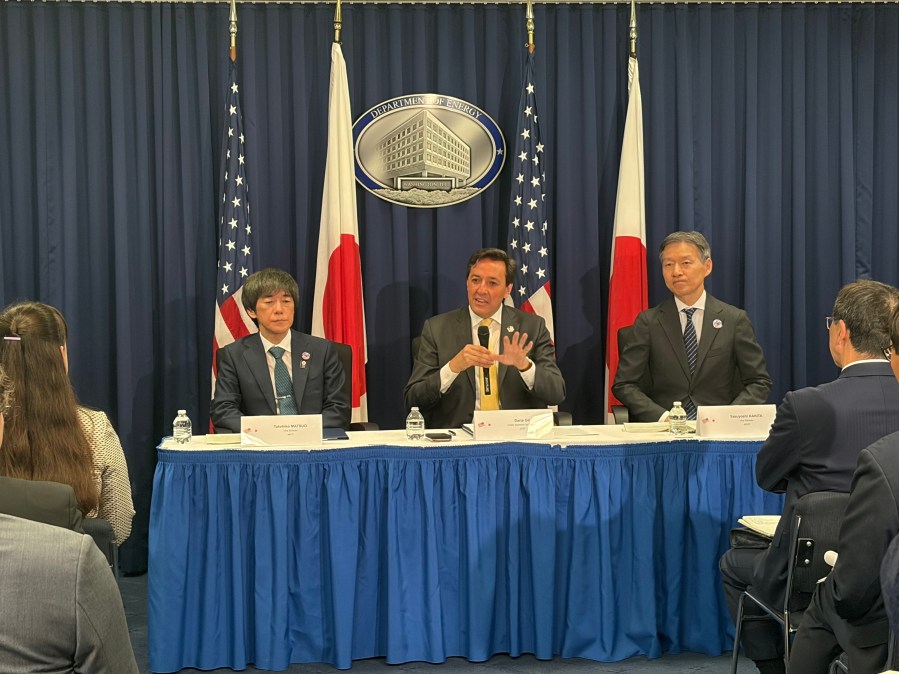
The Department of Energy is teaming up with two of Japan’s ministries as part of a $1 billion strategic partnership focused on advancing Genesis Mission goals, officials announced Thursday.
The Genesis Mission kicked off in November via an executive order that called for a national coordinated effort to capitalize on progress in AI, quantum and high-performance computing. With DOE leading the initiative, scores of private-sector companies, academic institutions and philanthropic organizations have joined in. Japan, however, is the first international ally to come on board.
As part of the partnership, DOE’s 12 national labs and a dozen Japanese research institutes are already partnering up. The working groups will tackle 11 of the 26 Genesis Mission challenges that DOE identified in February, including a mathematics-focused challenge added more recently, Under Secretary for Science and Genesis Mission Lead Darío Gil said at an event Thursday announcing the partnership.
“On each one of those, we have bilateral working groups that are actually defining the scope of the collaboration and the leading principal investigators and researchers from the different institutions,” Gil said during the event. “It’s actually very deep already and [there’s] very detailed discussions about the types of projects we will do together.”
Each country is investing $500 million. The monetary commitment reflects the resources brought to the table, including computational environment, data, infrastructure, facilities and expertise, per Gil.
“This is not just about having an MOU, it’s about ultimately having many, many hundreds of scientists collaborating and some very significant infrastructure being created,” Gil said.
The deal, signed Thursday at DOE headquarters, follows months of work between the agency, the White House Office of Science and Technology Policy, and Japan’s Ministry of Education, Culture, Sports, Science (MEXT) and Technology and Ministry of Economy, Trade and Industry (METI), according to Gil.
While work has already begun, there are still uncertainties, such as data governance.
During the event, Yasuyoshi Kakita, Japan’s vice-minister for policy coordination at MEXT, said there are still ongoing discussions to determine how to handle and share important data. The signed statement of intent includes a provision allowing researchers of each country the same permissions and approvals granted to domestic researchers.
Other international partners are expected to be announced later this year, according to Gil.
“The criteria will be countries and institutions that are strong allies of the United States that share our values toward scientific integrity and commitment to democratic values,” Gil said. “We are not seeking to just generically sign pieces of paper. What we want to do is world-class science.”