DEA looks to add Skydio, Parrot drones to its arsenal
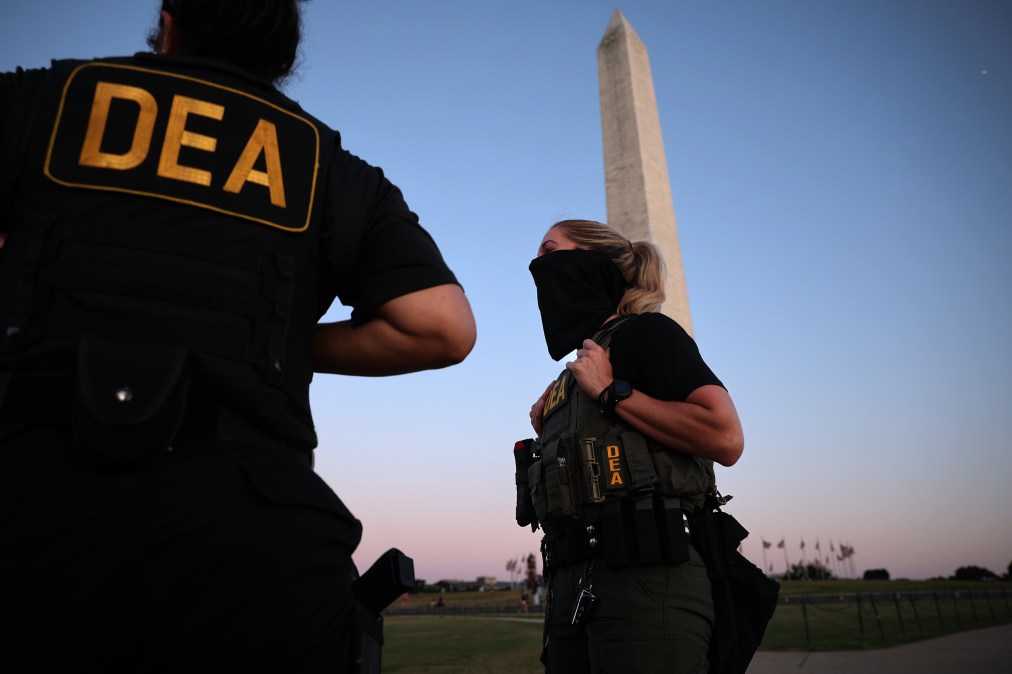
The Drug Enforcement Administration wants to build out its drone arsenal, according to procurement documents published Tuesday. The agency is eyeing products from two vendors: Parrot and Skydio.
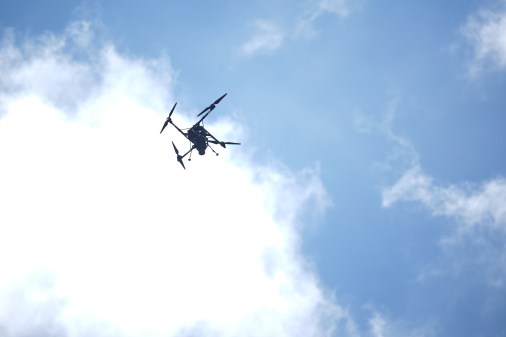
The Department of Justice unit is looking to add a pair of Skydio’s R10 hardware and software bundles. The R10 is a lightweight, compact drone designed for indoor and compact areas. On the Skydio website, the vendor cites a number of use cases, including post-incident safety checks, indoor reconnaissance and barricaded suspect searches.
The DEA is also planning to acquire 11 of Parrot’s Anafi UKR XLR drones, which are a bit more heavy-duty than the Skydio unmanned aerial vehicles but still compact. Parrot says the drones are jamming and spoofing-resistant. They also have a thermal imaging sensor, as well as object recognition and tracking capabilities.
All drones have a delivery deadline of August 1.
The DEA is familiar to some extent with both dronemakers. The DOJ unit has spent upwards of $663,000 on Skydio in direct awards since 2019 and has acquired its drones through third parties, according to USASpending data. In fiscal 2026, the DEA has already allocated more than $87,000 to Skydio, though that’s still a fraction of the Interior Department’s $1 million-plus investment.
Parrot is a bit more novel. USASpending shows a lone third-party contract for the vendor’s drones tied to the DEA. Parrot drones, which often arrive at federal agencies by way of a subcontractor, are more prolific in the Department of Defense. The European dronemaker said it is ramping up its focus on defense and public safety markets after hitting a record quarter for its micro-UAV business, with revenues totalling $24.5 million (21.3 million euros) in Q1 2026 compared with $12.1 million (10.5 million euros) during the same quarter last year.
Drones are proliferating across the federal government as the Trump administration’s plan to “unleash American drone dominance” rolls out.
The Department of Homeland Security has built up its drone fleet this year and stood up a dedicated office for easier procurement and deployment of the technology. The Federal Communications Commission and Department of Transportation have also worked to ease restrictions on unmanned aircraft systems and integrate them into operations.
As more drones enter the sky, privacy advocates have warned of the potential for misuse and degraded civil liberties due to drone-enabled surveillance. The American Civil Liberties Union pointed to a “much wider trend” within drone-related regulatory decisions that are giving the federal government and corporations more privileges than the average citizen.
“We don’t want a future in which our skies are dominated by surveillance and corporate drones, aerial imagery is under their control and their control only, and people can’t counter visual or other narratives with their own drone flights,” Jay Stanley, senior policy analyst at ACLU’s speech, privacy and technology project, said in a paper published earlier this year.