Energy Department launches Quantum Genesis initiative following Trump orders
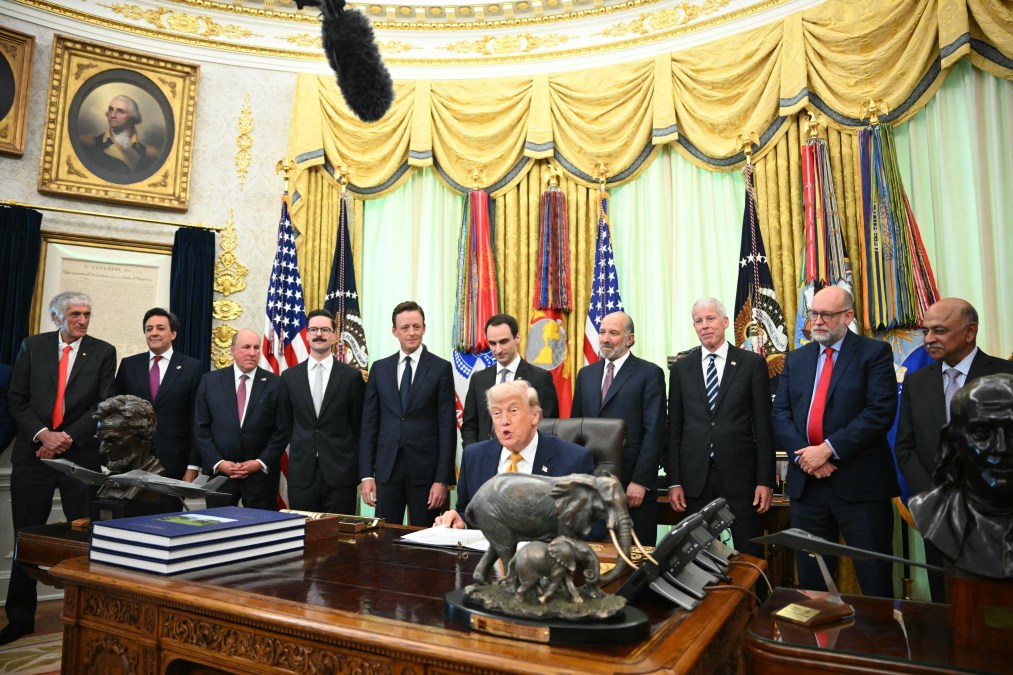
The Department of Energy is kickstarting a quantum computing effort tied to the Genesis Mission following a pair of quantum-focused executive orders signed by President Donald Trump on Monday.
The newly launched Quantum Genesis initiative aims to develop and deploy a more resilient quantum computing capability by 2028.
“President Trump’s Executive Order set a clear mandate: accelerate American leadership in quantum computing and prepare our institutions for the breakthroughs ahead,” Darío Gil, under secretary for science and Genesis Mission lead, told FedScoop via email. “The Genesis Mission embodies that charge, with the Quantum Genesis initiative serving as a foundation — challenging America’s quantum information science community and industry to build the world’s first fault-tolerant quantum computing capability that will transform scientific discovery, strengthen national security, and power the next era of American innovation.”
To reach that goal, DOE has three main priorities: set up a competition to accelerate quantum system development, conduct targeted research to advance high-impact, scientific quantum use cases, and build a supercomputing facility for engineers to access the new capabilities.
The facility, along with DOE’s existing high-performance computing systems and the Genesis Mission’s in-progress American Science and Security Platform, will form a unified high-performance computing, AI and quantum computing ecosystem.
“The Quantum Genesis initiative is the first step in delivering on President Trump’s charge for a national effort in developing a quantum computer powerful enough for scientific research,” Michael Kratsios, director of the White House Office of Science and Technology Policy, said Tuesday in an Energy Department press release announcing the effort.
In addition to Quantum Genesis, DOE has a key role to play in the provisions outlined by the quantum-focused executive orders released this week.
Energy Secretary Chris Wright will work with other government technology leaders to update the National Quantum Strategy with policies to promote the deployment of quantum information science and technology. Wright is also tasked with collaborating on how to provide access across federal agencies to the relevant capabilities and resources.
“Through Quantum Genesis, we are bringing together America’s National Laboratories, universities, and private sector innovators to develop and deploy the world’s first scientifically relevant fault-tolerant quantum computing capability,” Wright said in the press release. “America led the last computing revolution, and we intend to lead the quantum age as well.”
The Energy Department has some near-term deadlines and others that are further out as part of the presidential directives.
In September, DOE is required to have identified the technical specifications needed for quantum computing designed for application development and discovery science, in conjunction with other agencies. By the end of the year, DOE and the Office of Management and Budget are expected to have explored partnerships with private sector companies to have a better understanding of the cost, scope and time frame for reaching their quantum goals.
The executive orders also call for DOE to develop a plan for using quantum networking and eliminating manufacturing barriers for quantum and related technologies, among other goals.
The quantum-focused work builds on previous investments, including the more than $1 billion that has gone to the National Quantum Information Science Research Centers since launching in 2020. DOE also put out a request for information earlier this month to help inform strategic planning and future funding mechanisms for scientifically relevant fault-tolerant quantum computing systems.
While quantum has always been part of the trio of Genesis Mission technologies, it has experienced less prime time compared to high-performance computing and AI.
“Sometimes it’s overly centric on the AI,” Gil told FedScoop in an interview earlier this year.
With the recent executive orders and subsequent pending deadlines, quantum could find a more central role in the Trump Administration’s flagship technology project.
“Just as telescopes allowed us to explore the cosmos, advanced quantum computers will enable us to peer into the fundamental laws of nature with unparalleled precision,” Gil said in the press release. “This transformative opportunity for scientific discovery, deeply intertwined with advancements in AI enabled by the Genesis Mission, will be powered by DOE’s unique system of User Facilities, research centers, and partnerships that have laid the foundation for this next era of discovery.”