Federal AI policy needs labor-centric approach, lawmakers tell White House
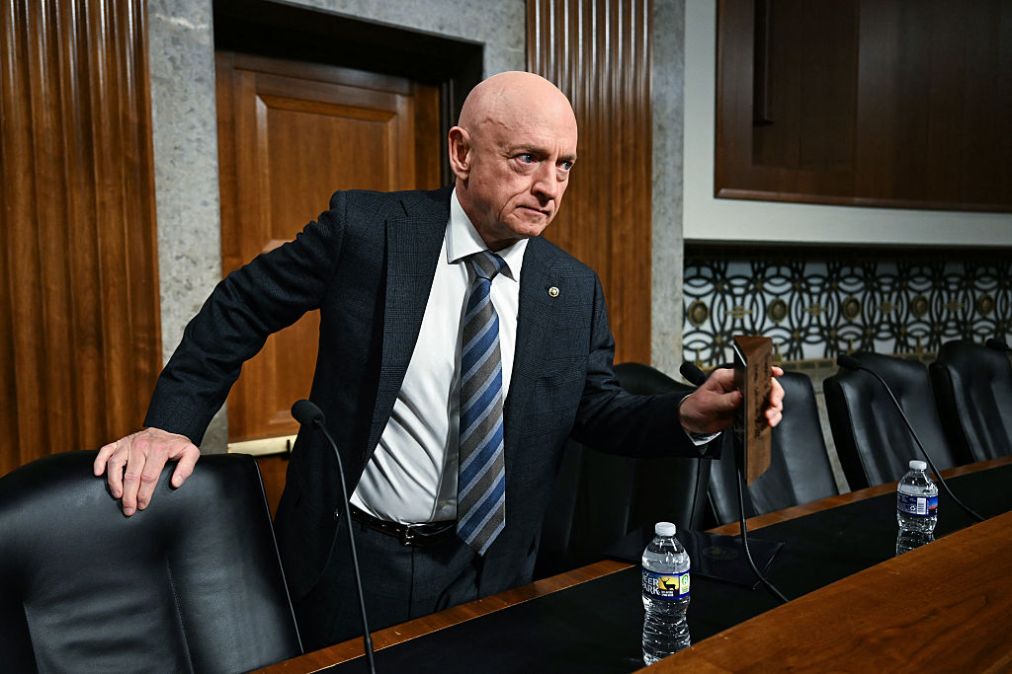
As the White House pushes forward on implementing its sweeping artificial intelligence policies, a bipartisan pair of swing-state lawmakers are urging the administration to make sure the U.S. workforce isn’t left behind.
In a letter to President Donald Trump and other officials, Sen. Mark Kelly, D-Ariz., and Rep. Brian Fitzpatrick, R-Pa., asked the administration to follow a set of “nonpartisan principles” on AI adoption laid out in an October 2025 report by the AFL-CIO.
Making sure that AI benefits American workers is not just about fairness, but also an ethos that the lawmakers view as “essential” to keeping the country globally competitive, economically powerful and secure in the long term.
“Artificial intelligence can support innovation, new industries, and expanded opportunity, but its impact will ultimately be determined by the working people whose skill and judgment put those tools to use,” Kelly and Fitzpatrick wrote.
“That promise will only be realized if AI is developed and deployed with meaningful worker involvement and input,” they continued. “This is not a partisan issue, but a shared responsibility to make sure that technological progress reflects American values and empowers American workers.”
The AFL-CIO report provides a “responsible path forward,” the lawmakers argued, giving the White House a blueprint for ensuring “transparency, accountability, fair notice, retraining, and a meaningful role for workers and their unions in shaping decisions about technology.”
A core element of the powerful federation of labor unions’ plan is collective bargaining, which Kelly and Fitzpatrick said “must be a central avenue through which workers shape how AI is designed, implemented, and governed in their workplaces.” The Trump administration has been especially hostile toward collective bargaining rights for federal employees.
“While Congress continues its work on legislation in this area, we believe the Administration can take immediate steps to reflect these core commitments in federal AI policy and oversight,” said the letter, which was also addressed to Labor Secretary Lori Chavez-DeRemer, White House AI and crypto advisor David Sacks, Office of Science and Technology Policy Director Michael Kratsios, and acting National Security Advisor Marco Rubio.
The lawmakers also made the case for maximum transparency to workers over how AI tools are used, as well as what data is collected and how decisions are made by management. There should be “meaningful” training opportunities for labor as new AI products become available, and “human judgement” should remain at the center of the technology’s use, the letter stated.
“AI must also be used to improve safety, job quality, and productivity, not to undermine privacy or circumvent the role that workers and their organizations play in shaping their workplaces,” the lawmakers wrote. “The federal government can set the standard by making sure AI systems used in public settings are transparent, accountable, and responsibly designed, with practices that reflect the public interest and reinforce trust in both technology and the people who use it.”
The letter also pushes for AI safeguards and systems that improve job safety, quality and productivity without compromising on privacy or diminishing the role of labor. “Worker-centered guardrails” should be foundational in federal AI policy, Kelly and Fitzpatrick said, as should the inclusion of labor groups, frontline workers and workforce experts as new policies are considered.
“We stand ready to work with you in a bipartisan manner so that American workers are full partners in shaping the future of artificial intelligence,” the lawmakers wrote.
AFL-CIO President Liz Shuler praised the letter in a press release from Kelly’s office, applauding the lawmakers “for standing with workers and advocating for an AI agenda that puts working people first at every step.”
“The AFL-CIO looks forward to partnering with members of Congress—Republicans and Democrats alike—who are committed to prioritizing working families over tech billionaires,” Shuler concluded.
The White House’s AI Action Plan has several items for the Department of Labor to take on, though the strategy document was compiled with seemingly heavy input — and approval — from industry.
The plan calls for investments in “roles such as electricians, advanced HVAC technicians, and a host of other high-paying occupations” to build the infrastructure that will “power America’s AI future.” And it contains a good bit of pro-labor messaging, though critics said it was light on details.
The AI Action Plan is “written as worker-first; that’s the language that they use,” J.B. Branch, the Big Tech accountability advocate at the nonprofit Public Citizen, said in an interview with FedScoop last July. “But there’s nothing that talks about preventing people from losing jobs.”