Trump orders big change to federal contracting structures
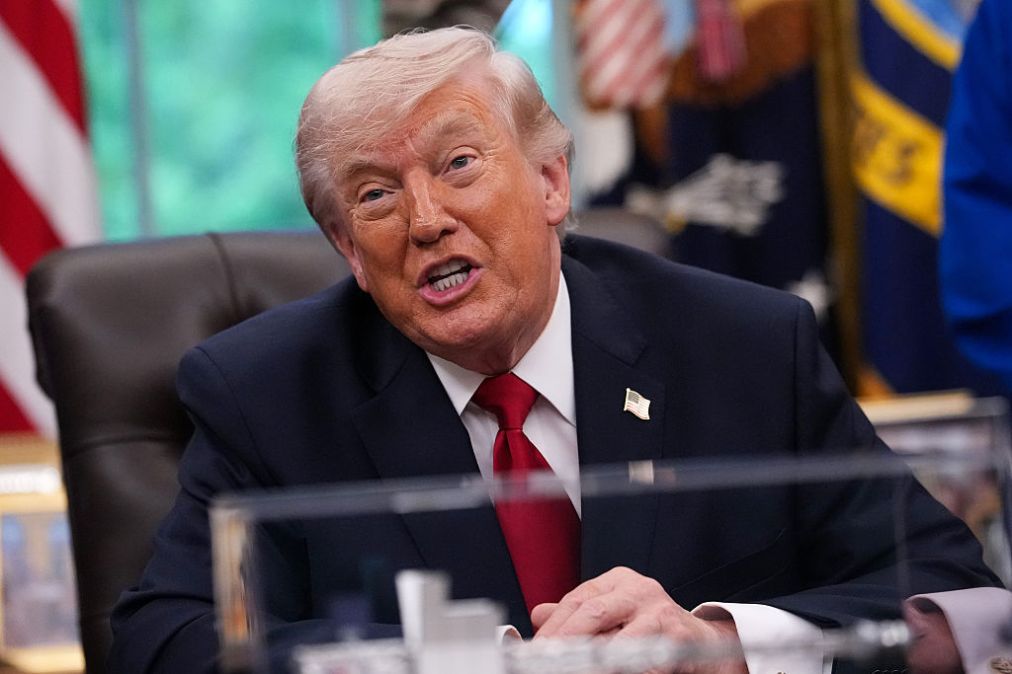
The White House wants to revamp federal contracting practices by making cost-reimbursement structures the exception, not the rule, per an executive order signed Thursday.
President Donald Trump’s order calls on the federal government to view fixed-price contracts with performance-based considerations as “the default and preferred method of procurement.” Shifting to fixed-price deals would “advance cost predictability and budget discipline” while locking in more “appropriate contractor incentives and accountability,” the directive stated.
According to the EO, a review of government spending in fiscal 2024 found roughly $120 billion obligated on cost-reimbursement contracts. Under that model, contractors could receive profit margins in addition to expenses and guaranteed reimbursement for “allowed incurred costs,” the order said.
“Cost-reimbursement contracts frequently allow for poorly defined product or service deliverables and increase the Government’s exposure to overspending by providing little incentive to control costs,” the EO continued.
Going forward, the order allows for cost-reimbursement contracting “only in limited circumstances and with appropriate senior-level accountability at the agency.” Agencies and executive branch departments should instead default to fixed-price contracts to “the maximum extent” possible, the edict said.
Requests from contracting officers to use non-fixed-price contracts — including those that follow the cost-reimbursement model — must be justified in writing to the respective agency head.
Hybrid contracts where the non-fixed-price value exceeds a certain threshold must also be approved by agency heads, in writing. For example, a NASA contract greater than $35 million or a Department of Homeland Security pact that exceeds $25 million must go through those approval channels.
Other carveouts noted in the order include contracts that support responses to emergencies or major disasters, and those that are R&D-focused for the acquisition of major systems.
Agency heads have 90 days from now to review their 10 largest non-fixed-price contracts and decide whether to modify, restructure or renegotiate those deals. Semiannual reports to the Office of Management and Budget on the use of non-fixed-price contracts would also be required of agency leaders.
The OMB director, meanwhile, is charged with issuing guidance to agencies within 45 days on how to move forward on the procurement shift. Within 120 days, the administrator for federal procurement policy must coordinate with the Federal Acquisition Regulatory Council, the Defense Acquisition University and the Federal Acquisition Institute on various compliance tasks.
The release of Thursday’s executive order comes one year after Trump issued an EO aimed at overhauling the federal procurement system via changes to the FAR and an examination of agency buying processes.