State Department eyes agentic AI for taking on ‘high-volume workflows’
The State Department is currently “at an exploration stage” with agentic AI that includes discussions about guardrails and how to leverage it as an executive assistant for “high-volume workflows,” a top agency tech official said Tuesday.
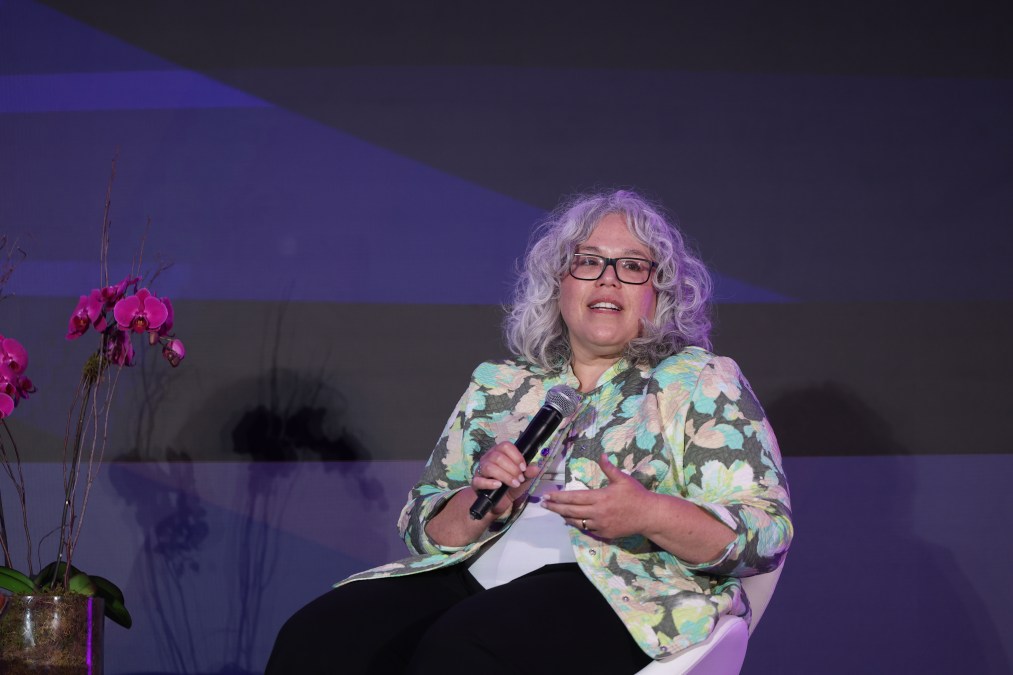
Amy Ritualo, State’s acting chief data and AI officer, said during a fireside chat at the Scoop News Group-produced AITalks event that the exploratory phase the department currently finds itself in is a time to be “really intentional” about how to fully implement agentic AI.
“Agentic AI is really the executive assistant that we’re looking at for advancing our workflows,” Ritualo said. “And I think the way that we’ve integrated AI into the department, that our employees are ready for that next step — with a lot of guardrails and input from the workforce about how we move forward in doing that.”
Ritualo’s status update on how State is approaching agentic AI echoes comments made by Kelly Fletcher, the agency’s chief information officer, at a different Scoop News Group event earlier this year. Fletcher said State was poised to “roll out agentic AI” with an eye on agents to “reduce administrative friction.”
Both State leaders pointed to the department’s general tech-forward approach, including a growing AI use case inventory and broad adoption of its StateChat chatbot, which Ritualo said has roughly 58,000 users and is “being used in … over 98% of our 270 missions and posts around the globe.”
Those AI successes have built trust within the workforce and set the department up “really strongly” for what comes next, Ritualo said. The key for her is figuring out where agentic AI will be most useful.
Areas with “complex work processes” where “more structured judgment” is required seem to make the most sense, she continued. Agentic AI could be especially helpful for how State manages permanent changes of station for the thousands of diplomats that have to move every two or three years “across the globe.”
“You either are moving as an individual [or] you’re moving as a family. You have children, you have children who have educational requirements. You have dogs, who are part of your family, or cats,” Ritualo said. “That is a very high-volume, multistep workflow that cuts across dozens of systems at the State Department, and that’s where we’re thinking about AI at that orchestration level.”
At the same time, the proper guardrails have to be in place before a process like that can be launched. Ritualo said the agency will “of course” align with Office of Management and Budget and National Institute of Standards and Technology requirements, as well as develop its own “mission-specific guardrails.”
“We want to make sure that employees understand that the actions that are taken, the outcomes that are taken, are owned by them,” Ritualo said. “And we want to be sure we have the mechanisms in place, the architecture, the infrastructure in place, to be able to monitor what decisions an agentic AI tool is making, and why it’s making those choices.”
One area where State will not allow agentic AI to make choices, according to Ritualo, is in foreign policy decisions. The technology could be used to stress-test policies, but the actual decision-making will be left to the policy workforce.
As the department inches closer to unleashing agentic AI and eventually exits the exploration phase, Ritualo said the early steps — and overarching goals — are becoming more clear.
“We’re going to really start with trying to reduce administrative burden for our employees and our workforce,” Ritualo said, “so that they can focus on their diplomatic work across the globe.”