US DOGE Service is alive and growing, organization official says
Months after confusion about its possible demise, the U.S. DOGE Service is reemerging and adding to its ranks.
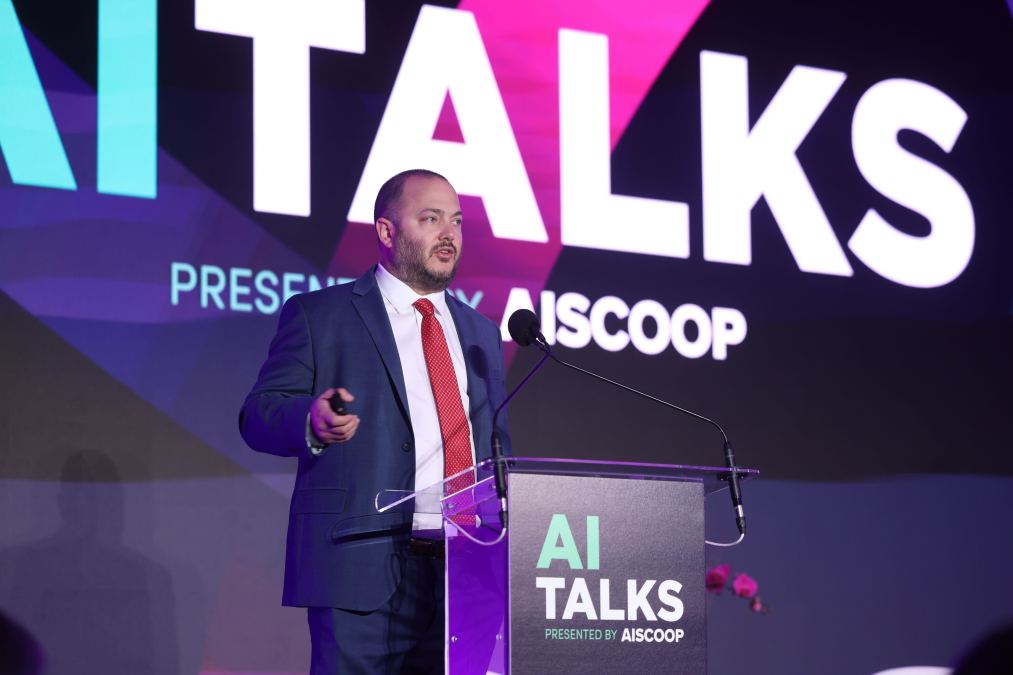
USDS’s Chase Ausley spoke at Tuesday’s AITalks in his capacity as both a director within the efficiency-minded White House organization and a senior advisor at the Centers for Medicare and Medicaid Services. His remarks focused on CMS’s ongoing push to improve how patient health records are shared via voluntary commitments from industry.
While acting administrator of DOGE Amy Gleason has been at CMS championing the health records project for some time, Ausley has only recently emerged as a public spokesperson for the project. Outside one other speaking engagement at a Healthcare Information and Management Systems Society event earlier this year on the same topic, Ausley’s leadership in the organization appears to be relatively under the radar.
In a conversation with FedScoop on the sidelines of AITalks, Ausley discussed his role and the current operations of the group, noting that it is focused on helping agencies build technology and is expanding.
“We’re actively growing,” Ausley said. “We have brought on a lot of staff within just the last few months to U.S. DOGE Service that are deployed across a lot of agencies.”
While he declined to get into specific organizational details, Ausley estimated the organization currently has about 90 employees and will be close to 100 within the next month or so after recent hires. The USDS also has three directors, including Ausley, who oversee the organization’s work at various agencies.
For his part, Ausley said he’s been a director with USDS since June 2025 and is detailed out to CMS.
“I’m focused on the work that we’re doing at CMS and a variety of other agencies, and just kind of helping make sure that we’re ultimately partnering with the agency in the right capacity and that we’re moving the work forward that we agreed upon with the agencies,” Ausley said.
When asked whether the DOGE’s previous involvement in reduction-in-force and contract slashing are still part of the mission, Ausley said the organization is “really just focused on driving technology strategies for agencies.”
Though efficiency is still a focus, he framed it as a factor in the context of building efficient, scalable and modern technology.
The details about the U.S. DOGE Service’s current operations come after some confusion late last year about whether or not the infamous Elon Musk-backed initiative had been disbanded entirely.
DOGE — or the Department of Government Efficiency — was set up by an executive order of President Donald Trump in two parts: The first was renaming the White House’s existing U.S. Digital Service to the U.S. DOGE Service, and the second was creating a temporary organization within that group that would expire July 4, 2026, but leave the USDS in place. Notably, neither is an actual government “department.”
After Reuters reported on comments suggesting that DOGE did not exist anymore, administration officials pushed back. In a social media post, the USDS said “nothing” had changed with the group and both the temporary organization and U.S. DOGE Service were still operational. Federal CIO Gregory Barbaccia later clarified that while DOGE was no longer a centralized entity, its workers had been embedded within agencies, reporting to the leaders and chief information officers within those organizations.
Ausley’s comments indicate that in the intervening months, the organization has quietly evolved.
The organization’s goal, he said, is to “partner with agencies to help them modernize their tech and kind of whatever their strategic initiatives are around improving technology to ultimately provide better services to the American public.”
Expansion of USDS comes as the administration is simultaneously hiring tech talent for two-year stints via its Tech Force. When asked about how the organization’s hiring contrasts with that Office of Personnel Management-based hiring initiative, Ausley said the difference comes down to experience of the candidate.
While Tech Force is focused on bringing in people who are early in their career, he said the U.S. DOGE Service is “typically bringing on more mid-career folks” with management experience to help agencies with strategy, roadmap, and execution of projects. Per Ausley, USDS is also working with OPM on the Tech Force push.
“U.S. DOGE Service is helping actually interview Tech Force candidates that are coming through, and kind of helping them to kind of scale and deploy resources out to agencies,” Ausley said. “So we definitely are helping support OPM in that initiative.”
In terms of the USDS’s presence and mission at CMS, Ausley said he and Gleason are leveraging their backgrounds in health tech “to help drive CMS strategic priorities forward.”
Prior to his work in the administration, Ausley was the vice president of product for health tech companies CareBridge and Get Well, per his LinkedIn. Meanwhile, Gleason, who has worked at USDS twice, was chief product officer at health care investment firm Russell Street Ventures, which had CareBridge as well as a company called Main Street Health under its portfolio. She also co-founded the health care company CareSync.
The U.S. DOGE Service is “ultimately just trying to help support Dr. Oz and the administration’s priorities and moving them forward,” Ausley said.