White House pressing ICE for updates on wearable identity verification technology
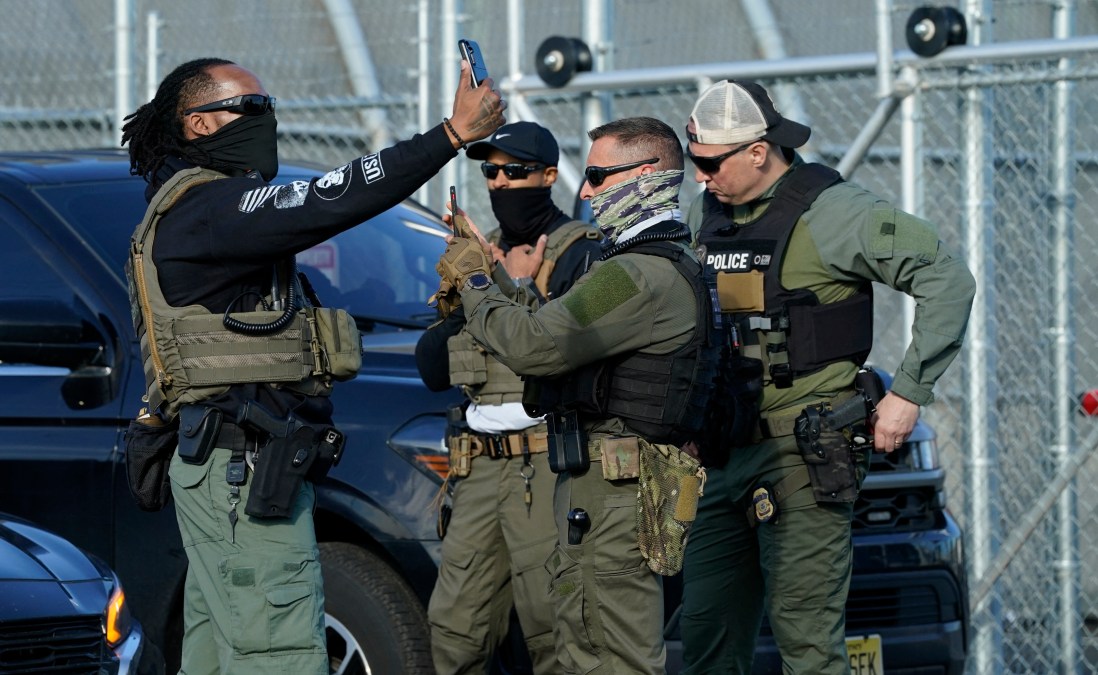
The White House is keeping an eye on Immigration and Customs Enforcement’s progress on a plan to deploy wearable identification technology for its agents, according to ICE Assistant Director Matthew Elliston.
The Department of Homeland Security’s fiscal 2027 budget proposal, set by the White House, allocates $7.5 million for the agency’s Science and Technology unit to develop critical technologies that strengthen the component’s ability to execute its mission. If passed, a portion of those funds would go to delivering operational prototypes of smart glasses that will “equip agents with real-time access to information and biometric identification capabilities in the field,” per the budget justification.
“We have been toying with the idea of wearable facial matching” technology, Elliston said during AFCEA Bethesda’s LEAPS Summit Thursday in Washington, D.C. “That got leaked to the press about five minutes after I came up with the idea.”
Even in early stages, the project has been met with apprehension from lawmakers and privacy advocates. A group of senators sent a letter Thursday to DHS Secretary Markwayne Mullin, calling for the agency to “abandon its dangerous proposal.”
ICE agents currently rely on mobile biometric technology, such as the AI-powered Mobile Fortify, to identify individuals. The smart glasses project is in the beginning stages, and the agency is still looking for a vendor to partner on it.
“The White House doesn’t have an appetite for slow,” Elliston said. “I’m getting hit for like a weekly update from the White House.”
The fiscal 2027 budget outlines a one-year timeline for the smart glasses project, beginning in Q1 of 2027 and wrapping by the fourth quarter of the same year.
“The Science and Technology Directorate (S&T) is constantly assessing the needs of ICE and other DHS components to assist law enforcement officers in the field,” a DHS spokesperson told FedScoop via email earlier this week. “These discussions involve privacy offices, chief information officers, and attorneys to ensure that any technology that DHS utilizes is within the full scope of the law.”
The spokesperson did not respond directly to questions about whether a Privacy Impact Assessment for the project has taken place.
“At this time, no funds have been committed to any form of ‘smart glasses,’” the spokesperson said.
This story was updated May 15, 2026, with a link to a letter sent by Senate Democrats to DHS Secretary Mullin.