From space photography to mission readiness, NASA turns to AI to alleviate data influx
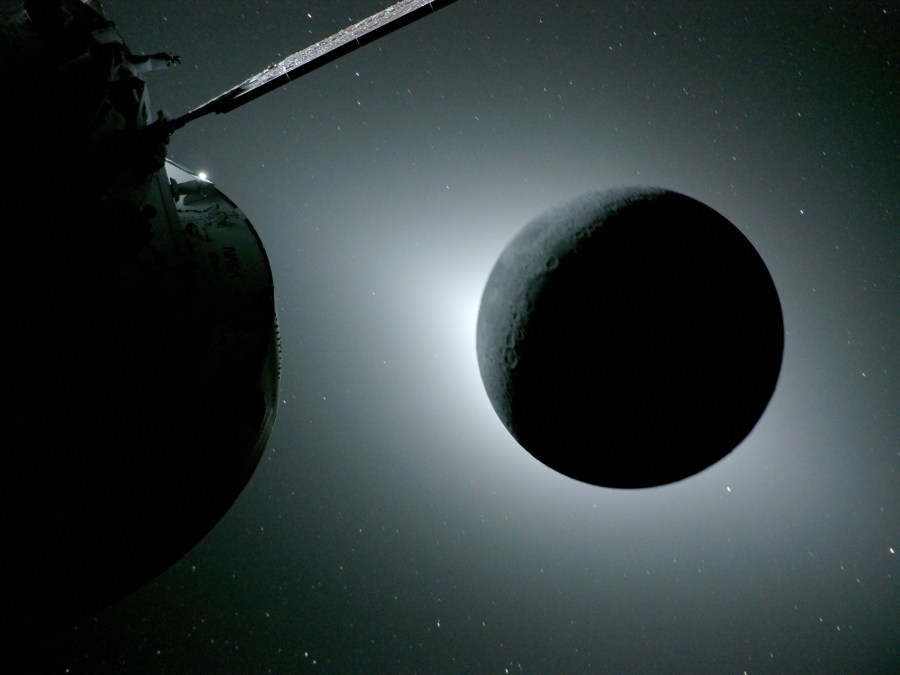
As the amount of data generated by space exploration increases exponentially, NASA is looking to artificial intelligence tools to more rapidly synthesize information and provide mission support.
During a keynote address last week, Troy LeBlanc, chief information officer of the Johnson Space Center in Houston, illustrated how technology advancements have multiplied the agency’s data flow by focusing on some of NASA’s most recognizable outputs: photos.
From pictures of the first moon landing to training photos to the latest captures of the four Artemis II astronauts landing safely back on earth, LeBlanc’s team at NASA stewards millions of images-of-record documenting humanity’s journey into space. As technology has advanced, so too have the number of photos and data associated with each image.
The data collected in a modern cellphone photo alone — the location, timestamp, copies — is greater than the amount of data generated during the landing phase of the 1969 Apollo 11 mission that first put humans on the moon, LeBlanc said at ACT-IAC’s Emerging Technology & Innovation Conference in Arlington, Va.
Today, a typical six-month expedition to the International Space Station produces about 1 million photos, a number that has rapidly increased over the years due to a combination of technological advancements in camera technology and interest from crew members in taking photos, he said.
That volume of information makes it easy for backlogs to build up with details that could be crucial for making decisions about human space flight, LeBlanc said. “That’s the challenge that we face today, and it’s a problem that we’re going to solve with emerging technology,” he said.
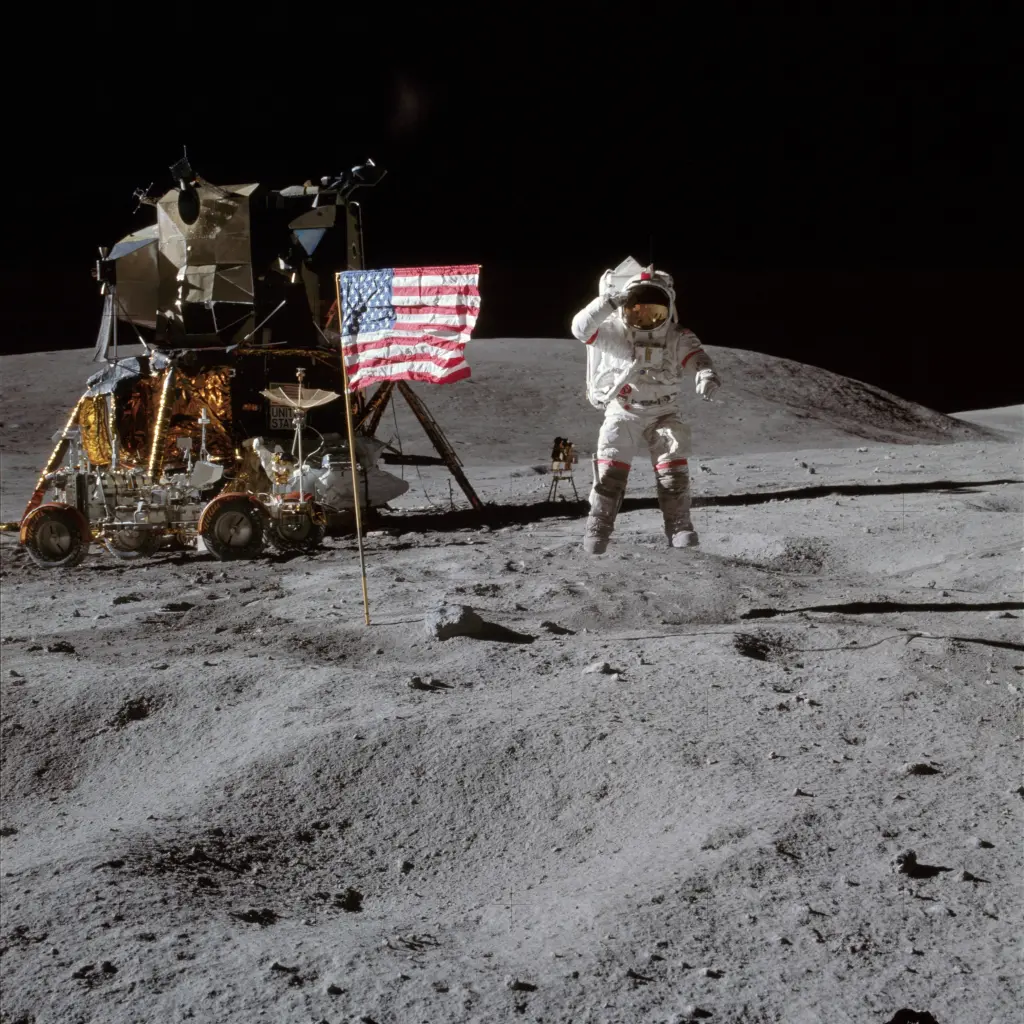
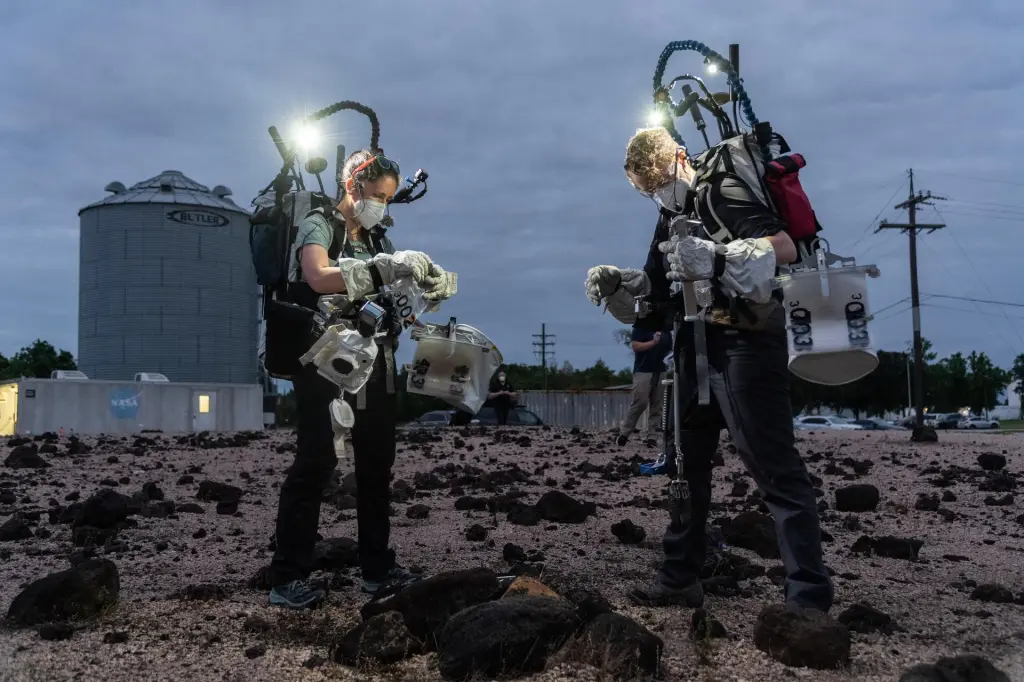
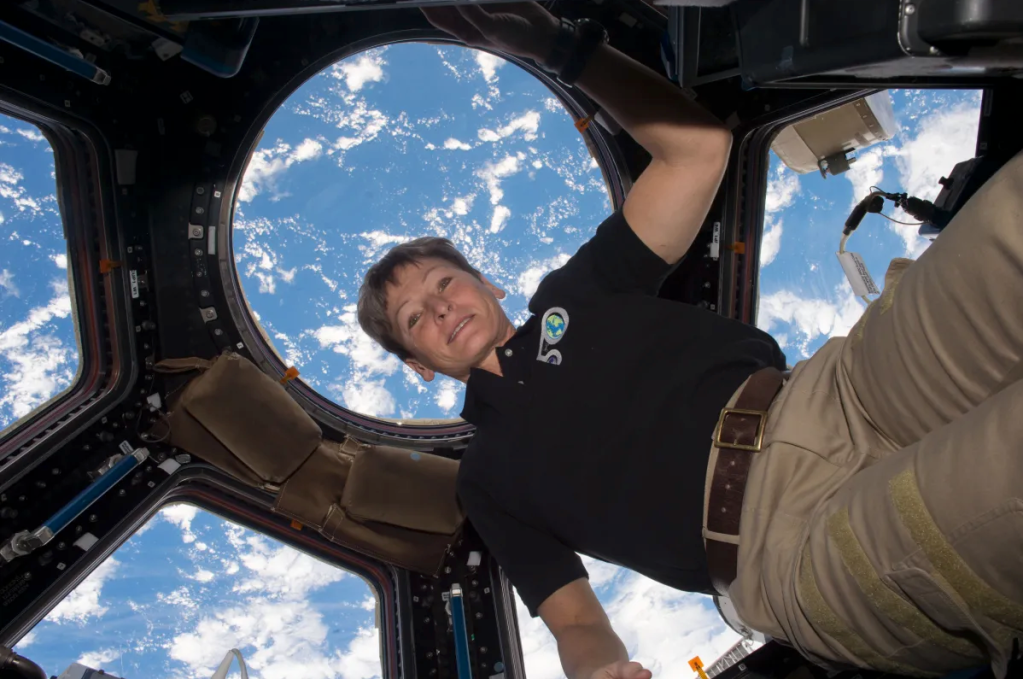
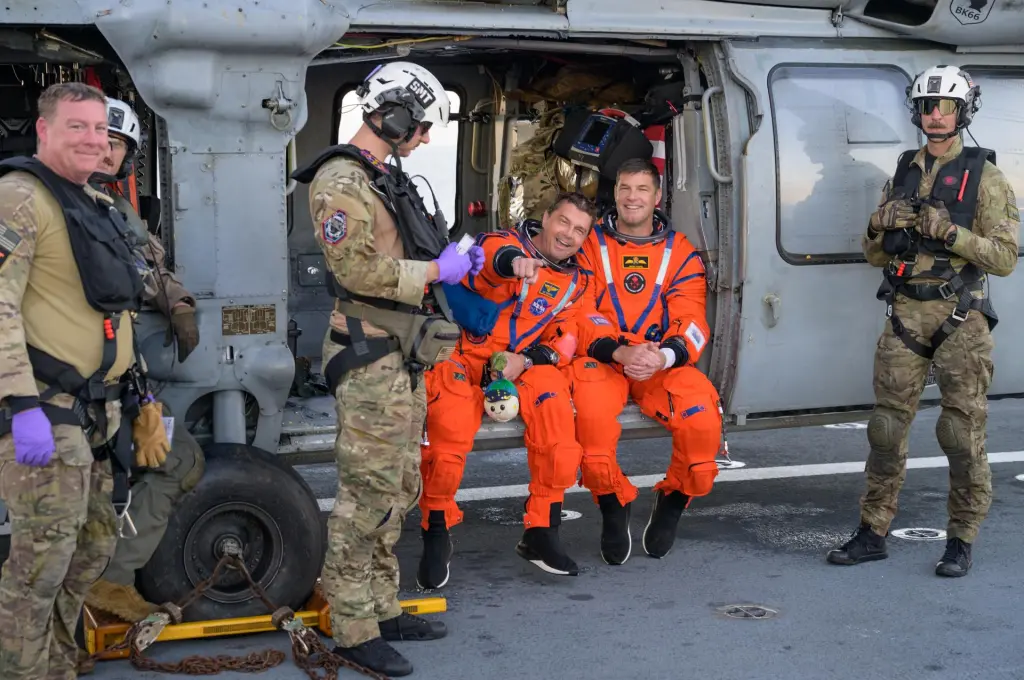
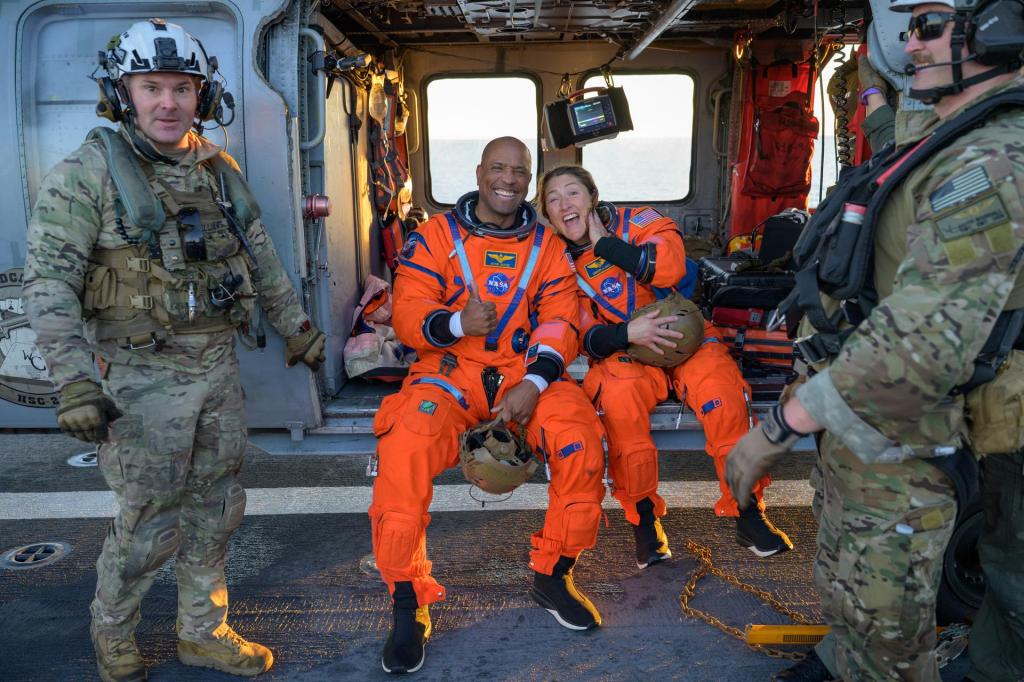
NASA is currently in the pilot phase of a project exploring the use of AI to improve image cataloging, tagging and auto-populating metadata for review to help speed up the processing time for that growing stream of images. The primary partner on that pilot is Google, LeBlanc confirmed to FedScoop on the sidelines of the event, and the agency is using Gemini for early prototyping.
The pilot project is one of many currently underway at the space agency. According to NASA’s most recent AI use case inventory, which was updated May 14, the agency has over 400 uses of the technology — the overwhelming majority of which are in a pre-deployment or pilot phase. Per the 2025 filings for non-Department of Defense agencies, NASA’s overall use case count is second only to the Department of Health and Human Services.
In addition to cataloging, LeBlanc said NASA deployed an AI agent known as “Holy Grail” to help sift through data to determine mission readiness of its recent Artemis II mission and is exploring the technology to assist with decision-making inside mission control. Additionally, Lindsay Hays, another NASA official who spoke at ACT-IAC, said the agency is looking at the technology to help determine what data to prioritize sending back on uncrewed missions.
LeBlanc acknowledged that there is some risk with respect to AI, in that it has potential to mislead but said the potential benefits are worth it.
“We’re introducing something new. We can’t know every variable until we’ve tested it, measured it, and validated the outcomes,” LeBlanc said. “However, I do believe that AI as a mission capability, and not just a productivity tool, outweighs the risk of attempting to use it.”
A ‘Holy Grail’
While many are in early stages, some AI tools are being actively used by the agency.
The Holy Grail agentic AI tool is used to help prepare risk-based recommendations of whether a mission is ready to fly safely and was used for the Artemis II mission, LeBlanc said. That tool, which was developed internally by NASA, looks across 10 different data domains to help answer the critical go or no-go question.
LeBlanc said the tool was developed by his team for the agency’s safety and mission assurance office for the Moon to Mars Program, and was built in November 2025, roughly four-to-five months before the Artemis II mission. Holy Grail was used to find relationships across the domains and different data formats and delivered a summary on-demand, he said.
“It doesn’t actually answer a go or no-go question, but it gives all that data. It doesn’t replace the judgment of those flight controllers; it changes what’s possible for them,” LeBlanc said.
Holy Grail is built on a platform called Luna, a secure cloud environment that allows NASA to work with providers without bringing them directly into the agency’s environment. Amid the popularity boom of AI, the agency has added “tool after tool on top of” Luna, LeBlanc told FedScoop.
Notably, the agency’s most recently updated use case inventory does not include entries with the terms “Holy Grail” or “Luna.”
When asked about a vendor for that tool after the keynote, LeBlanc said the agency uses Google’s AI capabilities as its underlying technology, but the Holy Grail system is the product of internal development.
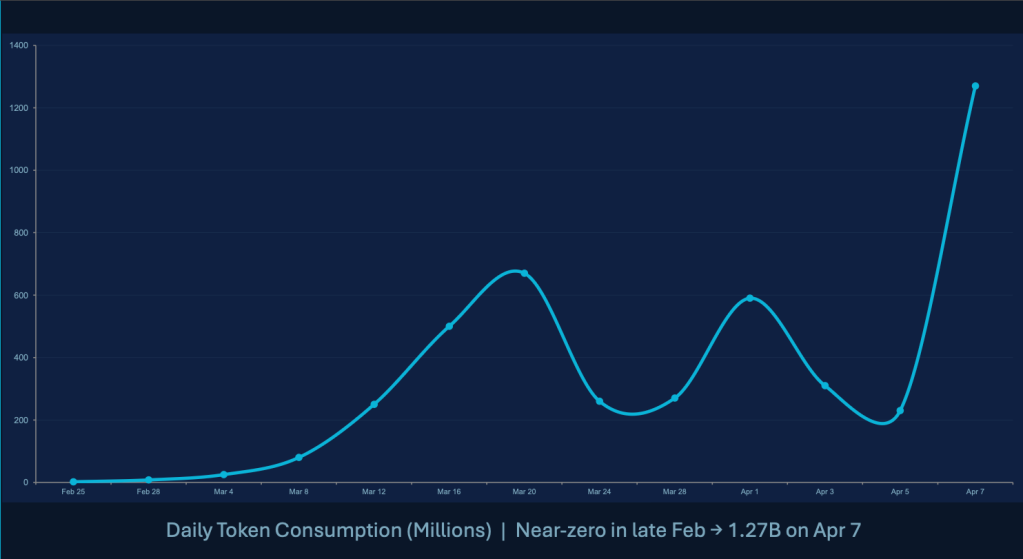
Use of Holy Grail, as well as other agentic tools, has caused the agency’s use of AI tokens through the Luna platform to skyrocket, according to LeBlanc. Tokens are the basic unit for text data processed by large language models. Approximately 19 billion tokens were used in six weeks, with a peak of 1.27 billion tokens in the same day, he said, citing data as of April 7.
Cataloging assistant
Other uses, such as the image-cataloging assistant, are still in the works.
An archive of NASA’s photos currently overseen by LeBlanc and his team includes about 10.3 million still photos from the space station program. That doesn’t even include videos, live downlink from the space station, and physical film the agency maintains from its early missions — over 12 million feet worth or roughly the distance from New York to Los Angeles.
Historically, the process of cataloging images has been completed by a human who tags each photo with information, like the name of the astronaut in the photo and whether it was in a lab or the space station, LeBlanc told FedScoop after his keynote.
Using AI allows the agency to add additional layers of information to images or video — such as what the astronaut might be holding or what the timeline was for that day — and summarize it all in a paragraph for a human to review.
That AI tool might also be able to flag moments from downlink streams for restrictions, such as proprietary music playing in the background, things that would intrude on the privacy of the astronauts, or branded products floating past the screen. (A very viral jar of Nutella floated past the camera during the Artemis II mission, for example).
LeBlanc estimated the use of AI would take a 15- to 20-minute process down to seconds. “What we can do is process more and more imagery more quickly as we apply AI to the system,” he told FedScoop.
But while the technology has promise, image-generation capabilities simultaneously threaten the agency’s public trust, according to LeBlanc. The agency is attempting to address that issue with authenticity mechanisms.
Just a few weeks ago, a realistic looking AI-generated image depicted major damage to the outside of the splashdown capsule that delivered the Artemis II astronauts back to Earth when the actual vessel remained intact.
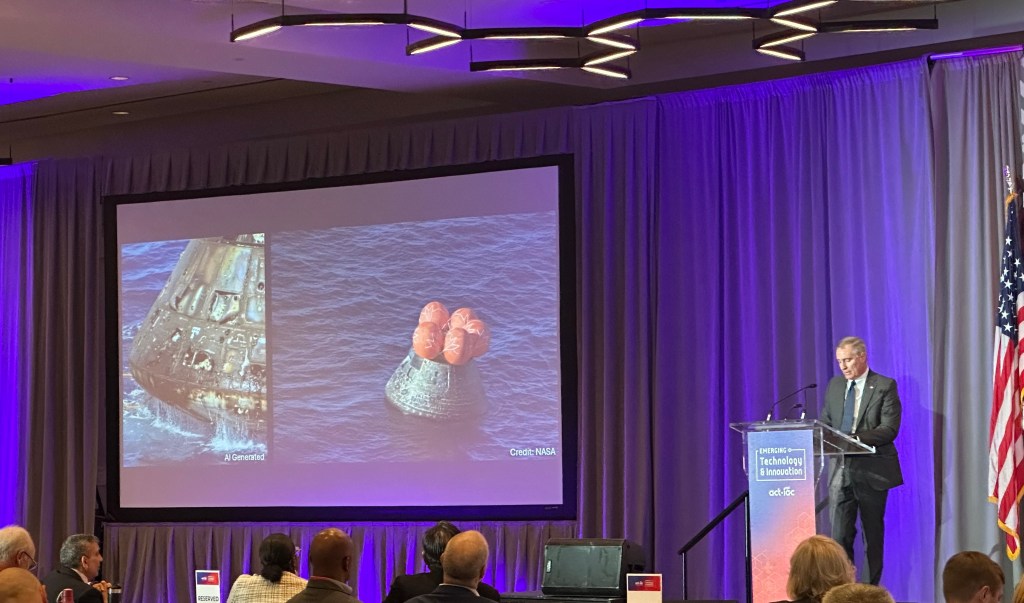
To address that issue, LeBlanc said NASA is establishing a policy for use of authentic, human-generated media, including standards that would help trace the origin of original NASA images back to the agency.
Specifically, he said the agency is planning to implement standards from the Coalition for Content Provenance and Authenticity (C2PA) and working with camera manufacturers to ensure that credentials are part of the metadata as soon as the photographer hits the shutter button.
The “operational enhancements” that NASA envisions for AI, such as cataloging and timestamping, will come after it’s met the requirements to prove image provenance, LeBlanc said.
Sifting through data
Helping officials comb through large volumes of data appears to be a theme with NASA’s use cases.
On a panel at the same ACT-IAC event, Hays, a senior scientist for Mars exploration at NASA, said the agency is working on an AI process to help prioritize what information will get sent back from a future mission to Venus known as the Deep Atmosphere Venus Investigation of Noble gases, Chemistry, and Imaging — or DAVINCI.
That mission aims to send an uncrewed probe into the planet’s hot, dense atmosphere that will likely only survive for roughly 90 minutes to two hours, Hays said. “All of the data that it collects needs to be sent back as quickly as possible, right? Because the probe itself probably won’t survive hitting the surface,” she said.
Communicating with spacecraft about data is “one of the major issues” for missions that go beyond Earth’s orbit, Hays told FedScoop. Using AI or automation in processes that help decide what data is relevant, exciting, or useful has potential to allow the agency “to do more science, which is fundamentally always my expectation and hope,” she said.
Meanwhile, LeBlanc said the agency is working with Microsoft on a prototype of an AI agent that would assist the Mission Control Center with its communications with astronauts.
“You can imagine a scenario where a flight controller has four people in a back room, possibly all working on subsystems within the major system they’re monitoring, and one of those flight controllers is now an AI agent,” LeBlanc said during his keynote.
In that scenario, a flight controller would communicate with the AI tool through their headset with natural language. Something the agency would like to test for first is whether it increases flight controller responsiveness to off-nominal telemetry — in other words, something that differs from the norm like high temperature.
“It’s not about replacing the flight controller,” LeBlanc said. “It’s really about giving them the tools to help manage the grueling amount of data that they have to quickly synthesize and act upon for human space flight operations.”