Innovation on ice: How DOGE derailed an SBA tech program
When the natural gas and coal industries around Farmington, N.M., consolidated, contracted and left the rural region in “a death spiral” at the turn of the decade, a group of energy technology experts looked to Washington for help.
With Hyperion Technologies, startups in New Mexico, Arizona, Colorado and Utah would band together and — with some federal backing — establish the Four Corners region as the country’s most innovative energy-transition tech hub.
“It was the broader view of, what can we do with this area that’s experienced some economic fallout?” said Travis Kellerman, a Hyperion advisor and senior policy staffer in New Mexico’s Energy, Minerals and Natural Resources Department.
The Small Business Administration was receptive to that pitch, and in October 2024 awarded Hyperion with a Regional Innovation Cluster designation. Securing RIC status locked in Hyperion-managed resources for Four Corners energy small businesses, ranging from funding and procurement opportunities to technology connections and training support.
Six months later, Elon Musk’s so-called Department of Government Efficiency canceled Hyperion’s award as well as the contracts for 16 other RICs, leaving tech startups across the country searching for answers as federal dollars they were counting on vanished.
“This isn’t some, like, ‘woke’ grant,” said one RIC operator, who was granted anonymity to protect against retaliation from the Trump administration on future applications. “We’re just here to serve small businesses and tech companies. … So it was pretty surprising to just get a termination notice that said, ‘as of today, you’re done.’”
The ensuing months were even more confusing for those who oversaw RICs — programs that spanned red and blue states and were supporting innovative work in artificial intelligence, cybersecurity, biotechnology, advanced engineering and more.
Less than four months after those 17 RIC contracts were canceled, the SBA announced new award opportunities for up to 20 new RICs aimed at “rebuilding America’s manufacturing dominance.” An SBA spokesperson said in an email that it is “moving forward” with those August 2025 solicitations, and that the canceled contracts followed a “broader” review of agency programs and investments.
“The terminated awards lacked, among other things, clear performance metrics and accountability mechanisms and did not show results that would justify continued federal investment,” the spokesperson said.
The whipsaw continued for Regional Innovation Clusters when the House passed an appropriations bill in January pledging $9 million for the SBA program and Massachusetts Democrat Ed Markey, ranking member of the Senate Small Business Committee, led an appropriations letter requesting at least $10 million for RICs. Then in April, the White House released a proposed fiscal 2027 budget that zeroed out the initiative altogether.
For startups in the technology space, the promise of federal support can mean the difference between scaling up quickly or washing out immediately.
“You tell [startups] you’re going to be doing this programming, [and] you get the rug pulled out from under you,” said Jason Rittenberg, who previously worked with the SBA and several RICs during his time as vice president of the Ohio-based science and tech nonprofit SSTI.
When companies “aren’t getting the assistance” they expect, “you can end up losing … an entire business cycle,” he added. “Maybe that’s going to have a significant long-term consequence for your region.”
A year after DOGE flung RICs across the country into chaos, an outcome of that kind remains unfathomable to those who championed the program — and are increasingly concerned about what it means for American innovation.
Helping homegrown hubs
DOGE’s cancellations kicked off a mad dash among RIC boosters to help startups stay afloat without those previously promised resources, while at the same time working to secure new government funding. For a program that has enjoyed bipartisan support for more than a decade, the decision was nothing short of stunning.
“It didn’t matter what your politics were; everybody agreed these were good things,” said Tom Snyder, who led an Internet of Things-focused RIC called RIoT in North Carolina.
Rep. Nydia Velázquez, ranking member of the House Small Business Committee, said in an email that “the clusters have had support from both parties over the years, and for good reason.”
“Startups so often don’t have the connections or capital to scale, and the RIC program helps bridge that gap,” the New York Democrat said. “It creates jobs and strengthens supply chains. It bolsters American innovation. If we are serious about making the U.S. the most innovative country in the world, it makes no sense to walk away from this program.”
The RIC initiative was launched by the SBA in September 2010 as a way to foster innovation in geographic regions where related businesses, suppliers and institutions could connect and flourish. The clusters represented a true diversity of regions; DOGE terminations included RICs located in Ohio, Washington, Indiana, Montana, Maryland and a dozen or so other states.
Four RICs — two focused on critical minerals, and two concentrated on supply chains and the defense industrial base — escaped DOGE’s wrath. The SBA spokesperson said those areas “bolster key national priorities and economic resilience.”
Organizations tapped to lead RICs play the role of connector, facilitating networking hubs for small businesses and providing industry-specific resources for funding, procurement and supply-chain opportunities.
They also direct businesses — and their technologies — toward real industry needs, with the ultimate goal of boosting the number of innovative U.S. companies and entrepreneurs.
The RIC operator who asked not to be named had a history of consulting with federal partners on startups. Working closely with agencies was “really fun,” but the work ultimately felt disconnected from their community.
“So that’s what drew me to the Regional Innovation Cluster program,” they said. “It would allow me to really apply these skills that I have locally to help build companies in the state and generate economic impact and give opportunities for our students and entrepreneurs here.”
Because RICs don’t deploy capital themselves, they’re largely focused on programmatic offerings that are specifically tailored to technology — as opposed to the broader, Main Street bent of SBA’s Small Business Development Centers.
For RIoT, programming included the running of startup accelerators. Snyder said his team worked with the founders of roughly 25 to 30 startups per year, offering mentorship and introductions that often proved invaluable to small tech businesses.
Hadas Webb has played a similar role with the Arlington, Va.-based FedTech services firm, a business that partners with federal agencies, national laboratories, state and local governments, research institutions and more to nurture early-stage innovators and “accelerate their path to market.”
FedTech, the company behind the Hyperion Technologies RIC, had been working with the Department of Energy’s Sandia National Labs and knew what kind of energy work the federal government was seeking. Webb aimed to “create more of a unified regional innovation strategy” that aligned with those federal priorities.

“There was already some initial momentum,” she said. “There were a number of organizations across the states that, in some cases, were working kind of independently, and we wanted to provide the connections [and] bridge the ecosystem for those early-stage startup founders to be able to continue in their startup trajectory.”
That SBA-backed trajectory could have included work on go-to-market strategies, building pilot projects and linking up with potential customers and private investment networks — all in an environment that appeared especially ripe for small business success in the energy sector.
Innovation in action
Though clean energy has long been linked with Democratic politics, Hyperion Technologies was partially focused on what was once considered a Republican priority: carbon capture and storage.
Some corners of the GOP have in recent years moved away from their support for CCS, but the oil and gas industries still appear supportive of the technology’s development. Kellerman, the New Mexico-based energy advisor, believed that Hyperion could play a key role in expediting that development.
For starters, the state’s legislature had already moved forward on some CCS bills, and conditions were right in the Farmington area for small businesses to remediate abandoned oil and gas wells and invest in new technologies to capture and sell lingering methane.
Oil and gas wells could also be used for geothermal power projects, substituting the firm base load power that coal plants once produced for a clean-energy source, according to Kellerman, who remains an advisor to the Department of Energy’s Boost Entrepreneurship Program.

Kellerman also had ideas for launching battery storage projects through the RIC. Supporting businesses that could make those ideas a reality simply required “regional coordination” that the SBA money supported, he said.
“Instead of having stranded assets, you repurpose them,” Kellerman continued. “You start to change the model and the economics of that industry, too. And then you incentivize cleaning it up.”
While some of the Hyperion-backed startups were in a more nascent stage, RIoT was a fully formed machine by the time DOGE dumped it. After essentially losing a battle to Silicon Valley in the 1960s to be a hub for semiconductor production, North Carolina’s Research Triangle began having “amazing success in wireless and connectivity,” said Snyder, whose organization also runs a wireless engineering lab in Wake Forest.
That backstory was key to the founding of RIoT in 2014, when Snyder said IoT was “one of the big buzz words, kind of like AI is today.”
The Internet of Things, referring to networks of connected physical devices with embedded sensors and software, allowed for the “real-time automation of data” that put information “at your fingertips,” he added. And RIoT was there to help startups in North Carolina and parts of Virginia take advantage of the proliferation of those technologies.
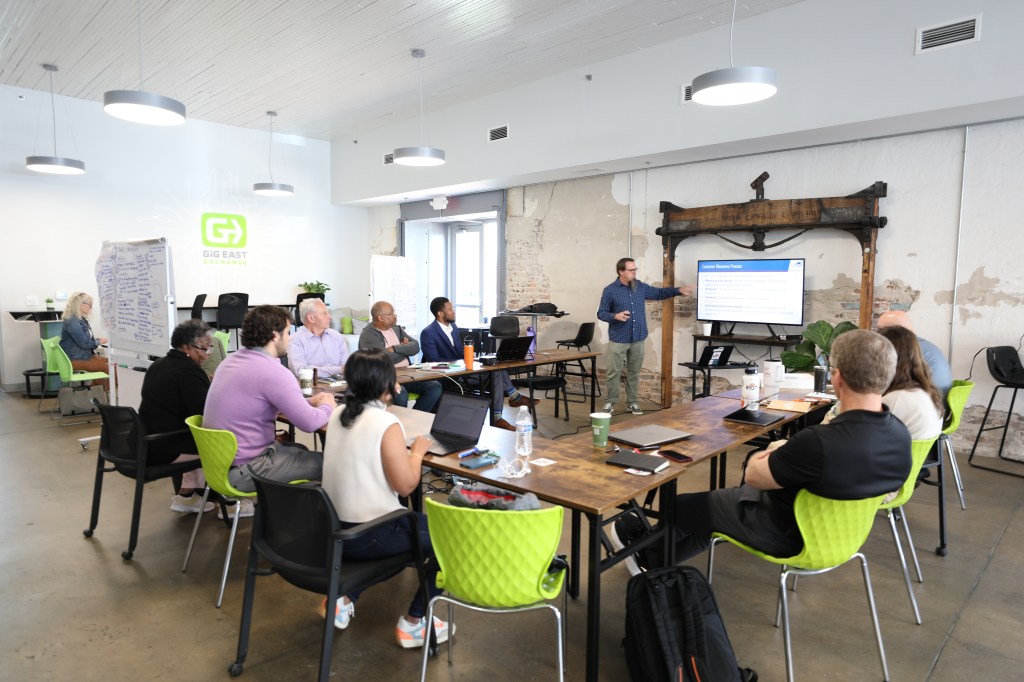
Over more than a decade, RIoT supported hundreds of tech startups in the region. One company, called Intake Health, developed sensors for toilets to do real-time monitoring of urine to quickly identify medical problems revealed in it. Another startup backed by the RIoT RIC was a pet cremation company called Companah that created a process to preserve an animal’s microchip during incineration.
The RIoT RIC was especially excited about working with different IoT applications in agriculture, Snyder said, a supposed priority for the Trump administration and Republicans more broadly.
Rittenberg, the former SSTI executive and startup advisor, noted that the AgTech Innovation Alliance in California’s Central Valley had an especially effective model that brought in farmers as board members to advise tech startups, help with demonstrations and then get equity for their assistance. AgTech was one of the 17 RICs whose contract was canceled by DOGE last year.
Webb, the FedTech director, said Hyperion was also zeroing in on current administration priorities, particularly with nuclear technologies, storage and other advanced energy tech aligned with the DOE, the agency’s Genesis Mission and the White House’s AI Action Plan.
But all the planning, engagement, technical promise and harmony with federal priorities didn’t spare those and other RICs from finding the same fate as so many other congressionally funded programs in the early days of the second Trump administration.
“When you first saw DOGE come out, I’m like, ‘yeah, get rid of the dead people who are collecting Social Security, get rid of money laundering through USAID.’ We all know that’s happening,” said the RIC operator who was granted anonymity to speak freely.
“But to just terminate … your highest ROI program that is serving the tech priority areas that you call out, it’s just kind of odd.”
A ‘death knell’ for startups
Dealing with the shock of it all and figuring out what to do next took on different forms for different RIC leaders. The unnamed RIC operator immediately reached out to their congressional delegation, which they said was “always very supportive” of the initiative “because it’s so essential to” the state’s economy.
One of the state’s senators “did try to get in front of SBA to get more information” since it was obvious that the RIC wasn’t an example of “wasteful spending.” But that line of inquiry didn’t seem to go anywhere — probably because Congress was left in the dark on DOGE’s decision.
A source with the Senate Small Business Committee Democrats said lawmakers found out about the RIC cancellations after the contracts were terminated, as “confused and concerned grantees from across the country” reached out to them for answers. Rep. Velázquez also heard about DOGE’s move “after it was already done.”
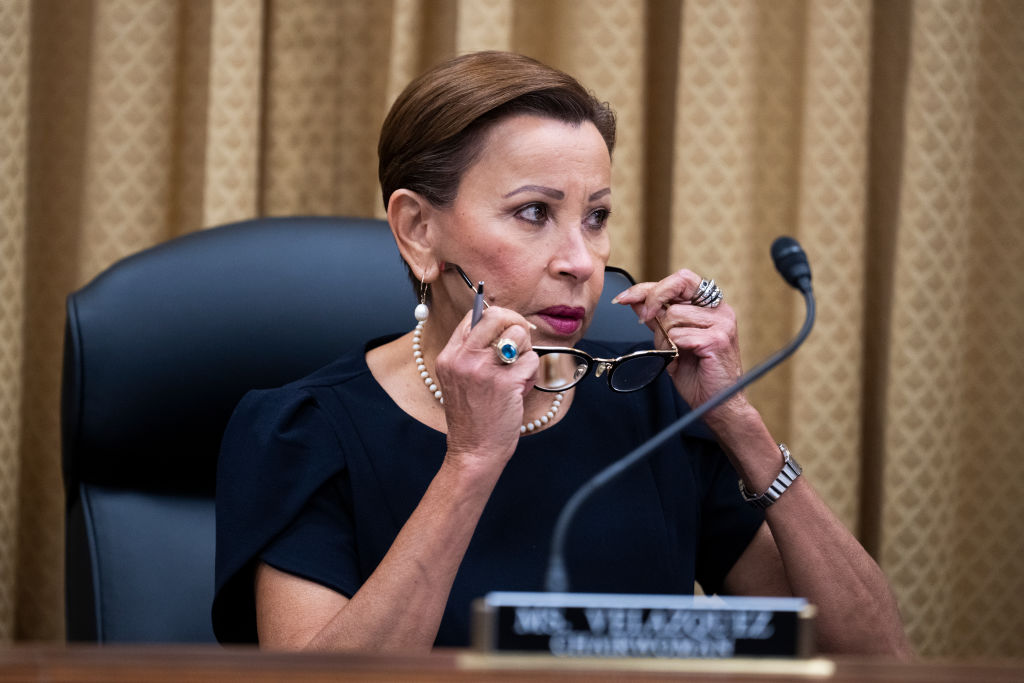
“We were not consulted,” she said. “There was no briefing, no advance notice, no opportunity to ask basic questions about what these cancellations would mean for the small businesses and entrepreneurs who rely on these clusters.”
Press contacts for Republican leadership on the Senate and House Small Business Committees did not respond to FedScoop’s requests for comment.
As for the RIC operator who was granted anonymity, there was nothing more to be done, post-termination, beyond working on new grant applications and informing the startups they could no longer help.
“They were just surprised and shocked,” the source said. “We work on [technology] things that you would think would be really important. So … it just took everybody aback. Like, if that one’s not safe, what is safe?”
That RIC was further along than Hyperion, which was still very much in the outreach stage of the work. From his home in Albuquerque, Kellerman was able to round up “quite a few applications” from New Mexico startups, plus a good chunk from energy entrepreneurs in Arizona. Colorado and Utah took a bit more effort, but the RIC’s first cohort was within reach when the cancellation notice came.
Kellerman’s pitch through Hyperion had been simple: He co-founded several companies over the course of a decade, half of which were successful and half of which weren’t. He’d use those lessons learned, plus his state government ties and SBA funding to help connect Four Corners energy startups with non-dilutive funding, then guide them toward private investment and maybe even venture capital.
“I didn’t see any reason why this wasn’t going to be the case here,” said Kellerman, who also served for a year-and-a-half as New Mexico Gov. Michelle Lujan Grisham’s senior climate advisor. “And in fact, because there was a broader scope of innovation, and there were other states at play, and it seemed like a good spectrum of talent, it was going to be successful.”

When DOGE shut it all down, Kellerman and his colleagues sprung to action and tried to contact as many of the small business sign-ups as possible. It was the first time those four states were “talking in that way,” he said, and the Hyperion boosters didn’t want to give up on that progress.
“When you’re an early-stage startup, and you only have so much time … it really matters what you choose to invest in yourself,” Kellerman said. “We had a lot of people really excited and starting to shift their timelines to include what would be [a] commitment to this program.
“And I’m not going to downplay” it, he continued. Terminating the Hyperion RIC “probably could have been a death knell for some of them.”
Murky future for RICs
For RIoT, the funding it got from the SBA represented about 20% of its annual operating budget, so DOGE’s decision didn’t deal a “lethal” blow to Snyder’s organization. Having a RIC award simply complemented municipal contracts and other sources of revenue it had secured over its 10-plus-year run.
And because RIoT was such an established nonprofit with a lengthy record of startup success in North Carolina, it was better equipped than most RICs to survive — and pivot. In February, Snyder transitioned to a new joint venture in which the RIoT Accelerator Program was absorbed into a private foundation called NC IDEA.
At the same time, the Wireless Research Center of North Carolina officially launched RIoT Labs to focus on dual-use and defensive technology acceleration and entrepreneurial support. Linking up with NC IDEA was “a conclusion” that Snyder may “have come to anyway.” But the uncertainty brought on by DOGE made it a no-brainer.
Still, RIoT’s happy ending shouldn’t be mistaken as absolution for DOGE’s decision, Snyder warned. The RIC cancellations — and the cloudy forecast for the SBA program going forward — could be a “tip of the spear thing” when it comes to federal investment in nonprofits and the innovative work they support, he said.
“At the end of the day, technology drives the economy and it drives society and the way we live our lives,” Snyder said. “As a nation, [if we’re] not investing in being leaders in this space, it’s just really terrible long-term policy.”
The Trump administration has supported other avenues that appear to be in the same ballpark as the Regional Innovation Cluster program. The National Science Foundation, for example, announced the launch last month of the NSF Tech Accelerators initiative to transform basic technology research into scalable commercial products. Congress passed a five-year reauthorization earlier this year for the SBA’s Small Business Innovation Research and Small Business Technology Transfer programs, which offer non-dilutive funding to technologists.
But the geographic component of the RIC program makes it unique, and the bait-and-switch with DOGE has left many entrepreneurs wary of putting in the effort to pursue more federal funding.
Rittenberg said he’s aware of discussions from prospective applicants questioning whether it’s worth it to apply to what’s left of the RIC program or “almost any federal program in this environment” due to the unreliability of the administration.
The tech founders “don’t necessarily know or [aren’t] quite as tuned to everything that’s going on in the policy space,” he said. “They just see that you didn’t follow through on a promise.”
For an administration that has argued for running government like a business, the lack of certainty that technology startups now face has undercut a long history of reliable public-sector investment.
The RIC operator who was granted anonymity said that “disconnect” is likely to stymie innovative work — including on some of the administration’s tech priorities — and stifle potential economic growth in regions across the country.
“If I were to treat partners like this in the private sector, I would never have any business anywhere,” they said. The administration “can just kind of do whatever they want. And I just have to live in their world.”