DHS taps dataset of baggage images to improve TSA scans
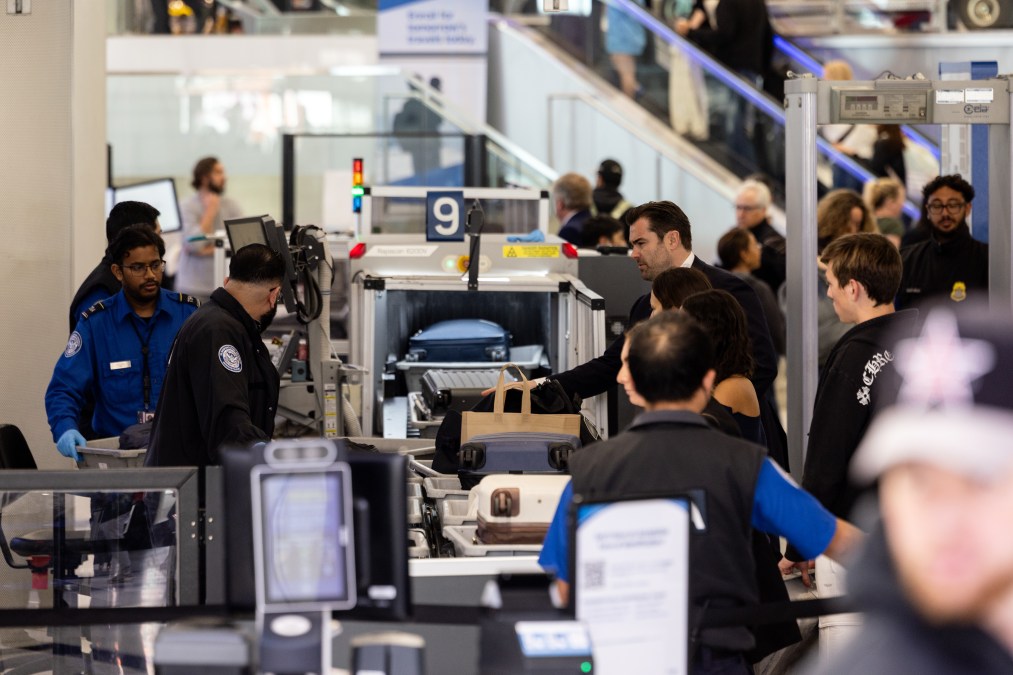
The Department of Homeland Security is aiming to improve the Transportation Security Administration’s baggage check technology with synthetic data that could lead to better algorithms, the agency announced Thursday.
DHS Science & Technology Directorate contracted with Cignal through the Silicon Valley Innovation Program to develop the dataset, which includes 250 X-ray images that mirror scans produced by TSA’s detection systems, according to a spokesperson.
“Synthetic data capabilities make it possible to rapidly generate data at scale to support algorithm development, testing, and evaluation while engaging a broader community and reducing development costs,” the spokesperson told FedScoop via email.
The goal is to reduce false alarms and increase accuracy, leading to improved traveler experience and shorter wait times at checkpoints. Original Equipment Manufacturers and third-party AI developers can access the dataset by request on Cignal’s website.
“The AI systems protecting our checkpoints require rigorous, dynamic environments,” Jaclyn Fiterman, CEO of Cignal, said in a statement. “We are thrilled to support DHS S&T in releasing this dataset. By providing developers with access to high-quality synthetic scenes, we are ensuring that highly adaptive threat detection models can be deployed faster, securely, and with greater accuracy.”
In addition to its latest project, DHS has used the Silicon Valley Innovation Program to help improve deep-learning algorithms for object identification and to train an AI model that can detect multiple objects during property scans at airports.
The new synthetic dataset arrives at a time when TSA is looking to modernize aviation security via public-private partnerships as part of its new Gold+ initiative. The agency wants “complete, turnkey solutions” to deliver and manage security screening technology, maintenance of systems and a “skilled workforce” to conduct screening duties, per the draft performance work statement released earlier this summer.
Airports can opt-in to the program on a voluntary basis. Several airports have already joined the initiative.
“Airports that opt-in will work with TSA and prospective vendors to develop and deploy solutions that leverage private-sector investment, cutting-edge technology, and human capital,” the agency said on its Gold+ website. “Opting-in to TSA Gold+ lets airports and airlines quickly deploy advanced security technology, improve customer experience, and unlock new revenue opportunities — all without lengthy federal budget cycles.”
The privatization push has garnered criticism from the American Federation of Government Employees, which represents 47,000 Transportation Security Officers at 400 airports across the country.
“Make no mistake — this is a major departure and step backwards from the aviation screening security system that Congress created in the wake of the Sept. 11th terrorist attacks in 2001 and the deadly bombing of Pan Am Flight 103 over Scotland in 1988,” AFGE National President Everett Kelley said in a statement. “Changes of this magnitude should not be made behind closed doors without the input of Congress, the flying public, the local airport authorities, and TSA employees themselves.”