Governmentwide HR system in the clear on post-award GAO bid protests
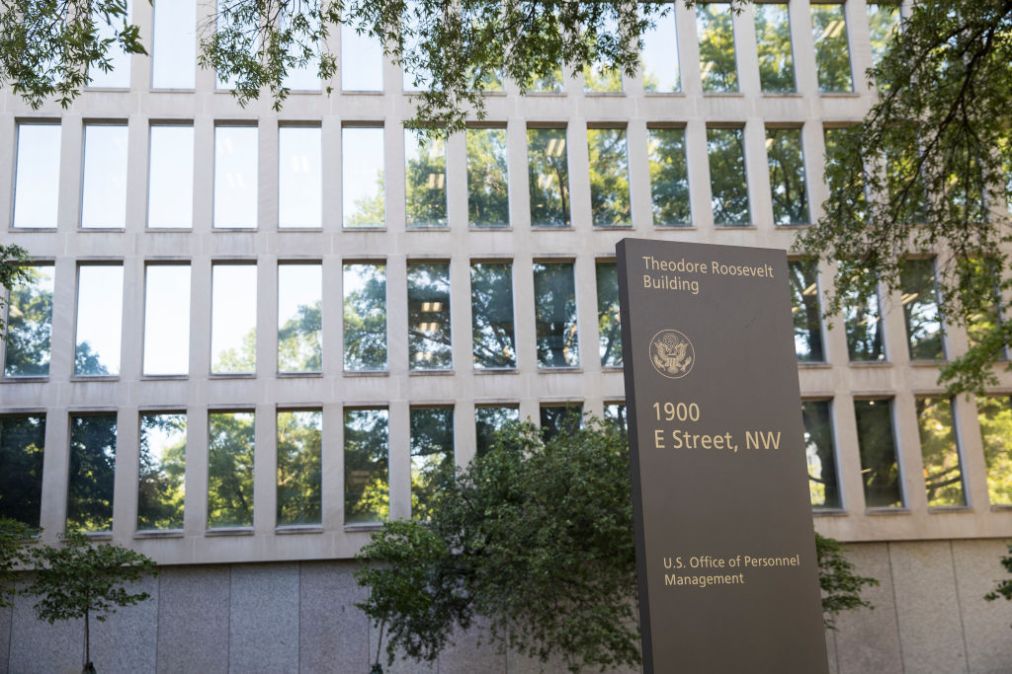
Post-award bid protests filed at the Government Accountability Office will not hold up the Office of Personnel Management’s rollout of a governmentwide HR system.
OPM spokeswoman McLaurine Pinover confirmed to FedScoop via email that all companies that were entitled to and requested a debriefing received one, and that all debriefings were completed “well over 10 days ago.”
Per rules that govern bid protests before the GAO, that means that the nearly $400 million award the agency made to Oracle in June can no longer be challenged before the watchdog agency’s adjudicatory body.
The eventual 10-year award to Oracle came after a rocky start for the push to build a governmentwide HR platform. OPM initially awarded a sole-source contract — one without a competitive bidding process — to Workday in May 2025 to facilitate the Trump administration’s HR modernization efforts, only to walk the award back shortly thereafter.
OPM eventually launched open competition for a contract to establish a governmentwide HR system. That contract faced pre-award protests from IBM and Economic Systems, Inc., which were withdrawn or resolved, freeing up the agency to make its award. And ultimately, Oracle was announced as the winner.
During the award announcement, however, OPM Director Scott Kupor noted that post-award protests were still possible. Confirmation that the GAO window has closed removes at least one avenue for challenge and minimizes the possibility of a challenge in the future.
William Resh, chair and professor of public management and policy at Georgia State University, said the absence of post-award challenges doesn’t come as a surprise due to the fact that there were already pre-award protests.
“A losing bidder has to ask what new ground they’d stand on. Protesting the administration’s flagship HR modernization is an expensive way to reintroduce yourself to your biggest potential prospect for future work,” Resh told FedScoop via email. “For Workday especially, it’s a rational play.”
While the window for GAO protest is closed, challenges before the U.S. Court of Federal Claims are possible for a years-long window. However, Resh said that it’s unlikely a court would “unwind a governmentwide system mid-implementation.”
Compounding that for prospective bidders is the possibility of future attempts. Resh said that historically, programs like the governmentwide HR attempt have low success and the objective of the current project is “pretty daunting.”
“So why protest something you’re likely to be bidding on again, and with a recently failed competitor essentially eliminated in the next round?” Resh said.
In a recent podcast interview with The Daily Scoop, Kupor acknowledged the competitive process for the award.
“We were lucky to have lots of, you know, really tremendous competitors in that process,” he said, noting that it was close to 12 months long from the start of the request for proposals to the actual award.
Per Kupor, OPM is working on three things for that award: Standing up the first instance of the platform, integrating data from the roughly 119 existing HR systems, and working toward the first wave of onboarding agencies.
“Now we’re at the point where we’re meeting with each of those major agencies who are part of wave one … on a weekly basis, figuring out all the tactical stuff,” Kupor said.
The expectation is that between the end of this calendar year to the first quarter of next year, the first instances will be live for those agencies, he said. Then, the second and third waves will roll out over the next few years into fiscal 2028.