FBI, DHS emphasize no-drone zones as World Cup kicks off
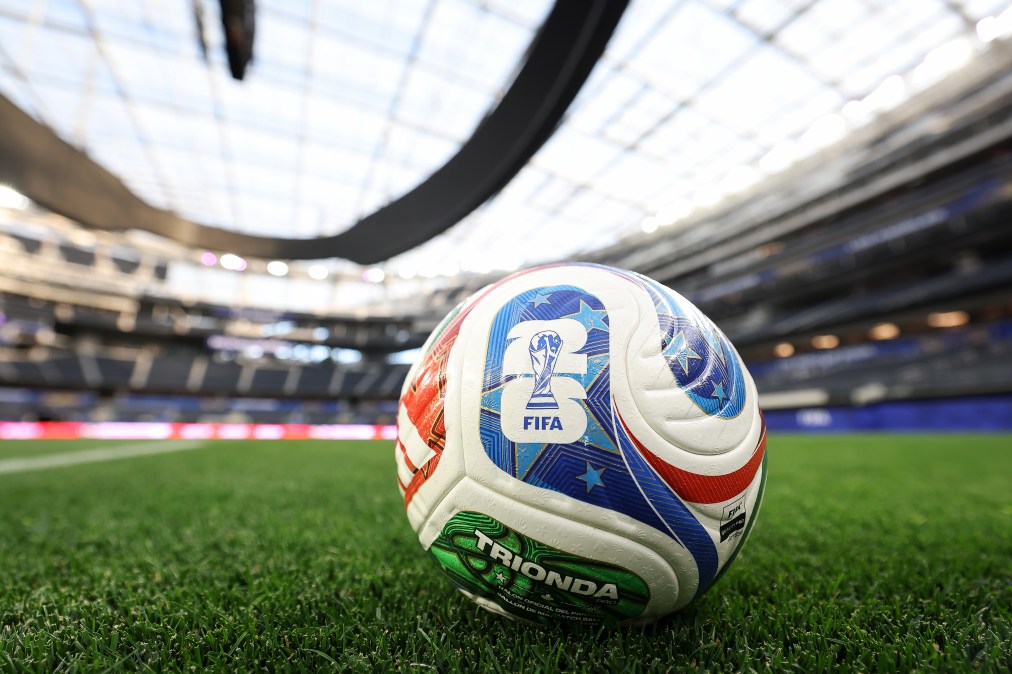
With FIFA World Cup 2026 underway, the Department of Homeland Security and FBI have an eye on the sky, ready to enforce the Department of Transportation’s temporary flight restrictions that are in effect across stadiums, team hotels and fan-fest sites.
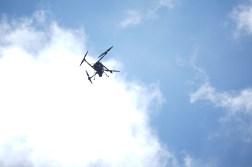
“Unsafe and improper use of a drone poses a physical hazard to other aircraft in the sky, as well as individuals on the ground, and can violate federal law,” Karen Valaas, an assistant special agent in charge of the FBI Seattle field office, said during a press conference this week at the local Coast Guard base.
FBI and DHS officials across the host cities have echoed similar sentiments, pointing to steep consequences for those who choose to ignore the no-drone zones. Unauthorized operators who enter restricted airspace can face up to $100,000 in fines, criminal charges and the loss of their equipment.
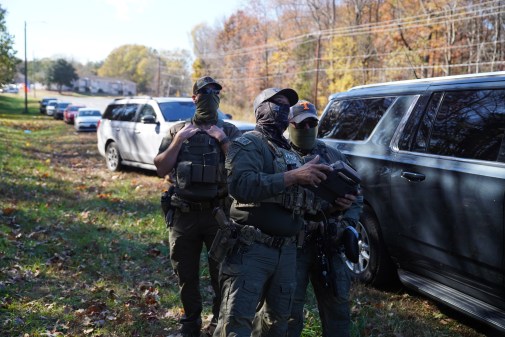
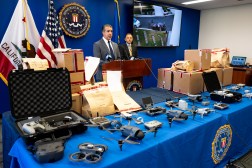
“We will be deploying drone mitigation and interception teams with the capabilities to detect, track, and assess unauthorized drone activity that threatens aviation safety or the public around venues at major events,” Patrick Grandy, assistant director in charge of the FBI’s Los Angeles field office, said during a press conference last week. “Our counter-UAS teams will be working before, during, and after FIFA games, and we will be strictly enforcing laws when it comes to violators.”
Funds from the Federal Emergency Management Agency are partially to thank for the beefed-up counter-UAS capabilities across local jurisdictions. The DHS unit allocated $250 million for the 11 American host states and Washington, D.C., in December.
DHS also worked to ease procurement challenges via a tool designed to provide a standardized framework for purchasing drone detecting, tracking, identification and mitigation capabilities.
The FBI had a hand in the efforts, too. Through its National Counter-UAS Training Center in Alabama, the FBI has trained and granted authority to state and local law enforcement for counter-drone work. The FBI is also deploying its own counter-UAS protection teams to provide layered support during the games.
“The FBI is legally authorized to use technical capabilities to detect, assess, and, if needed, mitigate unauthorized drone activity within restricted airspace, while also preserving evidence for potential enforcement action given the potential threats posed by unauthorized drone activity near matches, fan fest, or other World Cup events,” Joe Rothrock, special agent in charge of FBI’s Dallas field office, said during a press conference last week.
While several host cities and federal agencies declined to discuss details of the efforts, there are at least two vendors playing a major role: Ondas and Fortem.
DHS awarded a multimillion-dollar contract to Fortem in February centered on its DroneHunter tools and autonomous threat response software. The company makes a drone with a modular attachment that can fire rapidly expanding nets to ensnare rogue drones. Its systems are also powered by AI that predicts rogue drone movements to better adjust mitigation tactics, according to the Fortem website. A company spokesperson declined to share any further deployment details but confirmed via email to FedScoop that Fortem trained DHS personnel on its systems.
Ondas, similarly, handled the training for its systems as part of multiple contracts it secured from federal, state and local organizations, per a spokesperson. Ondas was tapped for its subsidiary Sentrycs’ counter-UAS tool that enables law enforcement to hack into, take control of and land unauthorized drones. Called Cyber Over RF, the technique targets specific vulnerabilities in the rogue drone’s communications using signal processing and protocol-level decoding that extracts operational data, according to company documentation. Once vulnerabilities are identified, the system creates an exploit strategy, such as changing the designated homebase location, then transmits signals to match the drone’s native protocol.
The drone-hacking capabilities are being used at more than half of the World Cup locations, according to a spokesperson, who declined to comment further on the use.
“Due to the sensitivity of the operational details involved, we’re not able to share certain specifics tied to World Cup security planning, including exact deployment locations or contract value,” an Ondas spokesperson told FedScoop.
Robo-dogs on duty
Advanced technologies aimed at strengthening security and safety come in all shapes and sizes, including that of man’s best friend.
Four of Boston Dynamic’s robotic dogs, called Spot, are being deployed to support security operations at the International Broadcast Center in Dallas and the New York-New Jersey stadium.
“Robotic patrol dogs are being used for asset protection at the IBC and NY-NJ Stadium to identify and report physical security threats and risks for further human intervention,” a FIFA spokesperson told FedScoop via email.
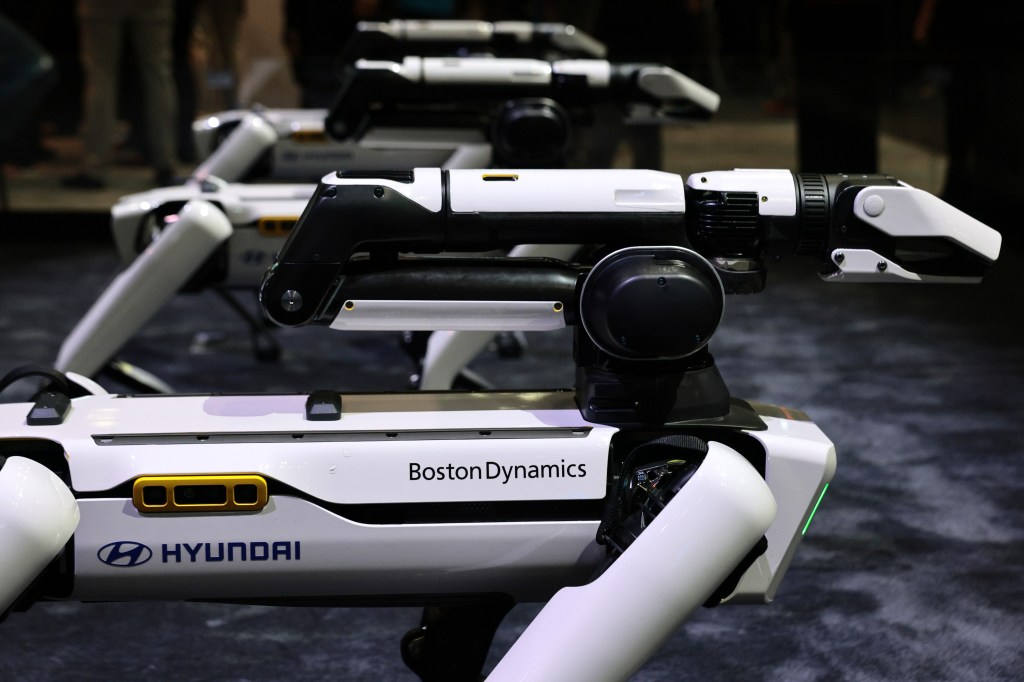
The four-legged robots are part of a partnership with Hyundai Motor, which is FIFA’s “official mobility partner” as well as its first “official robotics partner,” per an announcement from the automotive manufacturer last week.
Each Spot robot weighs in at about 75 pounds and can carry about 30 pounds more of sensing equipment. Boston Dynamics said the robots will perform perimeter security inspections and assist security with investigation of suspicious packages or hazardous materials.
“The robots do not have facial recognition capabilities,” a Boston Dynamics spokesperson said in an email to FedScoop.