CRS tried to use AI, but less than 3% of results met their standards, director says
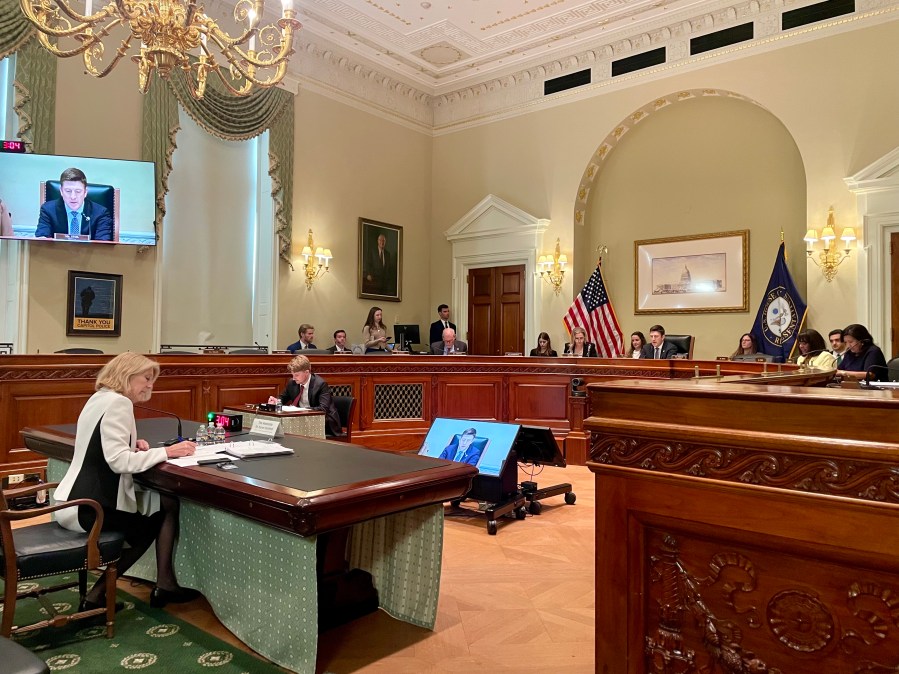
The Congressional Research Service has been testing artificial intelligence on bill summaries in an attempt to address its backlog, but less than 3% of the results met its standards, its director said Thursday.
To improve it, Director Karen Donfried told the House Administration Committee during a hearing that the service needs a recurring $1.6 million to upgrade to more specialized and confidential models, as well as to staff five data scientists and AI developers.
“AI is advancing rapidly, and CRS sees its potential to streamline our workflow and enhance our service to Congress,” she said in the hearing. “The use of AI, however, also carries risks of outdated information, hallucinations, bias and distortions.”
CRS tested six models over two years on about 1,000 bills, but the vast majority did not meet its standards for accuracy, coherence, relevance and objectivity, Donfried said. The money would help the service upgrade to a model where it could possibly train it on legislative data and input confidential information, she added.
The lawmakers were “stunned” to hear of the low reliability of AI, with Rep. Julie Johnson, D-Texas, saying, “I think it really highlights that we, as policymakers, can’t have a false sense of security of the accuracy of AI, and we have to really put guardrails on that and be vigilant about the data sourcing into these models.”
Donfried reiterated throughout the hearing that though AI can be helpful to CRS, it’s not yet ready to replace staff. It’s crucial to keep a “highly skilled human in the loop,” and right now they mostly need help catching up on bill summaries for legislation that doesn’t make it to the floor, she said.
“In this age of AI, I believe the role of CRS’s highly skilled workforce will become even more important to Congress as you look for sources you can trust in an increasingly unreliable information landscape,” she said.
Congress is already using AI. A recent study by POPVOX Inc. said AI-related spending is increasing across the House. Several tools, such as ChatGPT, Gemini and Copilot, are being used across both chambers, and the Congressional Data Task Force recently said it is working on several AI-powered tools for staff use.
On Wednesday, Rep. Anna Paulina Luna, R-Fla., said “most staff” use AI after one of her amendment summaries submitted to the House Rules Committee included the phrase “Claude responded.”
Members were even using AI during the hearing. Rep. Greg Murphy, R-N.C., “asked AI” if CRS should be replaced with AI, to which it responded “probably not,” he said. Panelists discussed AI use cases in their offices and beyond, but some, like Rep. Morgan Griffith, R-Va., were concerned about potentially partisan responses by chatbots.
“I love AI, I think it has great potential,” Griffith said. “We should be skeptical.”
Committee Ranking Member Rep. Joe Morelle, D-N.Y., said he was unsure if using AI to quickly develop legislation is “good, necessarily, but that’s the world we’re living in.”
“We’ve not made the mistake of thinking technology can be a substitute for a skilled and dedicated workforce, so CRS’s investment in AI, as I’m sure you agree, should make analysts more efficient, free them to do what only they can do, and should never, ever replace them,” he said.
Donfried said the service is developing AI governance and a plan for priority use cases, as well as using AI to produce code for making graphics and analyzing public comments on regulations. In fiscal 2027, CRS and the Library of Congress Office of the Chief Information Officer are planning to test five AI models: ChatGPT, Claude, Google AI, Perplexity and Microsoft Copilot, she said.