DOJ finds three federal STEM education programs unconstitutional
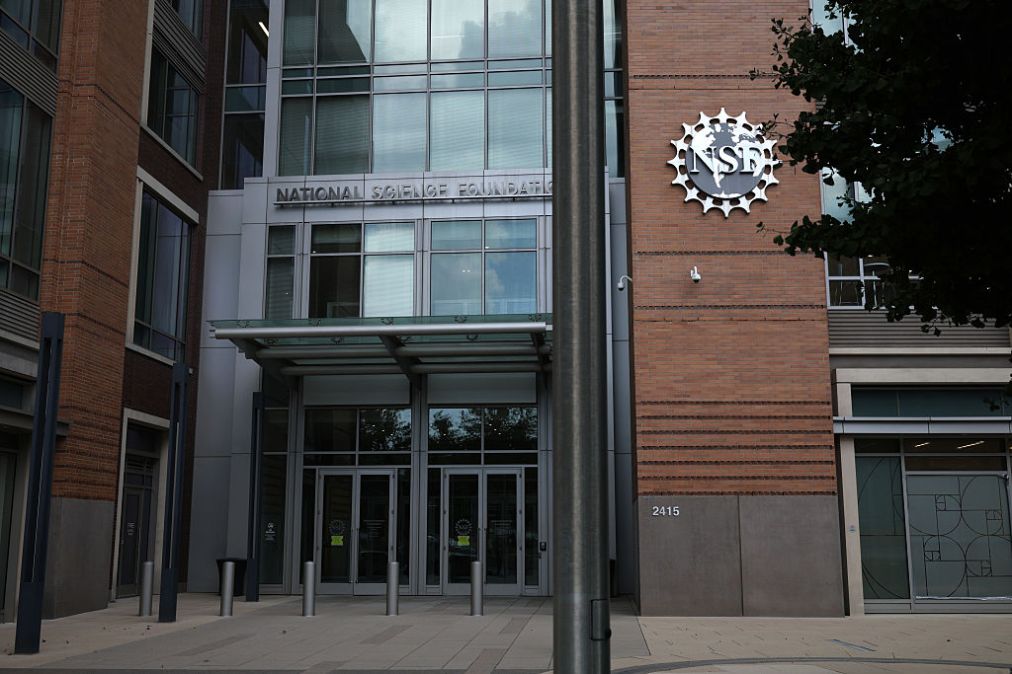
The Justice Department’s Office of Legal Counsel has determined that three of the National Science Foundation’s STEM education programs are unconstitutional following a review of the agency’s opportunities with race- and sex-based focuses.
In a slip opinion dated Wednesday, the DOJ said the Improving Undergraduate STEM Education: Hispanic-Serving Institutions; Alliances for Graduate Education and the Professoriate; and Louis Stokes Alliances for Minority Participation violate the constitution in their entirety.
Meanwhile, two programs — Advanced Technical Education and the ADVANCE Program — had “severable” elements related to race or sex. “NSF may continue to administer those programs provided that it does not implement or enforce the unconstitutional provisions,” the DOJ opinion said.
The opinion, which was addressed to the NSF general counsel, was issued in response to a request from the science agency to review nine STEM education programs it administers to determine whether they violated the equal protection clause under the Constitution and whether the agency may reprogram those funds.
But while the DOJ found three programs unconstitutional, it said NSF may not reprogram the funds. Instead, NSF may now treat the funding for those programs as residual amounts within its broader appropriation for STEM education, per DOJ.
Based on figures included in the opinion, the three programs deemed unconstitutional make up roughly $104 million of the agency’s $938 million STEM education fund.
DOJ found the remaining four programs it reviewed — including the Tribal Colleges and Universities Program — were not unconstitutional.
NSF declined to comment on what it planned to do after the opinion.
The opinion comes as the Trump administration has sought to remove diversity, equity and inclusion-based programs from the federal government. Michael Kratsios, the president’s top science advisor, has claimed that DEI initiatives degrade science, and NSF itself has sought to terminate grants based on their mentions of diversity, equity or inclusion.
DOJ also made similar findings about programs that factored in race and sex at the Department of Education and Department of Agriculture, deeming them unconstitutional. It referenced both of those previous opinions frequently in its memo, as well as a 2023 Supreme Court decision that overturned longstanding legal precedent to gut affirmative action in college admissions.
Notably, the memo finds unconstitutional programs created by Congress.
The Improving Undergraduate STEM Education: Hispanic-Serving Institutions, for example, was established under the bipartisan America COMPETES Act in 2007. That legislation was signed into law by President George W. Bush.
But DOJ found there was “no compelling interest to support the program’s racial criteria.
Congress made no findings at all about the program, much less findings about ‘specific, identified instances of past discrimination’ against Hispanic students that violated the law.”
Immediately, the opinion drew criticism.
“This move attacks the foundations of equal opportunity in our country,” Rep. George Whitesides, D-Calif., said in an emailed statement to FedScoop. “For decades, courts have ruled that it is legal and in fact beneficial to the nation to encourage minority students to enter into technical scientific career paths — many of whom have gone on to make tremendous advancements for our country.”
Whitesides is among the Democratic lawmakers that have pressed the science agency over reductions in decreased grant awards and whether the White House is approving NSF’s decisionmaking, which the administration has denied.
“Each and every attempt by this administration to dismantle our STEM workforce will have devastating effects on our future for generations to come,” Whitesides said.
Cole Donovan, director of science policy and advocacy for the Stand Up for Science Foundation, told FedScoop in an email that the memo will restrict economic mobility that “minoritized populations” may gain from an education, and those individuals will have limited ability to seek equal protection.
He also pointed to irony in the decision after the Trump administration celebrated a one-time investment of $1.34 billion in historically Black colleges and universities (HBCUs) just last year.
“This is really about redefining who gets to participate in higher education,” Donovan said.
Updated with comments from Donovan on Thursday, Aug. 13, following publication.