Fed chair says AI ‘hasn’t displaced workers’ so far, has boosted productivity
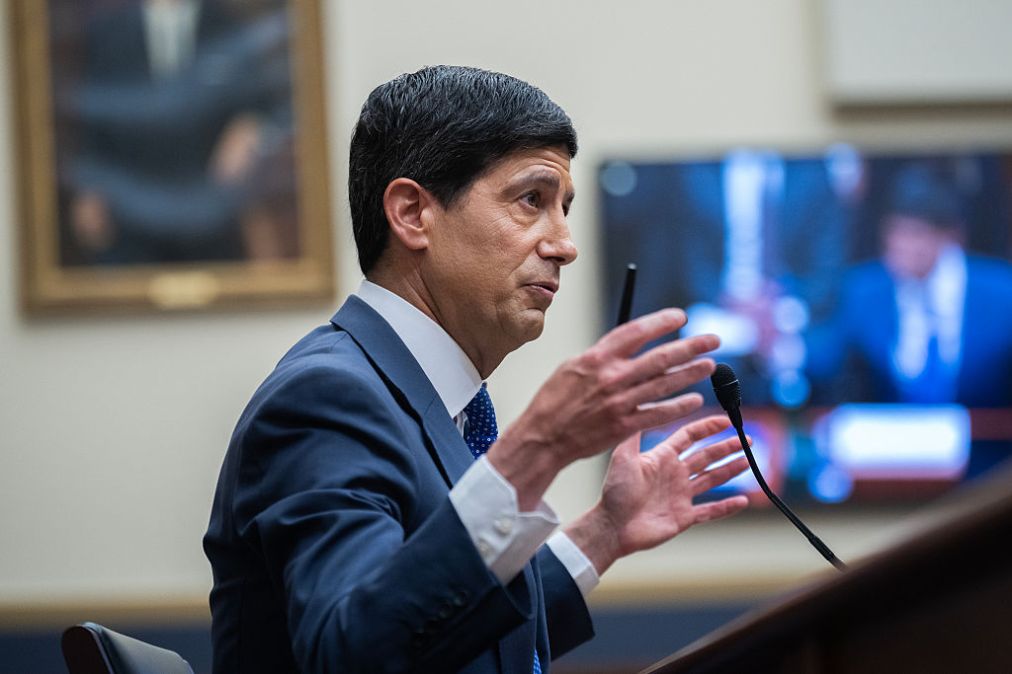
Federal Reserve Chairman Kevin Warsh told House lawmakers Tuesday that artificial intelligence represents “a huge opportunity” for the U.S. economy, though the “risks and challenges” it presents bear monitoring.
Appearing before the House Financial Services Committee, Warsh said the Fed is watching “the implications” AI could have on employment and inflation. He said the central bank doesn’t yet know the extent to which the economy will benefit from the technology, but the labor force “appears stable” and job creation has “kept pace with the workforce.”
“Over the long term, I think there is a material improvement in productivity, which should have a material improvement ultimately in wages and the strength of the economy,” said Warsh, who was sworn into office May 22. “But the long term can be quite far out, and we’ve got to monitor things month by month, quarter by quarter, as we get there.”
According to Warsh, data from the past few months shows that AI “hasn’t displaced workers at this point” and it looks as if it has “made them a bit more productive.” Still, it’s too early to tell if that trend will hold, he said.
“But a year or two from now, will these intelligence tokens be adding to the workforce or causing the workforce to temporarily be disrupted?” he said in response to a question from Rep. Josh Gottheimer, D-N.J. “It’s something that we’re very focused on as we think about what the economy looks like 12 and 18 months from now.”
Warsh was even more bullish about AI at different points in the hearing, saying in an exchange with Rep. Stephen Lynch, D-Mass., that the U.S. is “at the forefront of these technologies” and “likely to be a big winner.”
“This is a benefit broadly to our economy, but I don’t want to sound overly complacent about it,” he added, later noting that he believes AI will be successful in “augmenting existing work.”
He also called the technology “perhaps the most significant change in our economy in my adult lifetime” and likened it to “previous positive technology shocks.”
The result, Warsh said, is likely the U.S. becoming “richer” and “more productive.”
“There’ll be more labor, there’ll be more wages, there’ll be more compensation,” he told Rep. Bryan Steil, R-Wis. “That is, if this follows prior trends. This technology shock is likely more significant.”
When asked by Rep. Emanuel Cleaver, D-Mo., about AI’s impact on the arts and its potential to render professions “obsolete,” Warsh said the Fed is examining this “surge of technology with open eyes,” including through an agency task force to study productivity and jobs.
“I must admit that part of these challenges, I see huge amounts of talent and thinking inside at the Federal Reserve, but I wanted to bring in some outsiders to share a view,” Warsh said of the task force.
“We’re not outsourcing anything,” he continued. “We’re ultimately going to make these decisions, but American ingenuity has found its way into artificial intelligence, and it’s an exciting time, but one that we’re not complacent about.”