Fed won’t outsource AI decisions to task force helmed by tech titans, chair says
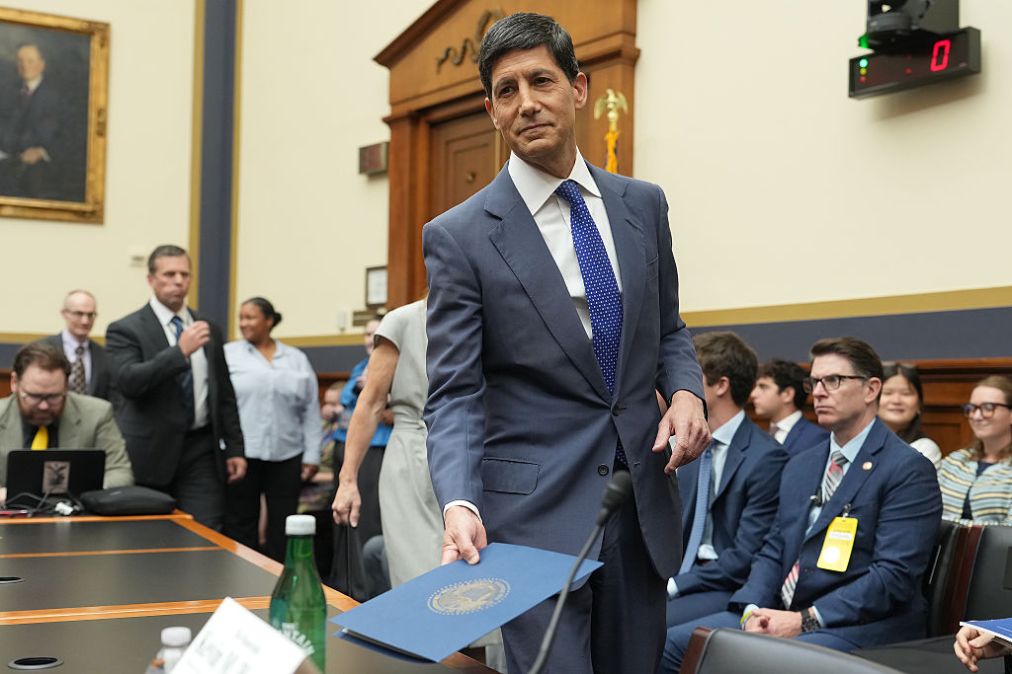
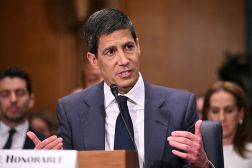
Federal Reserve Chairman Kevin Warsh defended the composition of a new central bank task force on artificial intelligence Wednesday following questions about its members’ personal financial stakes in the emerging technology.
One of five new independent Fed task forces unveiled by Warsh in recent weeks, the productivity and jobs group is charged with assessing the economic impact of AI and other new technologies to inform the agency’s “policy judgments.”
The three task force members are Marc Andreessen, co-founder and general partner of the Andreessen Horowitz venture capital firm, Asha Sharma, executive vice president and CEO of Microsoft-owned Xbox, and Charles I. Jones, a Stanford economics professor currently on leave from the university at Anthropic.
Sen. Tina Smith, D-Minn., noted during the Senate Banking Committee hearing Wednesday that Andreessen has made billions from AI and is a huge donor to President Donald Trump, Sharma recently oversaw the layoffs of thousands of Xbox employees, and Jones is currently doing research for one of the world’s most powerful AI companies.
“Is there anyone on the task force who has experience in the labor market?” Smith asked Warsh. “Or somebody who can bring the perspective of an employer rather than an investor to the questions that are going to be asked and hopefully answered by this task force?”
The Fed chair said it was “a fair question” but that all three members are among “the smartest people” he knows. He also touted Jones’ academic work, which has been “very focused” on the effect technology shocks have on labor markets — “both the good and the bad.”
Warsh also noted that ultimately, the recommendations provided by Jones, Sharma and Andreessen will be simply taken into account by Warsh himself and 18 of his colleagues.
“We’re the ones that have the dual mandate,” he said, referring to the Fed’s overarching goal of achieving maximum employment and stable prices. “We haven’t outsourced this decision to three people; what we’ve outsourced to is a bunch of thinking about this massive technology shock.”
Smith continued making her case, asking the Fed chair who will bring the perspective of working people to the table, whether it’s a labor leader or labor economist with expertise in wage stagnation and how it impacts the workforce.
“So can you can you understand why a task force that is led by people, in large part, who are likely to get richer by AI, might not be the most credible people to folks on the ground who are doing the work, who are worried about what impact this AI is going to have on their jobs,” the Minnesota Democrat said.
Sen. Lisa Blunt Rochester, D-Del., echoed Smith’s comments later in the hearing, imploring Warsh to make sure “Main Street has equal footing to Wall Street” when considering tough AI and labor questions.
“I hope that there will be the inclusion of other voices beyond economic experts and tech individuals,” she said, “but actually families, businesses, people that are actually both consuming and impacted by AI.”
Warsh said Blunt Rochester had his “commitment” to keep the Fed’s focus on Main Street. And he told Smith that he expects the jobs and productivity task force to “hear from folks that will be affected” by AI in the workforce as well as employers “that are getting struck with this technology shock.”
“But what I want to tell you is, if you think they have a credibility deficit, I don’t,” he said of Andreessen, Sharma and Jones. “I think they’re incredibly talented, and we will make sure to take both parts of our dual mandate in consideration of their output.”