House advances bill putting ‘undermined’ FTC at center of scam-fighting efforts
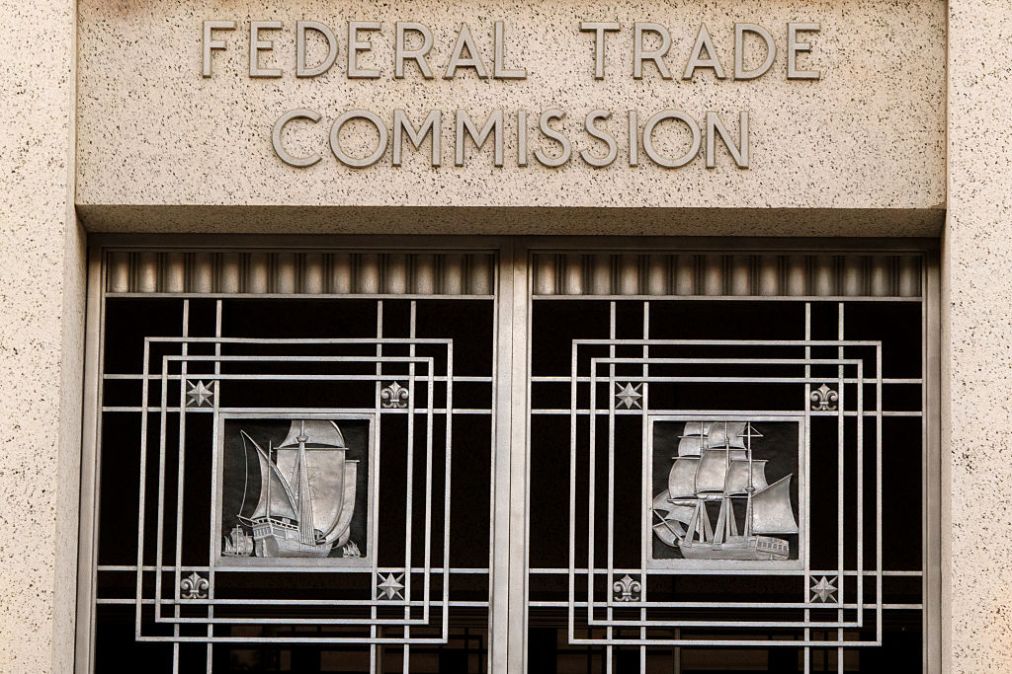
A House panel advanced a bill Tuesday to put the Federal Trade Commission at the center of a scam-fighting task force — even as a key Democrat warned of the Trump administration’s moves to undercut the independent regulatory agency.
The Strategic Task Force on Scam Prevention Act (H.R. 5967) from Reps. Rob Menendez, D-N.J., and Erin Houchin, R-Ind., was voted favorably out of the House Energy & Commerce Subcommittee on Commerce, Manufacturing, and Trade, putting the bill on track for consideration before the full chamber.
The legislation directs the FTC to work with the Department of Justice on convening a cross-agency task force whose mission would be to combat a litany of digitally enabled scams.
But near the beginning of the markup, Rep. Yvette Clarke, D-N.Y., shared her concerns that despite the best bipartisan intentions behind some of the bills up for consideration, the Trump administration “has systematically undermined the FTC and the Consumer Product Safety Commission, the very agencies set out to protect Americans from scams and ensure a fair market.”
“It’s simple: Consumer protection does not exist without the agencies equipped and ready to enforce,” said Clarke, a senior member of the full House Energy & Commerce Committee.
The New York Democrat acknowledged the FTC’s decades-long track record of protecting consumers from “deceptive practices” and filing cases against “scammers who impersonate businesses or con artists who target senior citizens.” Those actions have enjoyed bipartisan backing, Clarke noted.
Since the beginning of President Donald Trump’s second term, however, the FTC has shifted sharply from former Chair Lina Khan’s antitrust enforcement and consumer protection-focused tenure during the Biden administration.
Trump-appointed FTC officials have spoken publicly about pursuing an agenda “much more in favor of innovation” that reinforces “market principles” rather than “replace them.”
At the same time, Trump fired the FTC’s two Democratic commissioners — and was backed up by the Supreme Court — while the agency has been accused by top Democrats of protecting the president’s allies rather than consumers.
Clarke seemed to be alluding to that shift in her comments Tuesday, calling on her Republican colleagues to acknowledge that Project 2025 – the infamous Heritage Foundation policy blueprint for massive change across government — “was not a lie.”
“The Trump administration is directly inhibiting consumer rights and protections, and while we can continue to put forth well-intentioned legislation, it will ultimately fall short if we lack proper enforcement agencies,” Clarke said.
The FTC did not respond to a request for comment by the time of publication.
What’s in the bill
Despite Clarke’s misgivings about the FTC’s direction under the current administration, the Strategic Task Force on Scam Prevention Act cleared the subcommittee without fanfare.
The FTC would be joined on the anti-scam task force by representatives from the DOJ and FBI, the Department of Homeland Security and the Secret Service, the Federal Communications Commission, the Securities and Exchange Commission, the Social Security Administration, the U.S. Postal Service, and the departments of State, Treasury, and Veterans Affairs.
According to Houchin, fraud has transformed in recent years from “a nuisance crime” to a billion-dollar enterprise. Americans reported losing $15.9 billion to fraud in 2025, the Indiana Republican added.
“Clearly, this is an issue, but the problem is not that no one is working on it. The problem is that everyone is working on it from a different angle,” she said. “No single agency is able to see the whole picture.
“No agency has been told to own it, and no one has been tasked with the primary responsibility for it,” Houchin continued. “So emerging scams discovered by one agency never reach another. Meanwhile, criminal syndicates do coordinate, and Americans get hurt.”
Those comments matched an April 2025 report from the Government Accountability Office, which found that federal agencies weren’t working together to fight consumer scams, and recommended a governmentwide strategy to counter tech-fueled schemes. A follow-up report from the GAO published in January noted a “mixed” agency response to its anti-scam suggestions.
Part of the proposal from Houchin and Menendez would enlist industry to play a larger role in fighting scams and fraud. The bill calls for the governmental task force to consult with several sectors on its strategies, including executives in banking, cryptocurrency, generative AI applications, dating apps, peer-to-peer payment platforms, search engines, social media and others.
“These companies see things we don’t. They often spot patterns long before those patterns reach a federal database,” Houchin said. “A strategy written without that firsthand knowledge from industry is a strategy that’s written only from the outside. This bill ensures they will be part of the ongoing conversation and how we address it.”
Other callouts in the bill include coordination with international partners, leveraging the FTC’s Consumer Sentinel Network and the FBI’s Internet Crime Complaint Center, launching public education campaigns, using existing enforcement authorities, and pursuing strategies to lessen the “systemic risk” of scam-induced financial losses.
“Prevention has to be just as important as enforcement, and they’re really getting smart,” said Rep. Debbie Dingell, D-Mich. “We all have a responsibility to protect the people we represent and ensure our laws keep pace with the criminals trying to exploit them.”