GSA extends comments on sweeping AI clause after industry pushback
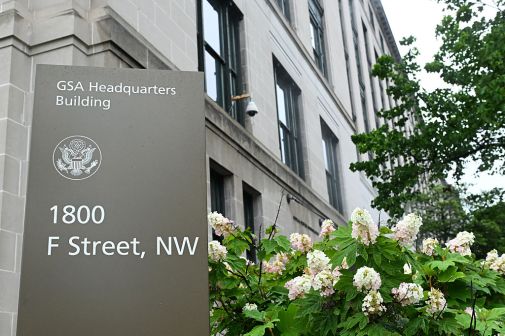
The General Services Administration pushed back the timeline for draft contract language that would define the government’s relationship with AI service providers in a major federal acquisition program, citing industry requests for an extension.
In an update to its Multiple Award Schedule Refresh 31 webpage Thursday night, GSA said that comments on the draft are now due April 3, and consideration of the proposed clause would also be pushed to the next scheduled modification to the contracting program, “Refresh 32.”
It wasn’t immediately clear when that future modification might take place, but in the meantime, the decision gives the private sector more time after the original deadline last Friday sent companies and lawyers into a two-week scramble to analyze the language and provide comments before the clock ran out.
That additional time will be important, as lawyers told FedScoop the nine-page draft clause is wide-ranging and comes at a time of already increased tensions between the government and those providing AI services.
“I don’t think we’ve ever seen something as substantive as this tried to be pushed through a MAS mod,” Kelsey Hayes, a partner with Burr & Foreman with a focus on government contracting advising, told FedScoop.
The proposed language includes terms and conditions for government data use, defines what it means for AI to be unbiased, creates a requirement to use only “American AI,” and establishes a responsibility for contractors to enforce terms and conditions on the AI they deploy. Notably, it also includes language that echoes the very policy at issue in Anthropic’s ongoing battle with the Pentagon that led to the company’s governmentwide ban and designation as a “supply chain risk.”
Under the draft, the government would be granted a “contract for any lawful Government purpose.” According to Anthropic’s legal challenge, its dispute with the Defense Department hinged on a policy that the military could make “all lawful use” of the technology. That change, Anthropic says, would have eliminated the company’s restrictions on use of its products for “lethal autonomous warfare” and mass-scale surveillance of Americans.
As written, the clause “attempts to subordinate” commercial terms and conditions for AI products to the government’s preferences, Hayes said, calling that language “jaw-dropping.”
Jessica Tillipman, associate dean for government procurement law studies at George Washington University, told FedScoop that because much of the DOD’s terms have not been public, the draft is the first time onlookers have seen “a real crack at an AI regulation.” Right away, she said, stakeholders can see “it has issues.”
The draft is “a huge policy in an emerging area of the law that’s going to be extremely consequential,” and reads as something that’s been in the works for a while, she told FedScoop. “They clearly didn’t do this overnight,” Tillipman said.
Rush to respond
Industry initially found out about the unexpected proposal earlier this month.
According to the GSA’s webpage for its modification to the MAS, the proposed language was initially shared with industry March 6. That original update set a comment deadline of March 20 and said the changes would be required 60 days after the modification was accepted. That same day, the Financial Times also reported that it had “seen” the document.
Jennifer Aubel, technical director of aerospace defense and government consulting as well as client accounting services at Aprio, told FedScoop in emailed comments that the draft was not something industry anticipated as part of Refresh 31, and the process it followed wasn’t standard practice.
“I have worked in GSA consulting for nearly 20 years, and this is the first time I have seen a change of this magnitude introduced in this way,” Aubel said. “Typically, a policy shift of this scope would proceed through formal rulemaking and would not appear unexpectedly in a MAS solicitation refresh.”
Aubel said she was informed the draft was added to the page the evening of March 6 via an automated email for those subscribed to MAS updates through GSA’s system. She also said that the change, as proposed, would have shortened the length of time to incorporate the provision from the standard 90 days to 60.
Beyond emails to those subscribed to the page, the notice does not appear to have been accompanied by any public announcement from GSA. Moreover, unlike the Federal Register, the webpage for the modification is not widely followed by the public, meaning the notice could have been missed by those who wished to comment.
FedScoop initially reached out to GSA for comment about the draft last Thursday afternoon. GSA did not respond, but updated the page with the new deadline soon after. FedScoop followed up for more details on why the deadline was changed, and GSA did not respond to that inquiry either.
Two more weeks
For those who were hustling to get their comments in last week, the extension is welcome, but also isn’t a lot of additional time, given the substantial nature of the provision.
Hayes, who co-authored a legal blog about the change, called the new deadline “better than nothing” but “still not great,” and said the proposed language could still be published more widely.
Tillipman, who called the language “governance by sledgehammer” in her Lawfare blog about the clause, similarly said that GSA seems to have heard the message from people who were communicating that the amount of time was not appropriate.
“The turnaround was incredibly quick for something that’s nine pages, incredibly complicated and has significant issues, and so the extension doesn’t surprise me at all,” Tillipman said.
Given the governmentwide scope of the MAS, the impact of the clause would be widespread.
In addition to the other contracts that run through the vehicle, the administration’s OneGov program, which is aimed at improving the way the government buys tech, leverages the MAS. That program includes multiple agreements through which major AI companies are providing their services to federal agencies at deep discounts.
There are also questions about GSA’s endgame for the provision. While the draft appears to apply only to the MAS, it’s written broadly enough that Hayes wondered if the intention is to eventually apply it more widely. That would likely be a more formalized process.
If GSA wanted to include it as a clause in the General Services Administration Acquisition Regulation (GSAR) — which governs all of the agency’s own procurement actions — that’s the kind of change that historically has been posted in the Federal Register with a 30- to 60-day comment period, Hayes said.
The clause could also have an impact beyond the MAS if agencies look to it as a template for other contracts.
“Once people see that there’s a template, they tend to follow it,” Tillipman said.
Sweeping policy
The overarching theme of the draft seems to be the establishment of additional responsibilities for industry related to implementation of the administration’s desired approach to AI.
On the “unbiased AI principles,” for example, contractors would be required to ensure AI systems are “truthful,” “prioritize historical accuracy,” and don’t “manipulate responses in favor of ideological dogmas such as Diversity, Equity, Inclusion” — all echoing executive orders and other directives issued under the Trump administration.
And if contractors don’t comply with those principles, the draft would hold them “liable for reasonable decommissioning costs.”
Contractors must also ensure that “American AI” systems are used, which includes a prohibition on the use of components not manufactured or developed by U.S. entities.
Per a Jenner & Block blog on the draft, that “requirement extends to all components of the AI system, and contractors whose solutions incorporate elements from non-US developers—including foreign-origin open-source model components—will need to carefully assess their AI supply chains.”
Hayes said the first element that caught her attention was the burden placed on contractors on the MAS to enforce terms on commercial AI service providers regardless of whether they’re subcontractors.
As Hayes and her co-authors said in their blog on JD Supra, that essentially requires MAS contractors to police compliance of upstream AI providers — like OpenAI, Google, and Microsoft — or stop using those systems as part of their contract work. “That’s super expansive,” she told FedScoop.
More broadly, the proposal is a shift for the administration on governance.
Echoing her blog, Tillipman said the clause got the governance problem right — in that GSA appears to recognize governance is needed — but then “blows right past it.”
The draft comes after months of signals from the administration that it’s assumed a deregulatory posture and was taking a hands-off approach to AI focused on speed, she said.
“What is striking to those of us observing the evolution of AI procurement policies is not that the government is finally building governance into AI acquisition,” Tillipman said in her post. “It is that GSA is doing so after months of policy statements pointing in the opposite direction, through a commercial channel, with a clause that reads like too many competing agendas forced into a single instrument.”
It is not yet clear if comments on the draft clause will be made public.