GSA leaders on OneGov: ‘We’re not anti-reseller. We’re anti-fragmentation’

Senior IT acquisition leaders from the General Services Administration looked to amend the record Wednesday regarding the government’s budding OneGov program and the role that value-added resellers, integrators and others in the technology procurement ecosystem will play in it.
While the Trump administration through OneGov — the initiative that looks to recentralize government contracts and spending on commodity goods and services, like software and other commercial tech — has been working to make deals on behalf of all federal agencies directly with original equipment manufacturers, or OEMs, that doesn’t mean the program is “anti-reseller,” a pair of GSA officials leading rollout of the program said.
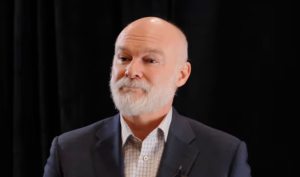
“OneGov is not anti-reseller,” Larry Hale, acting assistant commissioner in GSA’s Office of Information Technology Category, said during the Alliance for Digital Innovation event.
Instead, Hale clarified: “We’re anti-fragmentation.”
Hale explained that resellers will continue to play a role in federal IT contracting, despite the fact that OneGov looks to displace their traditional intermediary role, which is often contracting on behalf of those technology manufacturers with agencies that need their products and services.
Instead, those resellers may now find themselves playing the role of subcontractor or partner to the OEM primes.
“We’re all about consolidating and leveraging that buying power” of the federal government by acting as one, Hale said. “But small business participation remains central. OEM primes are expected to demonstrate meaningful subcontracting and partnering consistent with federal small business goals. So that doesn’t shrink the industrial base. It strengthens it by clarifying accountability while preserving the value-added services that small businesses provide.”
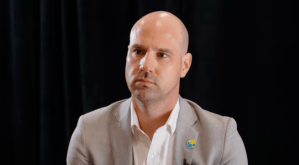
This shift was driven by the conversations GSA’s IT Vendor Management Office — which has the support of the Office of Management and Budget and the FAR Council — with agency acquisition leaders, who said the relationship between the government and the tech manufacturers had grown to be “misfocused,” said Kyra Stewart, the director of that office.
“OneGov really aims to shift to the direct OEM relationship, not remove the broader ecosystem,” explained Stewart, who is also the leader of the OneGov Strategy Integrated Project Team. “Agencies rely on the partners in the space. We want to do no harm to them, so we are not looking to complicate their abilities to provide the IT solutions that their agencies need. It really just is changing the dynamic and aligning the contract and the priority where it exists.”
In addition to better and more consistent pricing for the products and services, in moving to a more direct relationship between the government as a single customer and the OEM as the contractor, OneGov also gives the government an opportunity to deliver consistent standards for cybersecurity, tech lifecycles, performance standards and other terms in a deal, she said.
But beyond those things that “should rely with the OEM,” Stewart said, there’s still an ecosystem and value to add from the third-party support organizations.
“So resellers, integrators, other partners in the network are still essential,” she said. “We have integration needs, we have training needs, we have processing of personnel, change management and other mission-tailored necessities that we want the agencies to have access to. We’re talking with the OEMs now about reimagining those relationships, perhaps their subcontractor opportunities, CTAs [contractor team arrangements], and other ways that we can bring this to bear, and it’s happening in pockets.”
The Centers for Medicare and Medicaid Services recently negotiated a contract with Amazon Web Services through OneGov and GSA’s Multiple Award Schedule, where GDIT served as a subcontractor to provide some of those supplemental services as an integrator. The contract was negotiated in 60 days, a speed rarely seen in government technology contracting spaces.
“Amazon Web Services was directly accountable for the pricing and the platform, but the integrator delivered their key integration implementation and mission support using a OneGov contract,” Hale explained.
The Treasury Department in January inked a similar $1 billion deal with ID.me “that was awarded in under 45 days,” Stewart said. The Transportation Department did too with Google, an $89 million deal that took about 22 days to bring to life last fall.
Stewart claimed the federal government has realized $800 million in cost avoidance through OneGov contracts since launch.
“These are operational shifts, both in how agencies do business and how industry does business, but both are doing it and it’s working,” she said.
“When we launched, it was about speed … and it was about numbers, right? We really wanted to get a good number of deals out there to demonstrate that we’re working, that we have partners, that this thing is real,” Stewart said. “And now we’re prepared to pivot, to really double down on direct contracts.”
And while many of the offers GSA has announced through OneGov come with limited-time, nominal fees, like OpenAI’s offer for agencies to buy ChatGPT for $1, the agency is looking to move on from that and to what’s next. Stewart called those discounts “episodic” and “a subset of a catalog,” stressing that the vision is to “provide best pricing across the catalog” and engage in “the long play.”
“These are the opportunities that will bring lasting results to agencies,” she said. “And so that is important to us, to standardize those baselines, to coordinate the renewals, to address some of that fragmentation that we see, and leverage the buying power of the federal enterprise to secure better pricing for government and standardized processes for you all, and address, really, what are structural inefficiencies?”
Still, GSA doesn’t have this all figured out, and this first year of OneGov since its launch has been largely about piloting things, listening to feedback and adjusting to what the data shows is the best path forward, Hale said. And that will continue moving forward.
“We are learning as we go, moving fast,” he said. “We really value the opportunity to hear from you, to engage, to get your perspectives. We’ve had a lot of one-on-ones with industry partners where they’re helping us to understand the challenges of this pivot and recognizing, you know, just how difficult it is for a company that doesn’t do these things for themselves and counts on resellers and integrators to change their business model. And we’re listening. We’re working with them, we’re partnering on pilots to help both them and us learn how to move forward.”