House passes 5-year reauthorization to fund small business tech programs
Five months after the expiration of the Small Business Innovation Research and Small Business Technology Transfer programs, the SBA-managed seed funds are a presidential signature away from becoming law again.
The House on Tuesday passed a bill to reauthorize the SBIR and STTR programs for five years, following the Senate’s passage of the legislation two weeks ago and months of bipartisan, bicameral negotiations. The Small Business Innovation and Economic Security Act (S.3971), led by Sens. Joni Ernst, R-Iowa, and Ed Markey, D-Mass., cleared the lower chamber in a 345-41 vote.
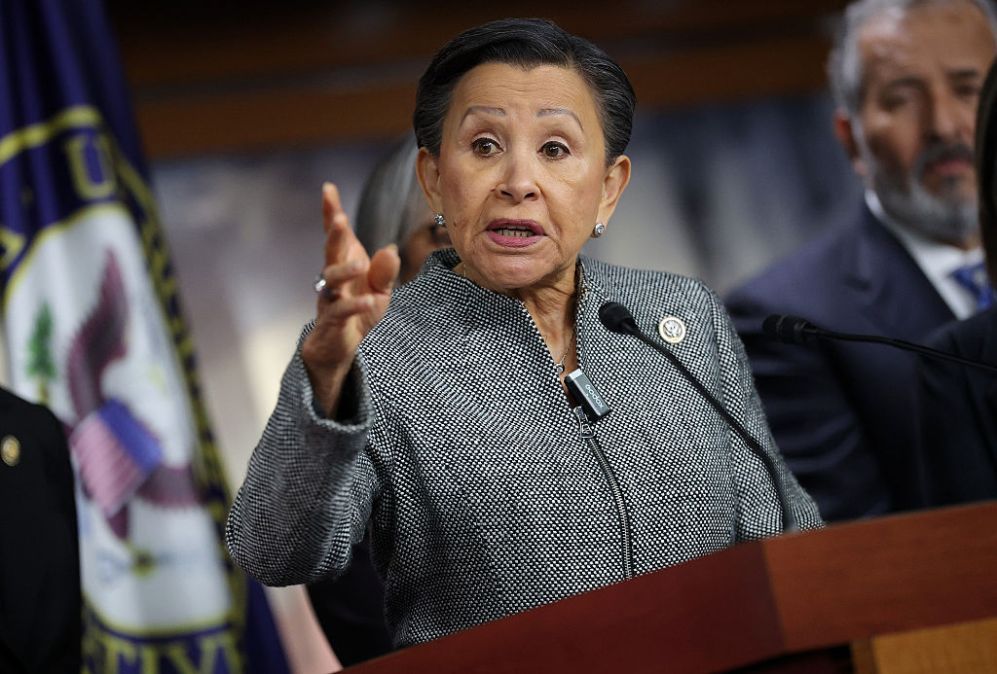
In remarks on the House floor Monday, Rep. Nydia Velázquez, D-N.Y., ranking member of the lower chamber’s Small Business Committee, said that nearly $6 billion in funding for “small, innovative companies” has been frozen since the end of September, when authorization for SBIR and STTR lapsed after the Senate failed to pass a short-term bill amid broader negotiations.
“These programs are overwhelmingly successful, boasting a demonstrated return across over 40 years of operation, resulting in groundbreaking technologies that have revolutionized medicine, telecommunications and military capabilities,” said Velázquez, who was one of four House lawmakers who tried to head off the funding cliff last September with a one-year stopgap bill.
“Unfortunately,” she continued, “negotiations started too late, and these agreements were too great to reach a deal before the deadline. I am proud to say that after months of uncertainty, we are finally turning the lights back on.”
The SBIR program, established in 1982 during the Reagan administration, was launched to spur small business innovation while strengthening federal R&D funding for tech-focused enterprises. Ten years later, STTR was created to fuel work between small businesses and nonprofit research orgs, with an eye on expedited lab-to-market innovations.
Per SBA data, the programs support 4,000 companies annually at roughly $4 billion per year. The federal government does not take equity or IP ownership in companies funded through SBIR or STTR.
The agreement reached by Ernst and Markey, the chair and ranking member of the Senate Small Business and Entrepreneurship Committee, respectively, includes callouts for bolstering research security, offering “strategic breakthrough funding,” boosting a commercialization readiness program and much more. The bill also aims to reduce administrative burden, make improvements to technical and business assistance elements of SBIR and STTR, and upgrade data collection processes.
Velázquez touted a provision she and Markey led to invest in contract officer training. The strategic breakthrough funding, she said, would “help attract both private capital and government buy-in to rapidly scale promising technologies.” And lawmakers from the House Science, Space, and Technology made “real improvements” to the foreign due diligence program, according to the New York Democrat.
“After a period of tremendous uncertainty, a reauthorization period of longer than five years will give small businesses and agencies the certainty they need for long-term planning,” Velázquez said. “The lapse in authorization over the past five months has been excruciating and unprecedented for small firms and labs who are at the cutting edge of technology. … This lapse was avoidable and the costs were real. We must be active in efforts to ensure it never happens again.”
Rep. Beth Van Duyne, R-Texas, credited Ernst, Markey, Velázquez, House Small Business Committee Chair Roger Williams, R-Texas, and House Science, Space, and Technology leaders Brian Babin of Texas and Zoe Lofgren of California for their work “to get these programs reauthorized.” The bill will “bridge the Valley of Death between research and commercialization” through better data practices across agencies, modernized resources and additional training for acquisition officials, she said.
“The SBIR and the STTR programs empower Main Street to deliver real solutions for both the government and the private sector,” Van Duyne said. “I thank my colleagues on both sides of the aisle and their staff for working to find a bipartisan path forward to reauthorize these critical programs.”