Tech talent, authority to operate among federal CIO’s 2026 priorities
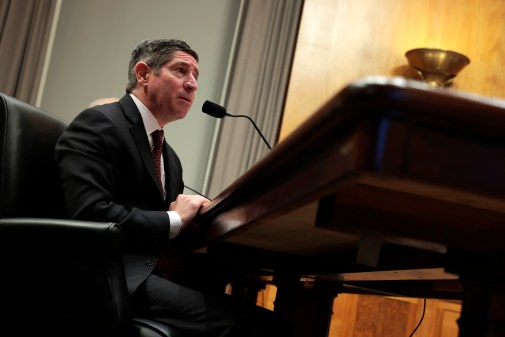
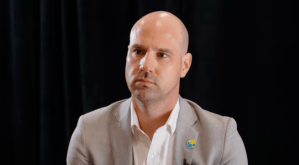
During his first months as federal chief information officer, Greg Barbaccia told FedScoop he’s learned that his role as the government’s top IT official is not purely to find problems and address them with technical solutions.
In his view, those are symptoms of a larger problem. His job “is to treat the disease.”
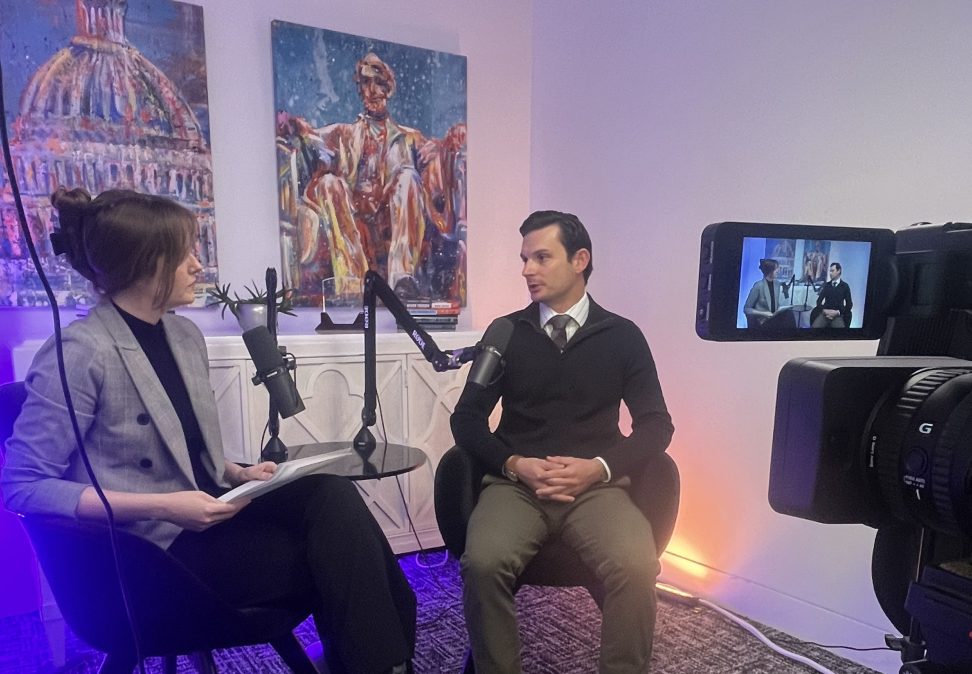
During a roughly 20-minute sitdown for the Daily Scoop Podcast, Barbaccia reflected on the Trump administration’s first year — including acquisition initiatives, workforce, and the DOGE — and previewed what’s on the horizon. Forthcoming actions, he revealed, include a tech talent initiative as well as a “revamp” of the security authorization process for government technology.
“If we don’t change the operating environment to one that does not allow for inefficiency and incompetent decision making, we’re bound to be stuck in this loop forever,” Barbaccia said.
Barbaccia came into the role of federal CIO from the private sector in the early days of the administration and has, so far, made few public appearances. But in an administration where technology modernization and efficiency have been under a spotlight, Barbaccia’s quiet public presence isn’t a reflection of the wide-ranging importance of his role.
His primary goal, he said, is to change the culture in government by getting “new people in who think differently” and empowering existing career officials to think outside of the box.
To that end, priorities for next year include a soon-to-be-announced tech hiring effort from the Office of Personnel Management.
While he didn’t want to get ahead of the workforce agency on an announcement, Barbaccia said it’s something he’s “very proud of” and described it as “a very high-level initiative that is going to be a novel way of bringing early stage tech talent in.”
He also previewed the idea of something like “a semester in the government” where students might be able to get college credit for their work in an agency. OPM Director Scott Kupor, who has also mentioned a tech hiring effort is brewing, similarly described a student-focused, public-private recruitment program in an interview with FedScoop in July.
Meanwhile, on authority to operate (ATO), Barbaccia said the administration is looking to go “back to first principles” to change the process, hinting at potential work with Congress.
The ATO process, as it stands, is used to plan for and manage risks of a technology in government before implementing it. Part of that process relies on security controls outlined by the Commerce Department’s National Institute of Standards and Technology.
But Barbaccia described that process currently as a box-checking exercise that’s disconnected from “reality in the field that it supports.”
“If NIST is not the right way to look at the security regulations, then we should work with the Hill and see what else is there,” Barbaccia said.
Rather than just looking to speed up the ATO process, which is currently slow, Barbaccia said the administration is looking to “change the environment and how we’re thinking about it, and to make it exponentially better.”
In addition to those two areas, Barbaccia said the administration plans to continue its ongoing efforts to reshape how the government buys cloud technology through the General Services Administration’s 20x initiative, as well as increasing information-sharing among agencies on government contracts.
“I think it’s kind of odd that we don’t have a way of looking at whole-of-government information. Why can’t we see all the contracts in one elegant solution?” Barbaccia said. “Data becomes intelligence when you [can] drive decisions from it.”
Examples of such data include information about people, decision-making, funding, budget, and contracts, he said. Currently, when leaders look at that information in silos, it’s difficult to see patterns.
State of tech workforce
While the Trump administration is poised to take tech-hiring action, a major impact in its first year has been a massive reduction of the federal workforce.
Last month, OPM’s Kupor shared that the administration had exceeded its goal of four departures to every one new hire. The government, he said, brought in about 68,000 people and lost roughly 317,000.
When asked about the impact of those cuts on the tech workforce in government, Barbaccia said it’s hard to put a number on it, but he acknowledged that there has been “disruption” — though he said “disruption is not intrinsically a negative thing.”
For the federal government, hiring tech workers has been a perennial challenge, partially due to the competition with the private sector, which can offer higher salaries. As a result, the government’s primary selling points have been stability and mission.
Addressing the question of how the government will pitch itself to prospective employees given the workforce cuts, Barbaccia pointed to impact and argued stability is still there for highly skilled, motivated technology workers.
“The mission focus is going to be things that are almost impossible to get in the private sector,” Barbaccia said. “And if you were to come close to this type of mission impact in the private sector, you’d probably be in government contracting anyway.”
Those workforce cuts have been a part of the administration’s once-Elon-Musk-affiliated DOGE initiative. The controversial organization, which also has technology-modernization marching orders, has recently been the subject of some confusion over whether it still exists.
As a result, Barbaccia addressed his relationship to DOGE and clarified its operational status.
“In the early days, when DOGE was more of a central entity, I had more liaising, but now the central command and control has been dispersed,” Barbaccia said.
President Donald Trump initially established the DOGE by renaming the U.S. Digital Service and establishing a temporary organization that would sunset July 4, 2026. While comments in a recent Reuters report suggested that the entity no longer exists, the organization pushed back on that in social media posts.
While the more centralized organization has been dispersed, Barbaccia said it’s his understanding that the teams assigned to agencies are still “alive and well,” but they are now embedded within those organizations, reporting to agency heads or working within a CIO shop.
“I don’t really have a central point any longer because it no longer exists,” he said.
CIO Council
Already, tech leadership has changed somewhat under the current administration, with more private-sector experience in CIO roles. That’s something Barbaccia said he’s proud of and has changed the dynamic of discussions.
Barbaccia estimated that of the 24 Chief Financial Officers Act agencies that sit on the CIO Council, nine to 11 of the leaders hail from the private sector. An early move by the Trump administration to make more of the IT chief roles “political” versus “career” designated roles made that possible.
The mix has resulted in private-sector leaders pointing out what doesn’t work and career leaders outlining the existing statutory requirements. When asked what areas that dynamic has helped with, Barbaccia pointed to the current focus on changing ATO.
Looking back at 2025, Barbaccia said he counts “camaraderie” and “candor” among the officials on the government’s council for IT leaders as the biggest win.
Barbaccia said he believes strongly in the idea that for any issue that one agency CIO shop is having, another agency has probably figured out how to solve it.
“Every agency has a few things that they do really, really well,” Barbaccia said, “and we’re doing the agencies and the taxpayer a disservice when we don’t have a marketplace for those ideas.”