Tax fraud costs up to $304B a year. More can be stopped before the refund goes out.

The Government Accountability Office recently released its first estimate of how much the federal government loses to tax fraud each year. By GAO’s accounting, which weighs both the fraud it can see and the income it presumes to be hidden, the figure runs between $116 billion and $304 billion, or roughly 2% to 6% of the $4.6 trillion in taxes owed. At the high end, that is about the size of the Navy’s annual budget.
But tax fraud is not a clean, easy-to-track problem. The GAO divides it into three broad categories: No.1. taxpayers who underreport income or claim credits they are not entitled to; No. 2. preparers who submit fraudulent returns for clients; and No. 3. criminals who use stolen personal information to file returns and collect refunds. The latter two cause the most concern; as organized fraud rings have grown more sophisticated and made identity-based fraud easier to carry out at scale, they have become a much bigger challenge for the government.
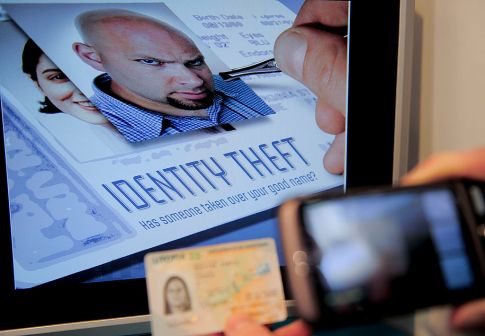
Increasingly, these operations function like supply chains. Consider a single stolen Social Security number. Stolen identities can be purchased online for less than $5 and used with falsified wage information to submit fraudulent tax returns. When a refund is issued, it is often directed to an account controlled by criminals, and the proceeds can then be laundered through other accounts or cryptocurrency. The next week, the same number might turn up on a federal student-aid application. The tax system sees a return. The bank sees a deposit. The aid program sees an applicant. But, no single participant may see the full cross-program picture.
When you put the pieces together, however, the picture changes quickly. An identity that looks legitimate on a tax return looks very different if it was created only a few months earlier, if its address and credit history don’t match the filer, or if the same information shows up on several other applications at once.
The IRS does some of this essential work, and the results show how much it can catch before paying a refund. Between 2018 and 2024, its automated screening blocked an estimated $88 billion in invalid or potentially fraudulent refunds. That is $88 billion the government did not have to chase after it was issued, when stolen funds can quickly disappear through those mule accounts, cryptocurrency wallets, or overseas banks. The IRS should be applauded for its aggressive actions to date.
The problem, according to the GAO, is that none of this adds up to a coordinated government-wide approach. Different IRS divisions design their own compliance programs, but the GAO recommended a more coordinated agency-wide anti-fraud strategy — and that is before you count what outside agencies monitor and find separately. That fragmentation creates a significant vulnerability for the U.S. that organized fraud rings are intentionally exploiting.
Enhancing protection against tax refund fraud will require putting more emphasis on what happens before a refund leaves the Treasury. In practice, that means verifying that an identity is real, that it belongs to the person filing and that it is not simultaneously being used elsewhere. It also means looking for connections across returns. A set of filings that shares a device, address, bank account or pieces of the same identity can reveal considerably more than any one return on its own.
The technology used to make those judgments must also keep pace with the technology used to evade them. Generative AI has made it cheaper and easier to fabricate documents, selfies and videos capable of fooling identity checks. A screening rule that reliably caught fraud a year ago may be considerably less useful today, requiring the government to update its tools in service.
For legitimate taxpayers worried about added hassle, none of this should be an issue. The effort should focus on the numbers and places with meaningful warning signs, while allowing ordinary returns to continue moving quickly through the system.
If done effectively, it won’t just help the U.S. government; identity-theft victims may have the most to gain. Consider how differently their side of this moves. The criminal can buy identity information, file a fraudulent return and move the proceeds before the victim discovers the theft.
On the other side, the victim may wait many months for the identity fraud case to be resolved. She may have sat down to file in April and then her return bounces back: someone has already submitted one using her Social Security number. So she starts the process of proving she is herself. Month after month, she proves she is who she has always been, waiting for a refund she was owed all along. The theft was fast, but the recovery is slow. If we stop the fraudulent return before the money goes out, we can often avoid the entire ordeal.
Prevention does not produce arrests, prosecutions or dramatic headlines. Its successes are refunds that never reach criminals and fraud rings that never get the chance to scale. That may be one reason it has historically received less attention than enforcement after the fact.
But, the GAO has now put a number on what is at stake. The $88 billion the IRS has already blocked is real money kept out of criminal hands. If as much as another Navy’s annual budget is being lost to tax fraud each year, we need to ask why we are still fighting a networked, organized fraud problem one office at a time.
Luke Wolf is the head of public sector for SentiLink, an identity, fraud, and risk solutions provider.