Judge rejects move to dismiss case on DOGE access to Treasury, OPM data
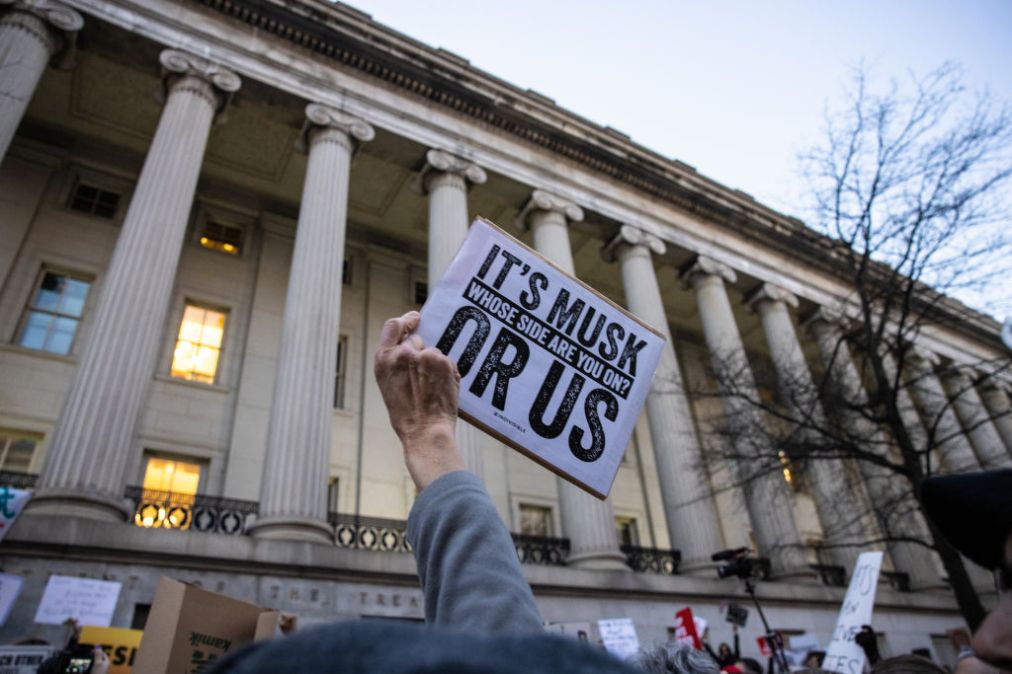
A federal judge has rejected the Trump administration’s motion to dismiss a lawsuit regarding the so-called Department of Government Efficiency’s access to Americans’ sensitive data.
In an order dated Wednesday, the U.S. District Court for the Eastern District of Virginia allowed Electronic Privacy Information Center v. U.S. Office of Personnel Management to move forward, ruling that the defendants failed to show that the plaintiffs’ amended complaint “should be dismissed at this time.”
The lawsuit, which was brought in February 2025 by EPIC, Democracy Forward and the Kaplan Law Firm on behalf of an anonymous former federal employee, argued that DOGE associates exceeded their legal authority by accessing OPM and Treasury Department databases containing the personal information of tens of millions of people.
The access, the plaintiffs argued, put their personal information at risk and amounted to a violation of constitutionally protected privacy rights. DOGE, the now-defunct tech collective launched by Elon Musk at the beginning of the second Trump administration, had accessed data housed by Treasury’s Bureau of Fiscal Service and OPM — meaning the data of nearly every federal employee and millions of others was exposed.
“DOGE’s unlawful access to federal personal data systems went far beyond any legitimate government purpose and jeopardized the privacy and safety of millions of people,” Robin Thurston, legal director at Democracy Forward, said in a statement. “The Trump-Vance administration violated numerous federal statutes restricting the handling and use of personal data.”
The motion to dismiss put forth by the defendants — DOGE, Treasury and Secretary Scott Bessett, and OPM and then-acting Director Charles Ezell — centered on lack of standing and failure to state a claim.
But both arguments had been rejected in other cases, and U.S. District Judge Rossie D. Alston Jr., wrote that by considering those cases and “applying the relevant standard at the motion-to-dismiss stage,” the defendants had not cleared the bar for dismissal.
“The court’s decision to allow this case to move forward is an important victory for transparency and privacy rights,” Alan Butler, president and executive of EPIC, said in a statement. “The federal government cannot simply hand DOGE the keys to Americans’ personal information and expect the courts to look the other way.”
The Trump administration has been on the receiving end of additional litigation regarding DOGE’s forays into sensitive government systems, including those controlled by Treasury’s BFS. That agency unit manages several payment systems, which contain individuals’ Social Security numbers, taxpayer ID numbers, home addresses and other personally identifiable information.
In summarizing the initial complaint, a press release from EPIC and Democracy Forward recounted how “DOGE illegally forced Treasury and OPM to disclose vast stores of personal information to unauthorized, untrained personnel.” Career agency staffers were blocked from stopping DOGE’s incursions and those who protested were fired, according to the complaint, as Musk’s representatives were provided “full access” to government payment systems.
Members of Congress are still trying to get a handle on what data was accessed by DOGE and how Treasury has responded to the incidents. Earlier this month, Democratic Sens. Elizabeth Warren of Massachusetts and Ron Wyden of Oregon sent Bessent a letter demanding details and answers about what the department is doing to “ensure that such a breach has been repaired and never occurs again.”