Trump taps Mark Zuckerberg, Larry Ellison for science, tech advisory panel
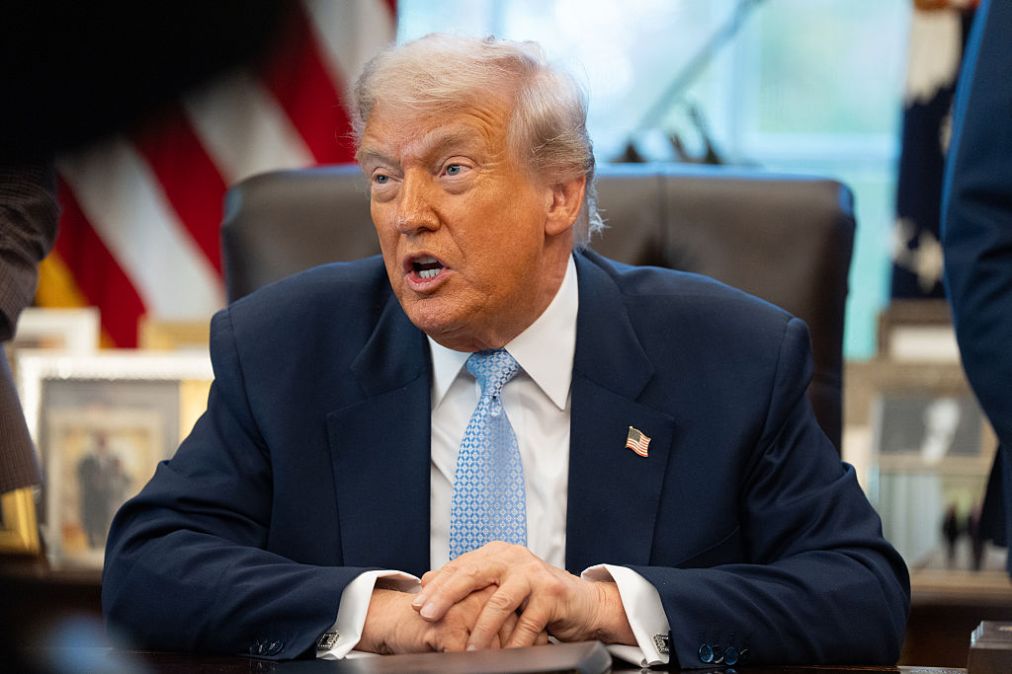
The technology industry is heavily represented in President Donald Trump’s first list of appointees to restock a White House science and tech advisory panel.
Among the 13 appointees to the President’s Council of Advisors on Science and Technology (PCAST) were Meta’s Mark Zuckerberg, Oracle’s Larry Ellison, Google’s Sergey Brin, and Nvidia’s Jensen Huang. That panel will be co-chaired by David Sacks, Trump’s AI and crypto czar, and Michael Kratsios, director of the Office of Science and Technology Policy.
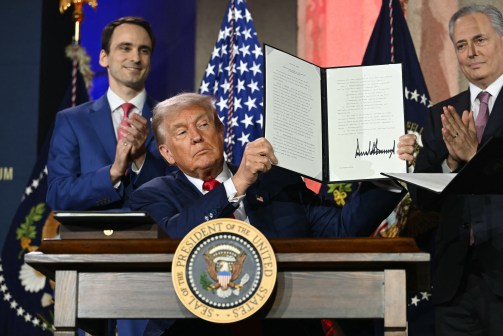
The PCAST has been around for decades as a way for the White House to receive feedback from scientists, engineers, technologists, and representatives from the private sector. While Trump announced the re-establishment of the council via executive order in January 2025, there hadn’t yet been details on its membership.
In addition to the Wednesday list, the White House said it expects to announce more appointees “in the near future along with information about the Council’s first meeting.” Trump’s PCAST will include up to 24 members.
The appointees are:
- Marc Andreessen, cofounder of venture capital firm Andreessen Horowitz
- Sergey Brin, cofounder of Google
- Safra Catz, executive vice chair and former CEO of Oracle
- Michael Dell, founder, chairman, and CEO of Dell Technologies
- Jacob DeWitte, cofounder and CEO of Oklo
- Fred Ehrsam, cofounder of Coinbase
- Larry Ellison, cofounder and chief technology officer of Oracle
- David Friedberg, venture capitalist, founder of The Climate Corporation, and cohost of the All-In podcast with Sacks
- Jensen Huang, cofounder and CEO of Nvidia
- John Martinis, a physics professor at the University of California, Santa Barbara, and co-winner of the 2025 Nobel Prize for Physics
- Bob Mumgaard, cofounder and CEO of Commonwealth Fusion Systems
- Lisa Su, president and CEO of AMD
- Mark Zuckerberg, co-founder and CEO of Meta (formerly Facebook)
At least one of the members, Su, is a second-time PCAST member. She was also among those President Joe Biden named to the panel during his presidency.
The announcement comes a few weeks after the PCAST’s status was the subject of an inquiry from House Democrats. In a letter to the White House, a coalition of lawmakers asked for details on the work of the PCAST amid the administration’s attempted cuts to federal science agencies, including a formal report on its membership and future plans.
Trump’s executive order reestablishing the advisory body placed an emphasis on a claim that the scientific community is “under threat” from “ideological dogmas” that “elevate group identity above individual achievement, enforce conformity at the expense of innovative ideas, and inject politics into the heart of the scientific method.”
That language appears to align with the administration’s controversial efforts to remove any initiatives, positions, or grant funding in the government related to diversity, equity, and inclusion. In comments last year, OSTP Director Kratsios called DEI initiatives “close-minded” and said they “degrade” the country’s scientific enterprise.
It’s not yet clear exactly what the current PCAST might prioritize, but past reports focused on topics such as networking and IT research, STEM talent, groundwater security, nutrition science, and harnessing AI, per a list maintained by Microsoft Chief Scientific Officer Eric Horvitz, a former PCAST member.