Energy Department sets up $293M funding opportunity for Genesis Mission teams
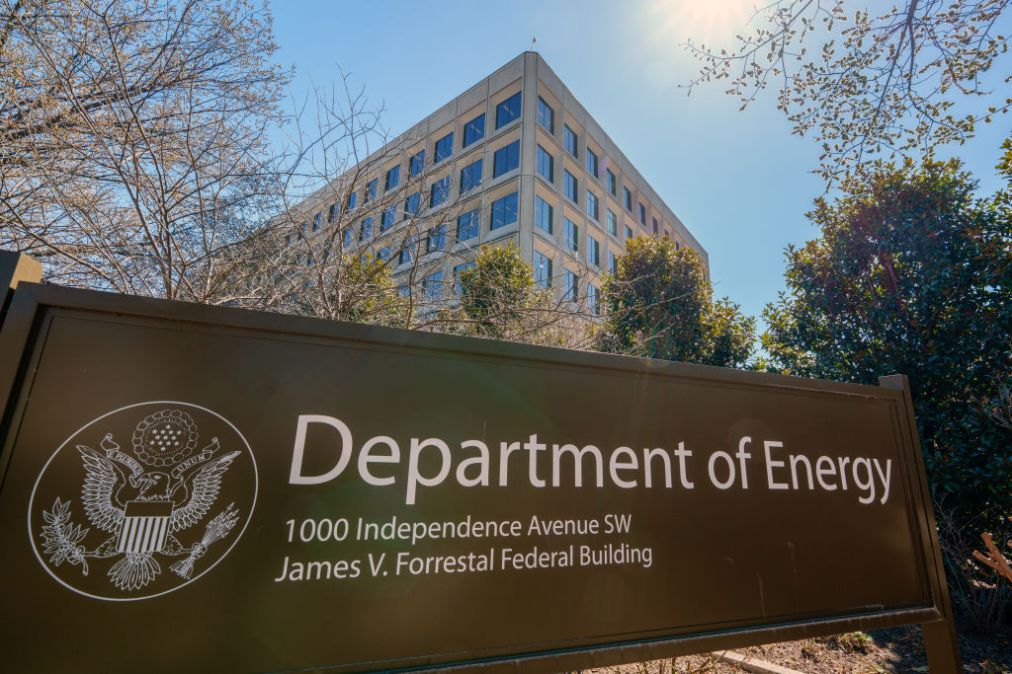
The Department of Energy is taking applications for interdisciplinary teams that will try to address one or more of the 26 identified challenges at the core of the Genesis Mission, the agency said Tuesday. DOE has earmarked $293 million in funding for the effort.
“With these investments we seek breakthrough ideas and novel collaborations leveraging the scientific prowess of our National Laboratories, the private sector, universities, and science philanthropies,” Darío Gil, DOE’s under secretary for science and Genesis Mission lead, said in a press release.
There are two award phases based on team size. Small teams can expect individual awards of $500,000 to $750,000, though the exact number of awards will depend on the availability of appropriated funds and number of meritorious applications, according to the RFA. Large teams will receive three to five times that of the small team awards.
Small team projects will last nine months, while large team projects will run for three years.
The Energy Department anticipates chosen teams will begin work by July 1. Applications will be evaluated based on several factors, including technical feasibility, cost-effectiveness and scientific merit.
The Genesis Mission is the Trump administration’s flagship technology project and framed as a coordinated national effort that aims to double the productivity of the U.S. research and development budget. The 26 challenges announced last month have helped put that goal into perspective, outlining objectives such as using digital twins to derisk the development of biotechnology, building an AI-fusion digital convergence platform and creating energy management strategies to support new data center technologies.
Since the Genesis Mission kicked off in November, the DOE has worked to quickly lay the foundation to enable execution.
“We’re going to show quite a lot of results this year,” Gil told FedScoop in an interview last month. The agency and its labs have made progress on AI supercomputer buildouts, as well as an agentic framework and integrated platform.
While much of the Genesis Mission centers on AI, it’s not about innovating for innovation sake, according to Gil.
“The part that people don’t appreciate is that it’s AI for something — for science, for engineering,” he said. “Sometimes it just gets reduced.”
The Energy Department launched a consortium in February to act as a single access point for members and resources. The consortium is hosting an event Thursday to help organizations identify collaborators for the current RFA and other Genesis Mission opportunities.
Initial Genesis Mission collaborators include Nvidia, Microsoft, AWS and 20 other technology companies. Anthropic was in the first wave of industry collaborators, but the Claude-maker is not listed as such on the Genesis website as of Wednesday.
The AI startup entered a high-stakes dispute with the Department of Defense in late February that has upended its place in the workflows of federal agencies. While Anthropic has filed a lawsuit against the administration following a governmentwide ban, agencies have been quick to take action.
“As directed by President Trump, the Department of Energy is reviewing all existing contracts and uses of Anthropic technology,” a spokesperson for DOE said in an email to FedScoop last week. “The Department remains firmly committed to ensuring that the technology we employ serves the public interest, protects America’s energy and national security, and advances our mission.”
The DOE did not respond directly to questions about Anthropic’s changing role in the Genesis Mission. Anthropic also did not respond to a request for comment.