VA head defends EHR budget ask to push program from ‘dial up’ to ‘cyber speed’
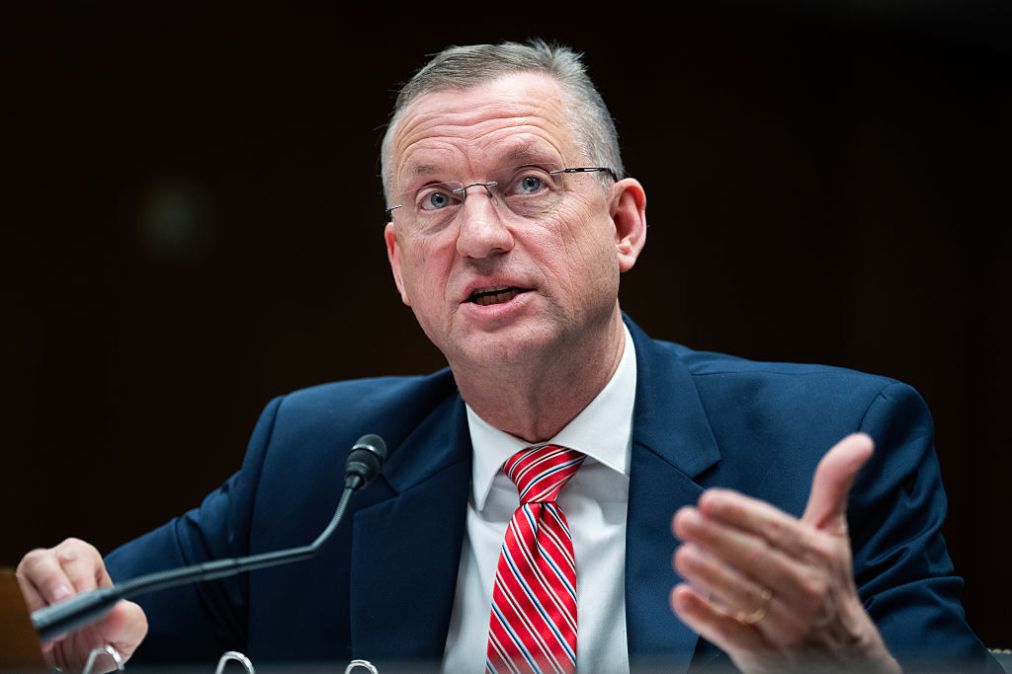
The only problem with the rollout of the Department of Veterans Affairs’ new Electronic Health Record is that they can’t do it fast enough, Secretary Doug Collins told two congressional panels this week.
During the VA’s budget hearings at the Senate Veterans’ Affairs Committee on Wednesday and a House Appropriations subcommittee on Thursday, Collins said the formerly assailed EHR system upgrades are now “actually working.”
“My biggest problem right now is I have executive directors calling me up and saying, ‘can we move up on the list?’” he told the House Appropriations Subcommittee on Military Construction, Veterans Affairs, and Related Agencies. “This is key for them, not only to do their work internally, but also their community care aspects and talking to other VA hospitals.”
The VA is seeking $4.2 billion to modernize the EHR, an $840 million or nearly 25% increase from last year’s level. VA Chief Financial Officer Richard Topping told the Senate panel that each site costs about $65 million to update, plus the cost of the program. In the latest version available, only $3.4 billion was included for EHR modernization in the 2027 Military Construction and Veterans Affairs Appropriations bill.
“We need this fully funded going forward,” Collins told the Senate VA Committee. “There’s no going back on the EHRM. We’re beyond that point, so it’s got to be done.”
Some of the aims of the EHR modernization are to make veterans’ records transferable between federal agencies and to community or commercial healthcare facilities.
“They’re working at cyber speed, we’re working at dial-up,” Collins told the Senate panel about community care and VA care record-sharing. “Until we are able to actually have an EHRM system that is part of the 21st century, we can’t talk to community providers. … Our current record system does not allow us to talk to each other, and we spend $700 million a year just to keep it alive.”
Modernization of the EHR began in 2017, but the VA halted the rollout in 2023 to renegotiate its contract with the vendor Oracle Cerner and resolve safety concerns.
Last month, Collins told a Senate Appropriations subcommittee that the first updates in four Michigan facilities “has been phenomenal, even by industry standard.” While lawmakers were skeptical last year after several attempts to update the system failed, they are now wondering how the VA got it to work.
Collins said in his first few weeks on the job, he sat down individually with Oracle and his EHR staff, then put them in a room to hammer it out.
“Within five minutes, they were yelling at each other — success, we got what we needed — because now we cut through the bull crap,” he told the House panel. “Two days after that, they locked themselves basically in a room for 48 hours and came up with a standardization plan that is now moved forward.”
While the bill already passed the House 400-15 last Friday, House Appropriations subcommittee Chair John Carter, R-Texas, said they’re “not through with the possibility of getting you some more money” and held the hearing regardless.
The VA plans to have 19 sites updated by the end of this year, with 26 new sites expected next year and 28 VA Medical Centers in 2028, an “aggressive timeline” to complete deployment at all sites by as early as 2031, the budget request said.
The funding bill was received in the Senate on Wednesday and has not yet been scheduled for further action.