DOT sets up no-drone zone along southern border
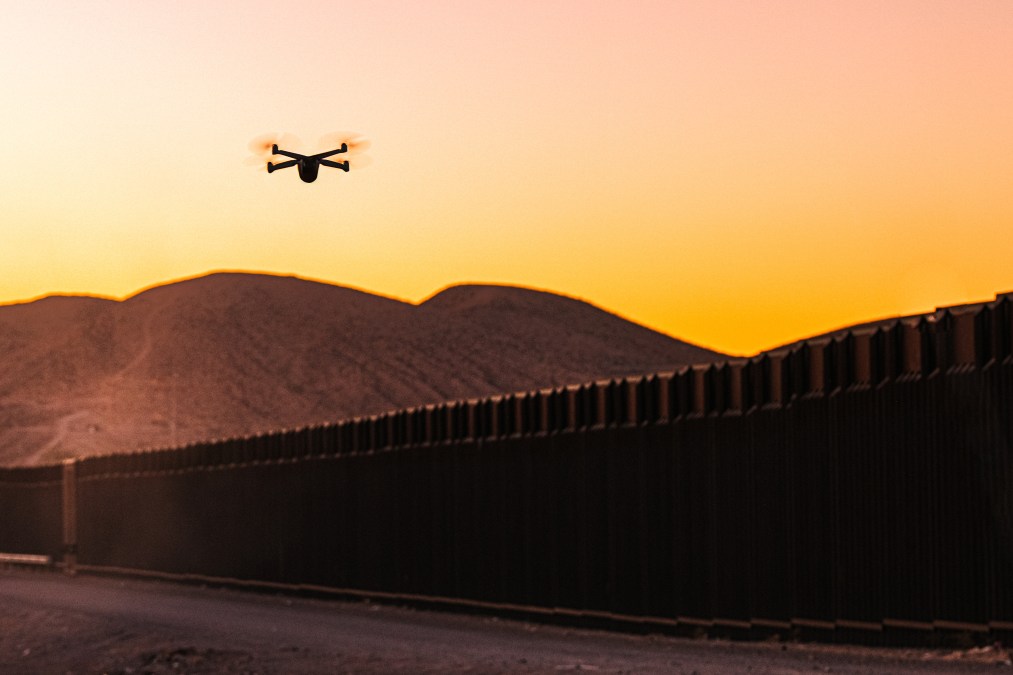
The Department of Transportation has established a new temporary flight restriction for drones along the southern border, according to a Friday press release.
The no-drone zone was launched in coordination with the departments of Defense and Homeland Security, citing national security concerns. The TFR bars any unauthorized drone activity up to 400 feet above ground level and extends one nautical mile north of the U.S.-Mexico border.
The agencies said the no-drone zone will “reduce risks to ongoing border security operations, protect federal personnel, facilities and the Homeland, and enhance enforcement against those who violate the restrictions.”
“Equipped with cutting-edge technology—including Directed Energy Weapons—our warfighters will shoot down any cartel drone that threatens America’s sovereignty,” Defense Secretary Pete Hegseth said in a statement accompanying the announcement.
The southern border has been a focal point for counter-UAS efforts. U.S. military officials have characterized criminal cartel drone use as “malintended” and a “very real” danger, DefenseScoop previously reported.
As a result, vendors providing DHS with AI-powered surveillance towers at the southern border are considering how to incorporate counter-UAS capabilities.
The influx of unmanned aerial systems has also led to an expansion of interagency partnership on drone defense. The Army-led Joint Interagency Task Force 401 has eased coordination since launching last year by serving as a mechanism for technology tests, standard-setting and procurement.
“Counter-UAS lives at the seam between military capability and civilian authority,” Bryan Stevens, deputy assistant director of the FBI’s Critical Incident Response Group, said during JIATF 401’s second summit in August. “The threat does not respect that seam, and neither can we.”
Last month, the Department of Energy’s National Nuclear Security Administration expanded its partnership with the task force, aiming to improve collaboration and information sharing. As part of the memorandum of understanding, the two entities created a framework for sharing counter-UAS test data to avoid duplicative research.