House Democrats push FAA to pause AI tool deployed in DC airspace

Lawmakers are continuing to question the Federal Aviation Administration’s rollout of its AI-powered aviation data tool, called the Strategic Management of Airspace Routes and Trajectories, or SMART.
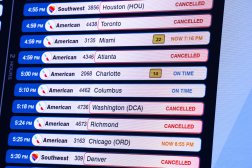
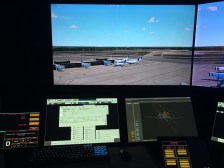
The tool debuted last month in a limited mode around the National Capital Region, spanning Baltimore/Washington International Thurgood Marshall Airport, Dulles International Airport and Ronald Reagan Washington National Airport. The goal is to provide aviation specialists with a centralized view of 200 data streams to help cut down on flight delays and cancellations.
In a letter sent Tuesday, most of the Democrats within the House Committee on Transportation and Infrastructure asked the Government Accountability Office to investigate the FAA’s safety risk management activities tied to SMART and related platforms, identify the FAA’s quantifiable performance metrics used for evaluations and assess the development and deployment strategy.
“The use of artificial intelligence within SMART has rightfully raised serious questions about its reliability and safety benefits, particularly on its potential to interfere with decision-making by experienced air traffic controllers or to hallucinate safety-critical information,” the members said.
Last week, more than two dozen House Democrats sent a letter to Transportation Secretary Sean Duffy and FAA Administrator Bryan Bedford, urging the officials to pause use of the tool until questions around safety testing, implementation and oversight were answered.
“I support modernizing our aviation systems, but passenger safety must come first,” Maryland’s April McClain Delaney, who co-led the letter, said in a statement Friday. “I’m calling on the FAA to pause this rollout, show us the safety testing, and explain who is accountable when something goes wrong.”
The group of congressional leaders characterized the tool’s rollout as “rush[ed]” and said it was launched “surprisingly” and “recklessly.” The letter also highlighted reported concerns about the tool from aviation workers and the airline industry.
“We have heard from several sources that frontline aviation safety workers were notified of the
SMART tool rollout mere days in advance or not at all, giving them no time to learn how the system works, how it is incorporated into their workflow, and what oversight and accountability mechanisms maintain aviation safety standards,” per the letter.
Rep. Don Beyer of Virginia, one of the letter’s signatories and co-leads, was quick to express skepticism about the AI system, calling for the DOT unit to “immediately suspend use” on the day the tool launched. Some of his worries were alleviated after a conversation with Bedford, NextGov reported, though his support of the letter suggests at least some of the concerns lingered.
“Before deploying its AI-enabled SMART air traffic control tool, the FAA must demonstrate, through air traffic controller feedback and independently verified testing, that this technology is safe and reliable, and it must clearly communicate those findings to the public,” Beyer said in a statement accompanying last week’s letter.
Public concern surrounding AI is on the rise — and top of mind for congressional leaders and agency heads.
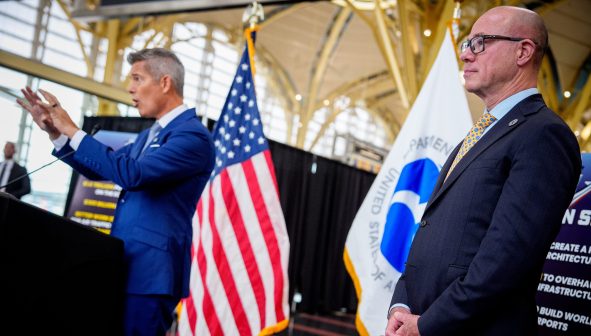
As part of the SMART platform launch, Duffy and Bedford repeated phrases about human workers continuing to be the ultimate decision-makers.
“There’s been a lot of conversation about AI and who’s controlling the airspace,” Duffy said during the launch event last month. “It’s always going to be a human that manages the airspace in America. This tool won’t manage airspace, but it gives us better information, better data to manage the airspace.”