Oak Ridge teams up with IBM, AMD to launch quantum error correction platform
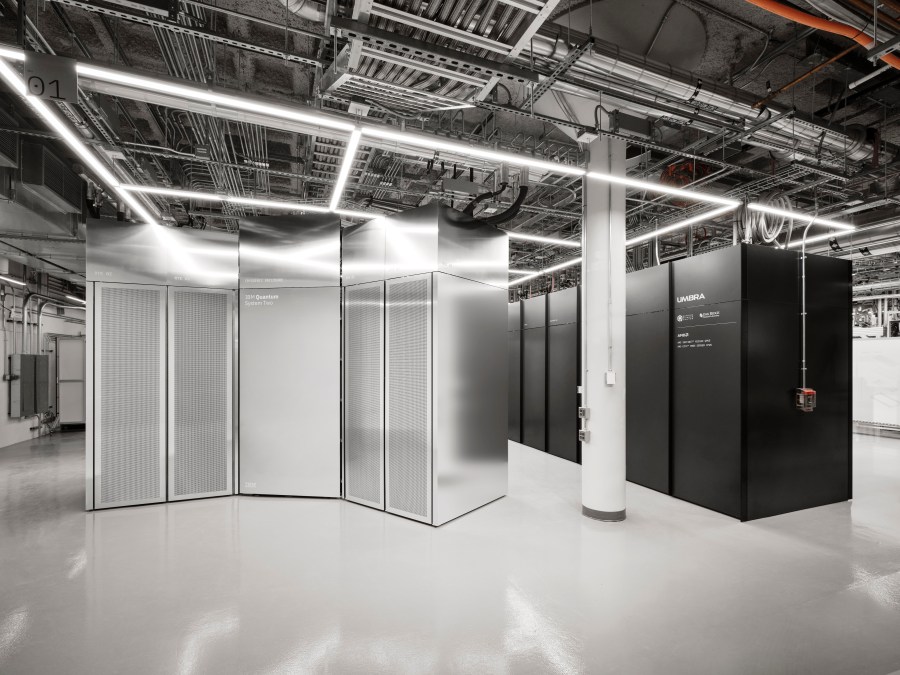
Oak Ridge National Laboratory, IBM and AMD unveiled a co-design platform for quantum error correction Thursday with the Department of Energy’s Quantum Genesis Mission in mind.
The Quantum Genesis Mission is an initiative that launched in June and is designed to accelerate quantum system development, advance high-impact, scientific use cases and build a supercomputing facility for engineers to access emerging capabilities.
DOE kickstarted what it’s calling the Q competition to reach those goals, inviting proposals for deploying quantum computers that have at least 100 logical qubits and can perform hundreds of millions of fault-tolerant operations. It’s a roughly 230-fold increase in hard operation count compared to experiments being conducted currently, per the joint announcement this week.
The co-design platform “will help us build those systems sooner,” Scott Crowder, VP of IBM’s quantum adoption and business development, told FedScoop. “This doesn’t solve everything, but it’s a really important first step in terms of trying to accelerate quantum error correction research.”
The platform will live in a rack of AMD’s GPU and CPU systems sitting in the same computation center as IBM’s quantum computers in Poughkeepsie, N.Y. The codesign platform will connect to the Oak Ridge Leadership Computing Facility in Tennessee.
Teams will use the platform to compare different methods and techniques — and then test ways to scale.
“Solving the challenges of quantum error correction is essential to making quantum computing a practical tool for scientific discovery, which is a priority for Oak Ridge National Laboratory,” Travis Humble, director of the Quantum Science Center at ORNL, said in a statement. “ORNL’s strength in high-performance computing, combined with the expertise of our QSC partners — like IBM and AMD — creates an opportunity to push the boundaries of what is possible.”
Once execution begins, the learnings will be used by the companies to improve future generations of how compute, networking, and software can be codesigned with quantum computers.
The collaboration with industry has been a key foundational layer of the Energy Department’s Genesis Mission and the related quantum initiative.
“In order for us to pull this off, it really is a collaboration with government, academia, etc.,” Crowder said. “It’s not just about building a quantum computer. It’s really to unlock the ability to do these kinds of computations.”
The platform is the latest illustration of the partnership between IBM and ORNL. The two groups, alongside the Cleveland Clinic, said they achieved the first-known computations of fusion materials on a quantum computer earlier this year.