Agencies fall short on documenting AI acquisition best practices, GAO says
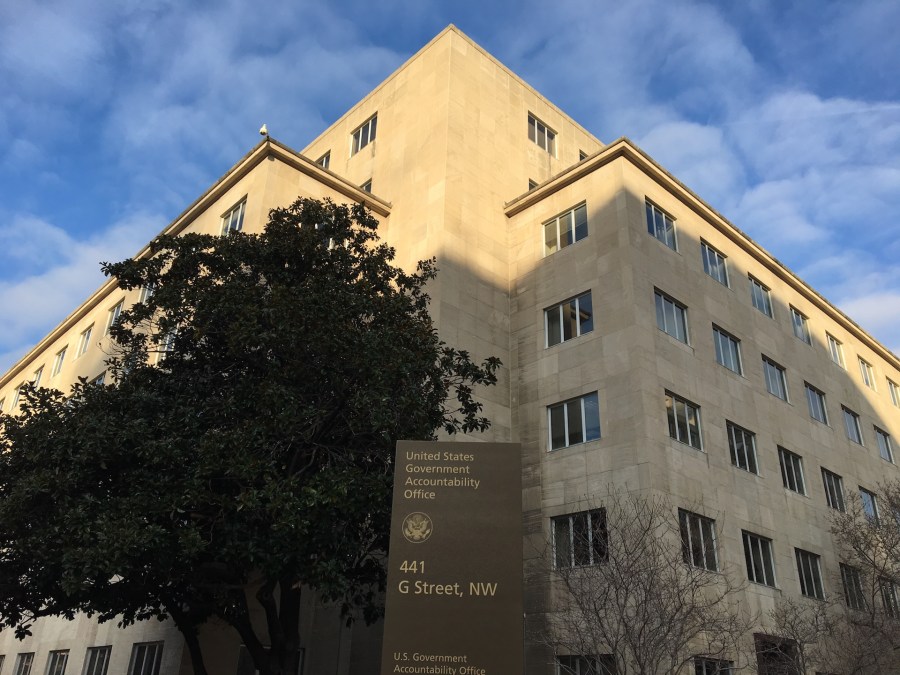
Federal agencies are still in the early days of acquiring artificial intelligence tools, but the congressional watchdog is worried that they’re not doing their best to document their findings.
In a report released Monday, the Government Accountability Office said it found that selected agencies have not been “systematically collecting lessons learned from AI acquisitions” — something the watchdog said is a “necessary first step” to follow White House guidance and a missed opportunity to set the stage for improvements.
As part of its audit, the GAO analyzed 44 AI contracts and agreements awarded between September 2018 and February 2025, as well as any supporting documentation. The watchdog also interviewed procurement officials to better understand the contracting details and the thought processes behind agency AI acquisition strategies.
Those conversations revealed an immediate issue between Office of Management and Budget guidance and internal agency policies.
“OMB has stated that agencies should share knowledge about AI acquisitions through a web-based repository developed by the General Services Administration (GSA),” the GAO stated. “However, officials at four agencies—GSA and the Departments of Defense (DOD), Homeland Security (DHS), and Veterans Affairs (VA)—told GAO they were not prepared to do so because their agency policies did not require them to collect lessons learned.
“As a result,” the report continued, “the agencies are missing opportunities to identify and apply best practices—such as contract terms related to data rights or testing requirements—or to avoid mistakes as agencies increasingly acquire AI.”
Better accounting for how decisions are made in acquiring AI tools and systems is especially crucial given how many choices agencies face. A sampling of those choices noted by the GAO include: agency-directed vs. vendor-driven; Federal Acquisition Regulation-based contracts vs. other agreements; custom acquisitions vs. leveraging established contracts; and AI as a service vs. as a product.
The “great latitude” agencies have in following one or more of those acquisition approaches makes sense given the nascent days of this AI lifecycle, as well as the general acknowledgement that “each acquisition is unique, and what works well under one set of circumstances may not work well under another,” the report noted.
Nevertheless, the watchdog endorsed some acquisition approaches over others. For example, the GAO believes that “acquiring AI as a service can often be a preferred approach” because agency officials relayed that “the quality of services vendors provide affects performance outcomes more than the quality of model algorithms (i.e., the core software product).”
The GAO also found common challenges facing agencies that might be more easily mitigated if they were documenting those issues in one, accessible place. Some of those challenges include access to subject matter experts, protections for government data and intellectual property rights, pricing and overall costs, traditional acquisition timeframes and more.
“Without systematic, robust knowledge sharing, federal buyers are more likely to make avoidable mistakes across the acquisition life cycle when they buy AI in the future,” the GAO concluded. “Officials from all of our selected agencies told us they had to figure out how to acquire AI on their own, and that having lessons learned from other federal AI buyers to apply would help them achieve better AI acquisition outcomes. They also told us that having agency-vetted terms and conditions to include in contracts would be beneficial.”