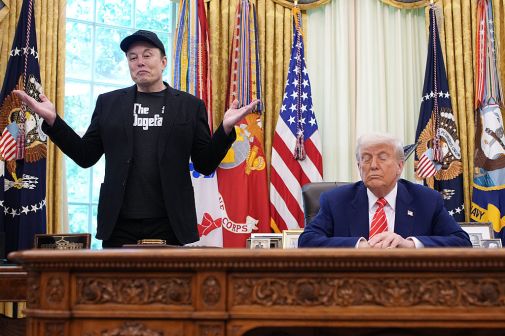
SBA refocuses Regional Innovation Cluster program following DOGE cuts
A year and a half after the so-called Department of Government Efficiency terminated the contracts of 17 Regional Innovation Clusters, the Small Business Administration announced nine new awardees for the initiative to spur technological development across the country.
The new RICs, unveiled earlier this month, include defense-focused clusters in Arizona, southern California, Louisiana, northern Michigan and central/south Florida; biotech organizations in Tampa Bay and the Mid-Atlantic region; an advanced manufacturing group in San Antonio and Austin; and a transportation cohort in the Ozarks.
The agency’s initial callout for applications in August 2025 — just a few months after DOGE delivered its cuts — sought organizations focused on advanced manufacturing, critical minerals, nuclear microreactors, quantum tech and emerging systems, AI, cybersecurity, IT, and semiconductors.
An SBA spokesperson said in an email to FedScoop that the agency’s prioritization of defense and manufacturing didn’t reflect a pivot away from AI, cyber and other tech areas, but instead folded into the administration’s focus on “rebuilding American industrial dominance.”
“The new awards identify the industries the clusters will serve, rather than every technology they will support,” the spokesperson said, “so the emphasis on defense and manufacturing does not represent a shift away from those technologies.”
Launched in 2010, the RIC initiative was conceived as a relatively low-cost way to fuel innovation in geographic regions across the country, serving as connective tissue for businesses, suppliers and institutions.
At $7 million via congressionally appropriated funding through SBA’s entrepreneurial development programs, the topline figure backing the nine new RICs — which join three that survived DOGE — is less than the $9 million allocated to the program in fiscal 2025 and 2026.
But the White House’s initial fiscal 2027 budget zeroed out the RIC initiative altogether. And the SBA spokesperson said the agency has “introduced new pathways to capital for businesses in critical industries and tailored resources to help them expand production.”
Jason Rittenberg, who worked with the SBA and several RICs while serving as vice president of the Ohio-based science and tech nonprofit SSTI, said it was “a bit of a surprise” to see the new awards go out given Trump administration moves to delay funding and cut contracts at the National Institutes of Health, the National Science Foundation and other agencies.
But the RIC program “has shown meaningful benefits for businesses and employees,” Rittenberg noted. And DOGE — while now more institutionalized across the government — is a bit more in the rearview, giving applicants the impression that to a “certain degree, things have settled down a little bit,” he added.
“The administration doesn’t seem to be spending all the money that they’re appropriated [but] they’re also following through more often on the announcements that they are actually putting out the door,” said Rittenberg, now the principal of Excel Regional Solutions. “So maybe groups are also just starting to read it as a little bit less risky than maybe things would have felt … a year ago.”
The SBA spokesperson said the discontinued RICs “failed to deliver results for small businesses” and the program is now refocused “on reindustrialization across critical industries.”
Heath Naquin, who leads the Mid-Atlantic Biomanufacturing Scale-Up Cluster and previously served as a special adviser to SBA’s Office of Investment and Innovation, downplayed any concerns about the program’s recent past ahead of the application process.
The new RIC, which will enlist biomanufacturing organizations in Pennsylvania, New Jersey, Delaware, Maryland, and Washington, D.C., should help highlight “all the assets that are across the entire region” and “leverage additional resources” for the groups, he said.
“There’s money going in biomanufacturing all over and onshoring, great, but let’s not recreate the wheel here,” said Naquin, whose day job is senior vice president for innovation and new ventures at University City Science Center in Philadelphia. “Here’s a legitimate hub … and we really do hope it helps build up the reputation and the business friendliness.”
The new RIC contracts were enacted Sept. 30 and will each run for two years. The SBA spokesperson said the new RICs represent organizations with “proven experience supporting critical industries and technologies” that will “help small businesses in those industries commercialize innovations, expand domestic production, and strengthen supply chains essential to America’s industrial base.”
Rittenberg was skeptical of the program’s future in the aftermath of DOGE’s targeting of it, but he’s been encouraged by the SBA’s recent RIC moves, including putting out a request for information that asked the small business tech community to weigh in on what they’d like to see going forward.
“You see the questions that the agency is asking, you can kind of get a sense of where their mind is,” he said. “I think doing that and then following up with the competition probably helped people understand that this was something that was being given serious thought in the agency, and maybe did help people feel more comfortable putting together … a serious and competitive proposal.”