1 year into Genesis Mission, Energy official emphasizes need for more funding

The Department of Energy-led Genesis Mission has become more tangible since it first kicked off a year ago, from unveiling its platform to awarding teams focused on solving some of the identified national challenges.
There’s certainly more work to be done, and it’s going to take more money to make it happen.
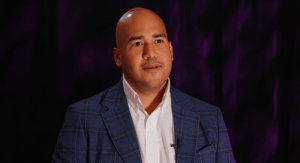
“We are limited by funding at the scale of the impact we ought to be having, but I don’t like complaining about it,” Darío Gil, DOE’s under secretary for science and director of the Genesis Mission, said in an interview with FedScoop. “We’re making good progress, showing that we’re executing well, collaboratively, and bringing everybody together.”
“But without a doubt, we need to make the case for additional investment to make the Genesis Mission the success and scale that is warranted for the American economy,” he added.
When the executive order creating the Genesis Mission was unveiled last year, the goals were lofty. Compared to the likes of the Manhattan Project, DOE was tasked with leading the effort to accelerate AI development, capitalize on advancements in high-performance computing and develop a platform capable of expediting scientific breakthroughs.
Over the past year, the goals have expanded to include doubling the productivity and impact of America’s research-and-development engine and a slate of quantum-related aims.
Around 15 federal agencies have gotten on board, committing more than $5 billion and bringing a range of challenges to tackle. With a whole-of-government approach taking shape and more priorities added to the list, funding could quickly become a make-or-break factor.
“That’s why partnerships are important,” Gil said. “Everybody can contribute, but there’s no doubt we’re limited.”
Industry partners have committed a combined $2.5 billion to the overall initiative in the form of compute, model access, tokens and more.
One way industry has been pitching in is through the Genesis Mission Consortium. In July, officials said they had garnered about 40 participating organizations, though that number has since grown to around 70, per Gil.
“Everything that we have done is to bring all the stakeholders to the table, and the consortium reflects that,” Gil said. “I have been impressed and surprised about the scale of it, but the design and the desire to participate with the private sector was always there from the beginning, as is with universities and philanthropies.”
Even with industry and federal agencies backing the Genesis Mission, Gil said congressional support is critical.
“I have no bigger priority in my life than Congress,” he said. “It’s been the case for many, many, many months. This is not something I’m just saying now.”
The Energy Department official said he has been working on a bipartisan basis across chambers to share details, give demos and provide technical assistance to the relevant committees so that they have the full context.
“Genesis Mission is a decade-long endeavor,” Gil said. “It cannot be successful to the scale of ambition we want without Congress making it their own. Congress is an indispensable partner, leader on this journey.”
Congress has not yet passed fiscal 2027 appropriations for the Genesis Mission, though both chambers rejected the White House’s request to carve out a $1.2 billion budget for DOE’s AI and quantum office. Currently, DOE and the national labs are operating at fiscal 2026 funding levels as part of a continuing resolution that will expire Dec. 11 at midnight.
The Senate Committee on Appropriations released draft bill text and summary for Energy Department funds earlier this month, recommending a total ceiling of roughly $467.8 million for Genesis Mission-related work across three DOE offices.
When Congress returns next week, lawmakers will have less than two weeks to reach a final compromise on appropriations. Getting appropriators to allocate more money to any project isn’t easy, even with bipartisan support.
“I have all the time in the world for Congress,” said Gil, who was headed to the Hill after the interview. “I’m absolutely making the case, and we’re advocating for it strongly.”
The year ahead
Over the past few weeks, technology system instabilities have dominated headlines and disrupted the American public’s travel, banking and work. In some cases, legacy systems were to blame for outages.
The Energy Department is taking modernization seriously as it brings more AI, quantum and high-performance computing to the table.
One of the focuses is on cleaning up and improving the accessibility of datasets.
“Without a doubt, there’s a huge amount of effort that is still required to bring datasets that have been collected and make them AI-ready,” Gil said. “Getting data AI-ready is not the same as saying the data is available for download on a website or in a database.”
Teams have worked to bring hundreds of datasets up to par, setting “solid” standards in the process across national labs.
Another area of focus is on scientific instruments that need to be upgraded.
“That journey is not yet done,” Gil said. “We’re tackling it and we have to continue to scale.”
Looking to the year ahead, the Energy Department official said there would be more funding opportunities for teams to tackle the national challenges, scaling around workforce development and fellowship programs and tangible advancements with the platform.
“We’re just thrilled about the momentum,” Gil said. “In a year, a lot got done.”