The award would continue “vital” services for six months after expiration of Anthropic’s OneGov deal, per the agency. But contracting experts question the justification.
The Robert C. Weaver Federal Building, the current headquarters of the Department of Housing and Urban Development, is seen on July 8, 2025 in Washington, D.C. (Photo by Kent Nishimura/Getty Images)
Julian, who has served as HUD’s assistant CIO since July 2025, takes over for Eric Sidle. Both previously worked at EV firms Chargepoint and NIO, as well…
The health department initially rolled out Claude to all of its workers in December 2025. Anthropic’s discounted deal with the government ends Oct. 31.
From left to right, Google Public Sector CEO Karen Dahut speaks with GSA Administrator Ed Forst, DOD Undersecretary for Acquisition and Sustainment Michael Duffey and Google Cloud CEO Thomas Kurian at the Google Public Sector Summit on Oct. 20, 2026 in the Ronald Reagan Building and International Trade Center in Washington, D.C.
FAA Administrator Bryan Bedford, right, and Transportation Secretary Sean Duffy, left, speak during a news conference at Ronald Reagan Washington National Airport on Sept. 28, 2026 in Arlington, Va. (Photo by Andrew Harnik/Getty Images)
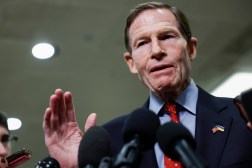
Sen. Richard Blumenthal, D-Conn., speaks with reporters after attending a closed-door, classified briefing for Senators at U.S. Capitol Building on Feb. 14, 2023 in Washington, D.C. (Photo by Anna Moneymaker/Getty Images)
Jennifer Franks, director of the GAO’s Center for Enhanced Cybersecurity, speaks during the Elastic Public Sector Summit on March 19, 2026, in Washington, D.C. (Scoop News Group photo)
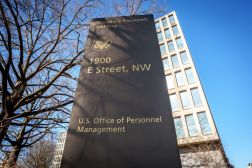
A sign marks the location of the Office of Personnel Management headquarters building on Jan. 29, 2025, in Washington, D.C. (Photo by J. David Ake/Getty Images)
Joe Gebbia, chief design officer at the National Design Studio, speaks during an event to unveil the new America.gov website, at the Andrew W. Mellon Auditorium in Washington, D.C., on Sept. 29, 2026. (Photo by Kent NISHIMURA / AFP via Getty Images)
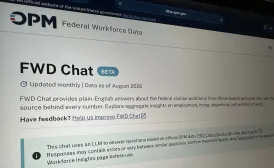
The Office of Personnel Management released a beta version of a Federal Workforce Data Chatbot with plans for improvement and integration with America.gov. (Madison Alder/FedScoop)