Secret Service begins recruiting for AI working group modeled after DHS AI Corps
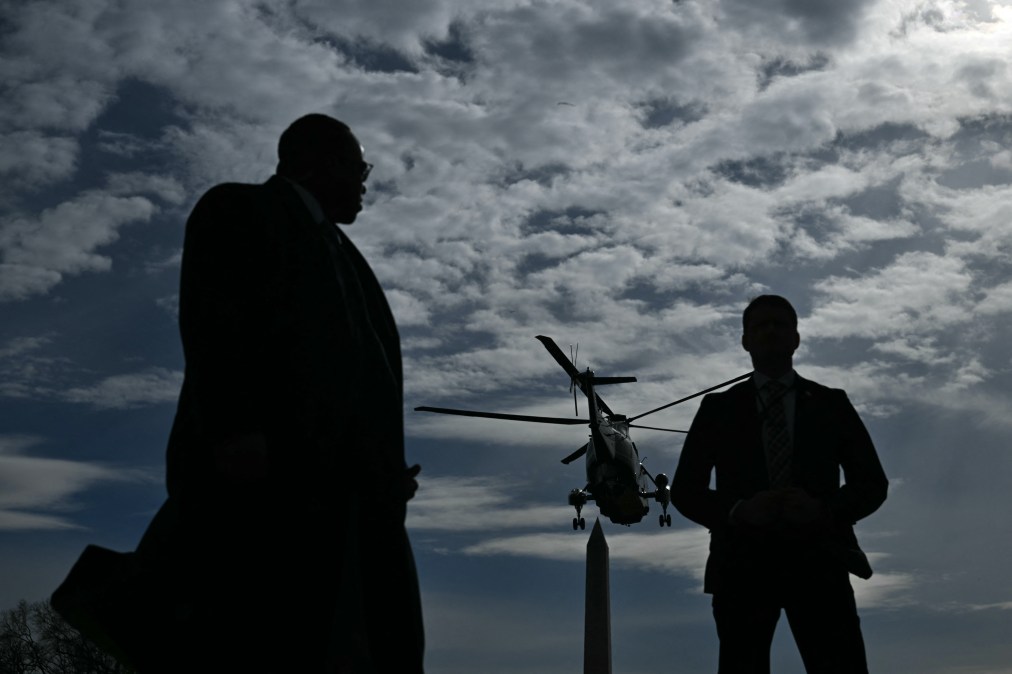
The Secret Service is gearing up to launch what CIO and Chief AI Officer Chris Kraft is calling a new AI Program, which will act as a working group that comes in and helps IT teams.
“We can take AI experts and have them work on a challenging need in one area, and then they can come back and other groups go work on other efforts,” Kraft told FedScoop at Secret Service headquarters Wednesday in Washington, D.C.
The group will consist of 10 members initially, according to Kraft, and will also be tasked with identifying areas of opportunity to implement AI and other emerging technologies.
“Having that internal expertise, I believe, will be really transformational for us,” he said.
The Secret Service already uses AI technologies for license plate identification, facial recognition and other threat analysis. The AI group will focus on iterating existing use cases, as well as others like expanding counterfeit currency identification.
“My experience with artificial intelligence is that if you’re not at least on par with others right now, and you don’t actively work to stay there or get ahead of the curve, you’ll quickly fall behind,” the IT leader said.
Kraft initially joined the Secret Service as acting CIO. At the end of 2025, he was sworn in and took on the title of CIO and chief AI officer. Prior to the Secret Service, the senior official held leadership roles at the Federal Emergency Management Agency and, most recently, at Department of Homeland Security headquarters as acting CTO and deputy CTO of AI and emerging technology.
At DHS headquarters, Kraft primarily focused on AI efforts and leading the DHS AI Corps. The AI Corps is said to have been the largest dedicated federal AI team at its height, comprising 50 positions that brought in massive interest. More than 14,000 applications were fielded, with many of those coming from Big Tech companies, like Meta and Google.
“We’re trying to generate interest,” Kraft said of the new AI Program, pointing to recent LinkedIn posts that direct potential applicants to job postings and other promotional tactics that were used when recruiting started for the AI Corps.
The to-be-formed AI working group will be “similar to what we had with that DHS headquarters team,” Kraft said. “That’s a great model.”
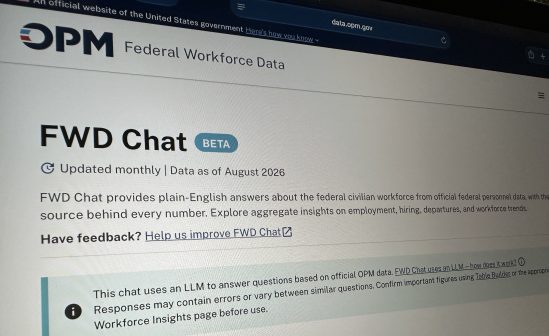
AI Corps was a tech talent hiring sprint that helped the agency build an enterprisewide generative AI tool and assisted across components. Reports suggest the team has since disbanded and remaining members were reassigned. Like other agencies, DHS saw its workforce squeezed over the past year, losing more than 800 IT managers in 14 months and 12,000 workers overall since the start of 2026, according to the Office of Personnel Management’s Federal Workforce Data. DHS did not respond to questions about how the AI Corps has fared.
There is benefit to standing up a working group within a component, according to Kraft.
“It’s easier to tie in to all of our different mission areas, whether it’s protection or investigation or other areas,” Kraft said. “We’re much closer to the mission, versus going across components and coming in as an external group.”
Kraft plans to apply lessons learned from his previous roles to ensure the AI group succeeds, such as the significance of testing capabilities at scale to assess a project’s resiliency and strategies to encourage high engagement among staff.
“Education and training for the workforce are areas that I focused on a lot in my prior roles,” the technology leader said. “I did something here late last year, and I want to continue to do it: AI lunch-and-learns on a regular basis where we just bring together anyone in the organization that wants to spend an hour and learn about some topic around AI in a way that’s practical and not overly complex.”
The AI Program will help further embed the technology into the workflows of the Secret Service’s 8,000 workers. In addition to providing security to protectees and key locations, the Secret Service leads the National Threat Assessment Center, works with the National Center for Missing and Exploited Children and investigates financial crimes.
Stakes are high as the agency ties AI adoption to increased efficiency and cost savings amid a governmentwide focus on all three. In addition to past experiences, Kraft said he is leaning on fellow federal CIOs and AI leads across and outside DHS to sidestep potential challenges.
“A really important part of being successful is to collaborate and share information,” Kraft said. “You can build on what other people are doing.”
This article was updated March 5, 2026, to reflect the size of the Secret Service’s full workforce.