HUD eyes AI tool to review grant spending. Housing advocates have concerns

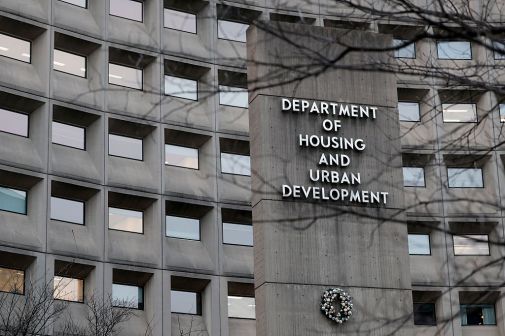
The Department of Housing and Urban Development is planning to launch an AI tool to analyze how grant recipients are spending their money, a move the agency’s top finance official has said is aimed at eliminating waste, fraud and abuse.
While housing and technology experts think there could be efficiency gains to be had with the tool, they also have foundational questions about whether an AI system of that kind could inject uncertainty into the grant delivery process, disadvantage small awardees that don’t have the budget to counter AI errors, and open the door to politically motivated decision-making.
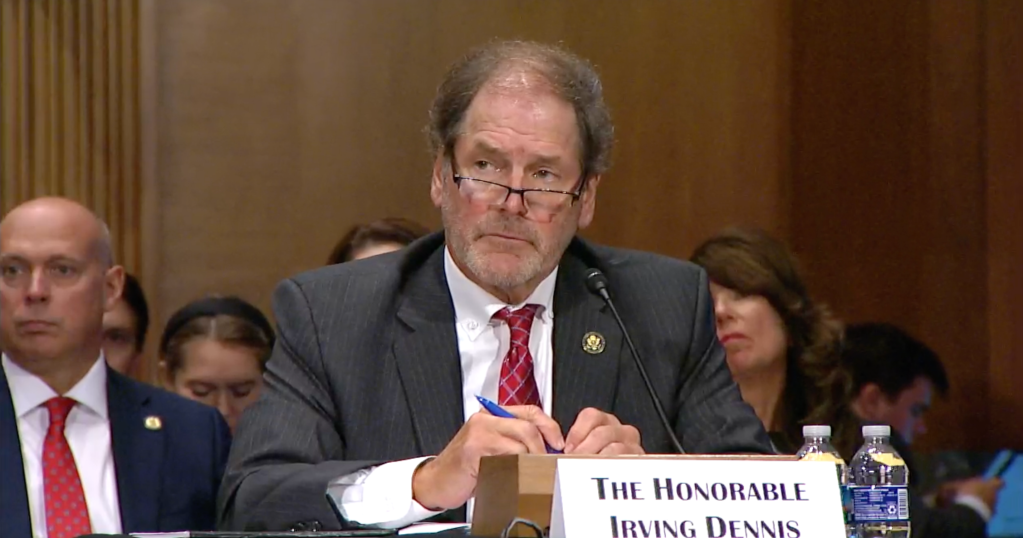
Irving Dennis, who has served as HUD’s acting chief financial officer since January 2025 after holding the permanent role during the first Trump administration, mentioned the AI pilot program during his nomination hearing before the Senate Banking, Housing, and Urban Affairs Committee in July.
Despite the fact that HUD sends out roughly $77 billion a year to grantees, Dennis told committee members that the agency doesn’t currently know how those beneficiaries are spending the money once it’s out the door.
“So what I’m putting in is using AI and technology to get information for every check that’s cut from the grantee to the vendor,” Dennis said. “I want the invoice or the contract that supports that vendor. We’ll get that using AI.”
A pilot program that tested the tool on 10 grantees was a “great success,” Dennis added. And during an Aug. 9 episode of Fed Gov Today, he said HUD has all of its “technology in place” and was working toward a launch date of Sept. 30.
“We’re going to do it in a structured way that makes sense,” Dennis said in the interview. “I don’t want this to be a burden for the grantees. They can submit data daily, weekly, monthly, quarterly, whatever makes sense. … But this is going to be very transformational to understand how dollars are spent.”
There isn’t a use case matching the description of the tool in HUD’s individually reported or consolidated AI inventories, though an agency source familiar with the project said the department is in the process of updating the list.
The same source said HUD has been coordinating with program offices to communicate the policy change to grantees. HUD has also enlisted a technical assistance provider to offer training, onboarding and troubleshooting support during the transition, the source said.
HUD may still have work to do: None of the dozens of national and local housing organizations and think tanks focused on housing policy that FedScoop reached out to were aware of the technology despite the agency’s plan to deploy it by the end of this month. Most declined to comment; those who did weigh in had concerns.
“As advocates, we definitely have been worried by the application of AI, for example, in the [administration’s] rulemaking process and in the announcement of executive orders,” said Sharon Cornelissen, director of housing for the Consumer Federation of America. “So I think it fits within a broader trend of lots of applications of AI rolling out quickly without due diligence.”
Keeping humans in the loop
Dennis first previewed HUD’s thinking about the use of AI and analytics in grants management during a May 2025 interview. Federal contracting documents from earlier this year provided a closer look into the agency’s plans for the HUD Unified Grants System, or HUGS, with a $500,000 contract awarded to Palantir.
But it appears that the runway to HUD’s deployment of the new AI tool began in January. Dennis said during his August Fed Gov Today interview that those initial steps included changes to the agency’s notice of funding opportunities and existing grant agreements, as well as connecting with grantees to make them “aware that it’s happening.”
Additionally, Dennis said he and his team worked with a software company and the agency’s Office of the Chief Information Officer on backend technology to support the AI system. He also looped in congressional appropriators to ensure “they gave us the funds we needed,” and got buy-in from the White House and agency leadership.
“Once we rolled out what this is, what it looks like, once we had a successful pilot, their minds started energizing as to what we can do with this data,” he said. “And we have so much excitement around all the stakeholders on this.”
Cornelissen, whose research and advocacy work with CFA is focused on equitable mortgage lending and affordable housing, was one of those stakeholders not so long ago. During the first Trump administration, HUD supported her work to study first-time homeownership challenges in Brockton, Mass.
Having been through the process, Cornelissen became accustomed to detailed check-ins with an agency grant officer. One fear with inserting AI into the process, she said, is losing that “human element.”
“It raises risks. You don’t know what the AI system will flag in your receipt,” she said. “Having a little bit of flexibility, I think, is also core to a lot of these grants, and I don’t know how this AI system will accommodate that, or understand compared to human evaluators that have years of experience in compliance.”
Dennis did not respond to FedScoop requests for comment, but he did answer a series of questions from Senate Banking Committee ranking member Elizabeth Warren, D-Mass., ahead of the panel’s Sept. 17 vote to advance his nomination.
Dennis said in his written response to Warren that “HUD intends for human review and oversight to remain integral to grants-management decisions,” and HUGS’s AI components are designed to “support — not replace — HUD staff and program office judgment.” Processes and procedures for HUGS, however, haven’t yet been finalized, he acknowledged.
The HUD source familiar with the soon-to-launch project told FedScoop that a centralized data science team within the Office of the CFO will monitor the AI tool’s work, and any final determinations will be made by a human. That team will continuously test and refine models, and follow a governance framework to guide analytics-driven decision-making.
Keeping humans in the loop and not outsourcing final decisions to AI mirrors approaches seen in the private sector, according to Darrell West, a senior fellow in governance studies with the Brookings Institution’s Center for Technology Innovation.
“AI cannot prove fraud, but it can identify outliers and then use humans to look at the actual details to see if there’s anything that looks suspicious,” West said. “You’re not going to be able to prosecute someone just because their contract might be unusual — because there may be a reason why it’s unusual.”
Any lingering questions about the tool’s mechanics and oversight should be spelled out in the AI use case inventory entry that the HUD source said is in the process of being written. Quinn Anex-Ries, senior policy analyst with the Center for Democracy & Technology’s Equity in Civic Technology team, said based on the public information about the system so far, “it seems like it’s pretty clearly a high-impact tool.”
The high-impact classification triggers the implementation of various risk management practices, per Office of Management and Budget guidance. Those practices should be in place by the time of a tool’s launch.
“I would expect that HUD has at least gone through the process to implement those risk management practices and then update their public-facing inventory so people know what’s in place,” Anex-Ries said. “If that doesn’t happen, I’m pretty concerned about how they’re assuring that appropriate safeguards are in place.”
Can smaller grantees keep up?

Ensuring proper safety precautions is especially important for HUD’s AI tool given the range of grants the agency awards. Recipients include state and local governments, nonprofit and for-profit organizations, public housing authorities, and tribal entities.
The money goes toward a variety of functions, spanning everything from fair housing centers and homelessness prevention organizations to housing counselors and community development block grants.
The size of recipient organizations also varies widely — a fact that several sources drew attention to. A major concern for Cornelissen is the survival of small housing organizations that plan their yearly budgets around promised federal grant money that now seemingly “can be clawed back at any moment.”
“They can’t just, like, hire an AI consultant that can make sure that their paperwork fits with these new non-transparent requirements, right?” she said. “How are they even going to prepare themselves for this? So it sort of further disadvantages them” from larger grantees that have the means to “adjust.”
Dennis said in the August interview that the data team operating out of HUD’s CFO office that will review the AI tool’s work will have a process in place and not make snap judgments. “You don’t want to overreact, and you don’t want to underreact,” he said.
In the same interview, Dennis presented an example of one grantee spending $1 per foot of lumber to build a house with remediation and disaster recovery funds, while another grantee from a different state may be paying $10 per foot of the same type of lumber.
“Both those numbers may be right, but there’s an inefficiency in there somewhere,” he said.
A source in the nonprofit housing sector, who was granted anonymity to speak candidly without fear of retaliation, said that example doesn’t adequately capture the considerations grantees must make. Simply “cherry-picking the lowest-cost service,” they said, “both distorts what the workflow should be and really disadvantages organizations that are doing the more difficult deals.”
“There’s huge variability, and sort of thinking that this is all price comparison is missing the point and not an effective way to evaluate performance,” they added.
Smaller organizations that receive HUD grants, the source noted, are often neighborhood-based and particularly well-attuned to reaching their own clientele. What works for the little guys is likely to be vastly different than what works for larger organizations that are more technologically advanced.
Though Dennis told Fed Gov Today that HUD didn’t want to make the process a burden for grantees, the nonprofit housing source said it seemed clear that the use of this tool would create a “higher administrative workload.”
The move toward AI is a move toward standardization, they said, and the result could be exposure to “more arbitrary decisions based on what might not be very good information.” For smaller recipients, that could be crippling, they added.
“They are disadvantaged in this process because it becomes one more metric they have to meet, one more thing they have to review, one more thing that their staff has to do as opposed to providing direct services, and makes it much more difficult for them to thrive,” the source said. “So it really works against the smaller organizations … in our field.”
Launch date fast approaching

In Dennis’ mind, a successful rollout of the AI grant review tool at HUD could set the stage for others to follow. He said during the Fed Gov Today interview that he’s already been talking with different federal agencies “about how we’re doing this.” He could also see a system of this kind adopted at the state and local level.
“This isn’t being implemented free without cost, but it’s also not that expensive,” he said. “And I think the payback will be [seen] very quickly.”
The data analysis of grantee spending will be especially crucial as a proof of concept for Dennis, who worked closely with the so-called Department of Government Efficiency on HR evaluations and contract, process and rules reviews during the early days of the second Trump administration. The HUD source familiar with the project said recipient compliance will be measured against existing standards, not by individual judgement.
Housing and technology experts told FedScoop that that element of the AI tool’s use is what has them on pins and needles — particularly given how DOGE and the Trump administration have approached data analysis and made seemingly indiscriminate cuts to federal grants and programs.
West, the Brookings senior fellow, said the “efficiency of the analysis and using AI to scan millions of documents” is a plus for the tool. But “the minus is how the administration may use it. Like, sometimes they have unusual definitions of fraud that have a political component, and so one would worry if they’re using AI to find political adversaries as opposed to fraud.”
Anex-Ries of the Center for Democracy & Technology said he hopes the federal government has learned lessons from “previous mistakes made under DOGE,” referring to the Elon Musk-created group’s use of AI for overly broad cancellations of grants.
Those cancellations were often done “in a haphazard way without clarity for grantees,” he said, which created myriad problems that caught up with DOGE in court and have been the subject of scathing watchdog reports.
In the post-DOGE era where its alums have scattered across agencies, many of its methods are now “institutionalized.” Anex-Ries pointed to reporting by Wired earlier this year that showed the Department of Health and Human Services using AI tools from Palantir to target grants that mention DEI or gender ideology.
Definitions of waste, fraud and abuse by the current administration “are being so widely interpreted,” Anex-Ries said, and are frequently “used to target certain political viewpoints, or being bastardized outside of their intended meaning.”
Whether HUD’s use of the AI tool takes on the administration’s political bent or sticks to sober, efficiency-based analysis should be revealed soon enough. The agency source familiar with the project confirmed that the phased implementation of the system is beginning this fall, with specific AI analytics capabilities set to come online this month.
At the end of his Fed Gov Today interview, Dennis said he’s feeling “terribly excited” about the launch of the tool and “very optimistic” that it “will be successful.”
The nonprofit housing sector source is wary of that optimism and what it will mean for their constituents.
The Trump administration, they said, hasn’t been “paying attention to the quality delivery of services by nonprofits,” and the focus on its definition of waste, fraud and abuse doesn’t actually help groups “figure out how to be able to produce work effectively.”
“So I think there is a lot of concern in the field,” they said. “And I share those concerns as well.”