ICE IT shop looks to build ‘agentic software factory’
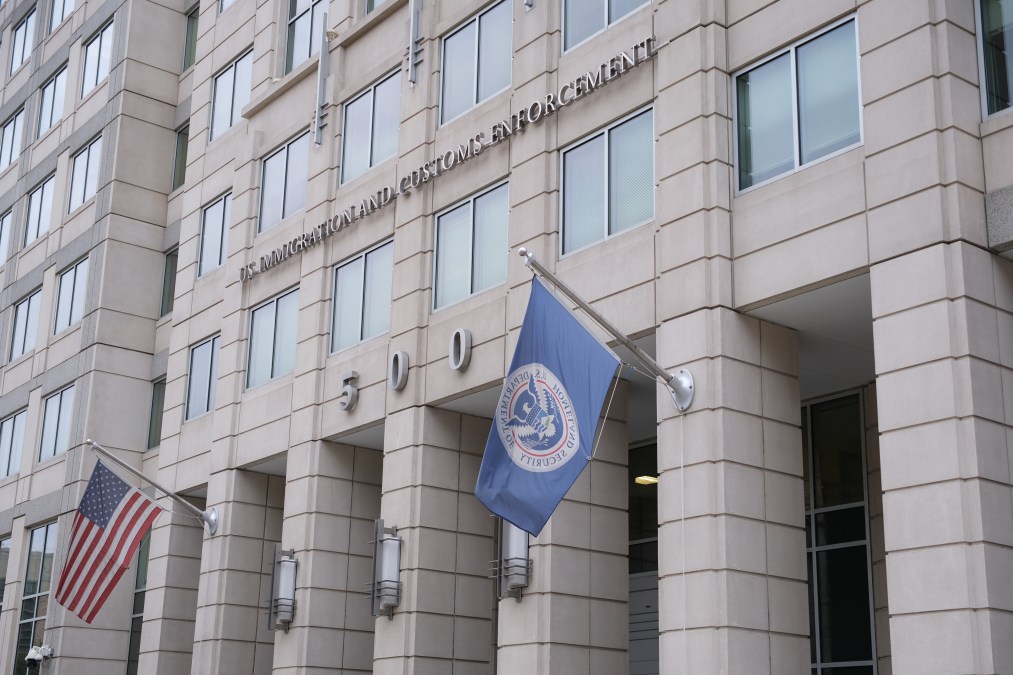
Immigration and Customs Enforcement is looking to build out its AI ecosystem by assigning software development work to AI agents and expanding existing platforms, per a request for information published Friday.
An agentic software factory, which ICE wants to build, has AI agents handling a significant share of the planning, implementation, testing and review process of the development lifecycle. ICE’s IT shop wants help across three layers of the agentic software factory, which are “desired future-state capabilities, not existing ICE implementations,” the unit explained in its documentation.
The first layer is an enterprise control plane that will include the governance, architecture, infrastructure, shared services and cost-reporting mechanisms. The next layer contains the agentic orchestration, allowing ICE to coordinate AI agents and map out protocols for tool access, human escalation and stop conditions. The third layer that’s top of mind for ICE is its independent assurance boundary, which will provide cybersecurity, accessibility and mission acceptance testing before production.
“ICE’s intent is to operate a secure, modular Agentic Software Factory built by expanding existing STELLA Platform and DevSecOps capabilities, with a design rule that generation, assurance, and authorization must remain distinguishable and no autonomous component may silently expand its own permissions or approve its own production release,” the Department of Homeland Security component said.
The STELLA platform, which stands for Secure Technology Environment for Large Language Agents, was implemented earlier this summer, FedScoop previously reported. Documents obtained via a public records request outlined ICE’s plans to use the platform as a way to develop, test and deploy AI use cases.
At least a dozen fully deployed, production-ready AI applications are already live on the platform, per ICE’s background documentation provided in the RFI.
As part of the anticipated scope of work, ICE said it wants a partner that can build on that foundation. Developing and deploying new “low, medium and high-complexity AI applications” for STELLA will be on the to-do list, as well as integrating emerging frontier and specialized models.
The RFI is arriving at a time when AI agents have played a minimal role at ICE. In May, ICE CIO Dustin Goetz said the DHS component wasn’t using “those features” and wasn’t planning on it.
Part of the anticipated scope of work includes providing workforce training that explains the agentic software factory concepts, safe use and how they will be implemented over time. ICE said it also anticipates requiring a potential vendor to assume full continuous monitoring responsibilities for its enterprise data and analytics ecosystem while enabling the software factory.
Despite the clear focus, the RFI is broader than just the software factory. ICE said it expects the chosen vendor to “continuously scan and evaluate emerging technologies for applicability to ICE’s mission,” and develop a “technology radar” to track findings.
Among other responsibilities, the vendor will likely be tasked with comparing other vendors’ solutions for ICE and recommending adoption, modification or decommissioning of technologies, according to the documentation.
Using AI to create responses and proposals will only get interested vendors so far.
“The Government recognizes that the proliferation of generative AI tools has made it easier to produce highly polished, technically accurate written proposals,” ICE said in its request to industry. “To ensure the Government selects a vendor with genuine, proven capabilities to execute the scope of work, what specific evaluation methods… do you recommend to differentiate genuine, demonstrated hands-on capability features creation from purely generative AI responses?”
Responses are due by Oct. 16.