A Trump team wants to automate U.S. Web Design System accessibility testing. Experts are worried.
A Trump-aligned team has taken control of the U.S. Web Design System with plans to automate accessibility testing, per public activity on a GitHub repository. While the end goal isn’t entirely clear, accessibility experts say they already have dire concerns about the impact.
“Immediately, USWDS went from something I would recommend to something I wouldn’t touch with a 10-foot pole,” said Sheri Byrne-Haber, director of accessibility projects and strategy at AccessAbility Officer.
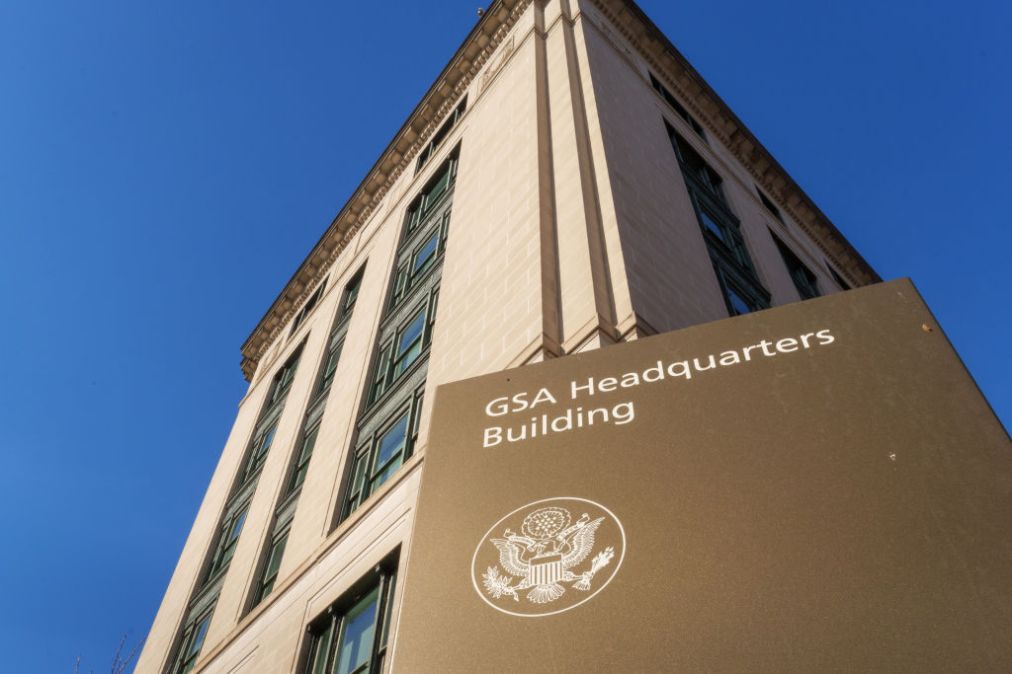
The USWDS is a roughly decade-old federal service housed within the General Services Administration’s Technology Transformation Services that aims to make it easier to keep government websites up-to-date and aligned with accessibility standards. Federal, state and local websites rely on it, and, by design, the resources are publicly available for anyone to reference.
But support for the service has dwindled during the Trump administration as it lost almost all of its team and contractor support, current and former GSA workers said. Earlier this month, following the installation of DOGE-affiliated Treasury Department Chief Information Officer Sam Corcos in three GSA leadership roles, the Trump administration’s approach transformed into an outright takeover.
Over the last few weeks, a new team has removed contributors from the repository, deployed artificial intelligence tools, blocked people from commenting, deleted posts, and shared plans for the future of the system, according to public posts on GitHub, records viewed by FedScoop, sources familiar with the repository and GSA employees who were granted anonymity to speak more freely.
For many, those actions have broken the trust of an open source community the project has relied on in the absence of support from leadership.
As Matt Henry, former engineering lead for the U.S. Web Design System, wrote in a recent blog post about the takeover: “USWDS is dead.”
New priorities
The takeover more or less began at the start of September when former USWDS program lead Anne Petersen was placed on administrative leave and later ousted from the repository for the system, as confirmed by GSA sources, public comments, and a post to GitHub.
Around the same time, Corcos appeared in the repository along with Ryan Parker, a self-described AI engineer who also comes from the Treasury Department. Nextgov was first to report on Petersen’s ousting and Parker’s designation as the USWDS lead.
But things took another turn earlier this week, when Parker made a post on the system’s GitHub titled “our priorities” that disclosed a desire to “automate as much accessibility testing as possible across current and future USWDS versions.”
Parker also stated in posts that the aim is to build on the work of the system and maintain “the standards that make USWDS valuable” — but experts in the web engineering and accessibility space said that AI tools aren’t good enough to live up to those kinds of promises.
Henry, who has continued to be an active public member of the repository after his departure, said that partially automated accessibility testing is possible and has been the practice of USWDS and other organizations, but only about 30% of that work can be reliably automated.
“Most accessibility testing is evaluating how a real human user — particularly a real human user with accessibility needs, like a screen reader user or other assisted technology user — would interact with the site,” Henry said. “It is about what a human would experience.”
By definition, it’s impossible to have that automated, he said.
Byrne-Haber, who founded the accessibility program at VMware, said that while automated testing has always been part of the solution, it’s not the whole solution, and current tools are “not even close to good enough.”
Per Byrne-Haber, a famous saying among her peers is that “accessibility is never accidental; you have to do it on purpose.” But anytime AI is in complete control, it doesn’t understand how people use assistive technology, detecting only about half of violations, she said.
‘Wrong.’
Repository contributors have also been vocal about their concerns.
In one post responding to Parker’s priorities, a GitHub user “ajfarkas” asked for insight into how those priorities were developed, including information on stakeholders who contributed, agencies that gave input, and whether there is a working group at TTS.
“If there are priorities (listed or not) we feel strongly about, how can we–as civic technologists and as the American public–best make our needs heard?” the user asked.
Another user named “smustgrave” asked for communication and expressed worry about the apparent AI-generated, or “vibe coded,” nature of the recent updates. Vibe coding refers to the practice of being overly reliant on AI tools for development to the point that users might not understand or be aware of all the aspects of what they’re producing.
“Maybe before merging anymore AI vibecoded work something could be communicated to the USWDS community before it feels even more neglected then it does now,” that user said.
At least one user’s comments were taken down.
In a now deleted exchange, GitHub user “lauraGgit” said that the current resourcing for USWDS is likely in violation of federal guidance for digital services, requiring agencies to have cross-functional teams that include expertise in human-centered design. That post was archived by FedScoop in the Wayback Machine.
Per records shared with FedScoop, Corcos responded with just one word — “Wrong.” That comment, however, quickly vanished.
The original poster later said that deleting public comments violates requirements for records disposition. Two additional posts made by that user that have since been removed were also archived by FedScoop in the Wayback Machine.
Use of AI
In addition to plans to automate testing, the newcomers appear to be heavily using AI tools to work on and manage the repository.
GitHub posts show that they are using OpenAI’s Codex and a product called CodeRabbit for code review, but the volume of posts, pull requests, and comments from developers like Parker have people suspicious about the use of AI to write text as well.
With respect to responses to contributors, Henry said it’s just not possible for a human to have engaged meaningfully in the amount of time that Parker is doing so — even for small paragraph responses. While a longer post might look like it’s written in normal English prose, he said, upon further inspection, “it doesn’t actually say much.”
Spokespeople for GSA did not provide responses to FedScoop’s inquiries about how the team plans to produce a quality product relying on automated testing, whether the team is communicating with accessibility experts on staff, and details on the ultimate goal of the current efforts by time of publication.
Notably, the USWDS actions come as GSA plans further reshuffles of its staff.
This week, Corcos sent emails to several TTS workers notifying them of potential assignments elsewhere in the agency. There also may be interaction with other initiatives of President Donald Trump. Records reviewed by FedScoop show that Caelin Sutch, who identifies himself as part of the Trump-created National Design Studio, is now a member of the repository.
Decay of progress
The broad use of AI and potential elimination of accessibility experts from USWDS has also sparked concerns as vibe coding has been cited as a possible factor in declining web accessibility progress in recent years.
A 2026 review of 1 million of the top homepages on the internet by the accessibility solutions organization WebAIM found increases in accessibility issues, reversing a trend of gradual improvement. That report concluded that the proliferation of AI-enabled coding was likely among the contributing factors.
That reversal in progress has been a major blow to the community.
“As a person with a disability who has a child with a disability, I’m just so frustrated overall by all of this backsliding in society,” Byrne-Haber said.
Accessibility professionals “clawed and scratched” their way to website accessibility gains and people were starting to pay attention, she said. Relying on automated testing at USWDS ultimately risks pushing updates that further impact that progress.
“That means the next update that Health and Human Services or the VA grabs, accessibility might completely backslide,” Byrne-Haber said, “and people that had access because they fought for that access will have their access taken away from them.”