FAA tech teams to partner with AI vendors on customized ATC software
The Federal Aviation Administration is making progress on its goals tied to the modernization of the systems powering air traffic control and the National Airspace System, according to Administrator Bryan Bedford and Transportation Secretary Sean Duffy.
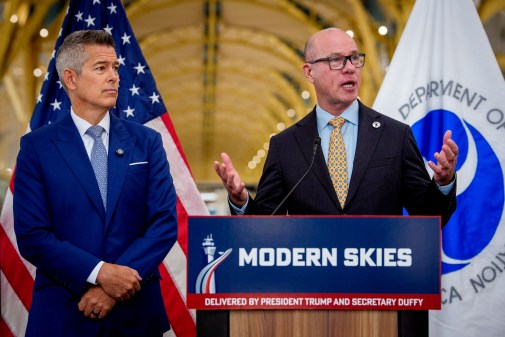
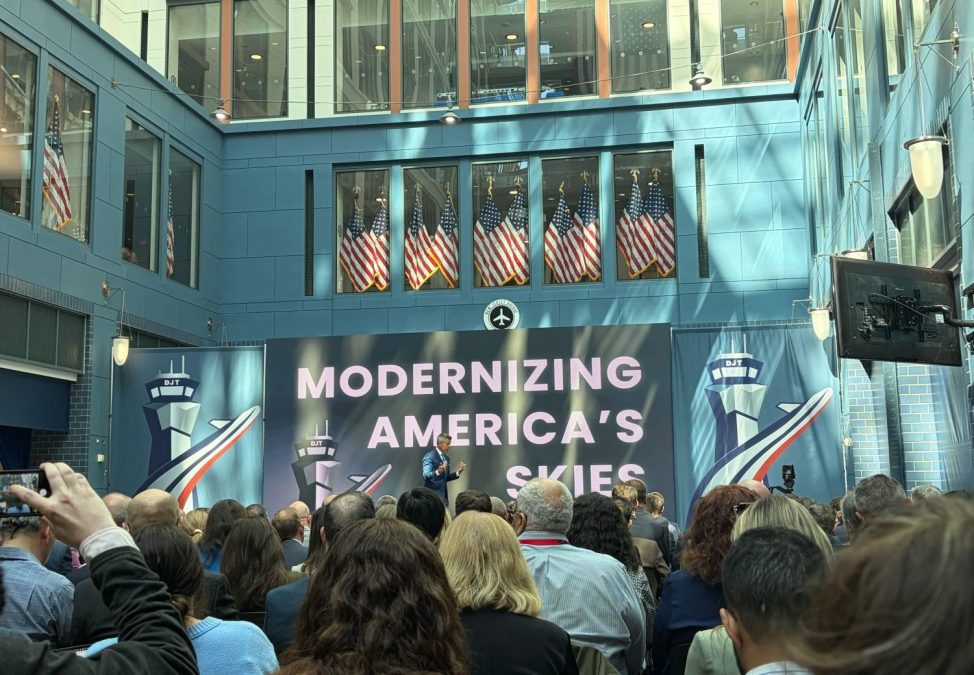
The Department of Transportation officials were two of the speakers that gave updates on the initiative during the agency’s Modern Skies Summit held at its headquarters in Washington, D.C., on Tuesday.
Since the modernization overhaul was announced last year, the FAA, along with its partners, has replaced nearly 50% of all copper wires, converted about 270 radio sites, installed new surface awareness systems at 54 airports and transitioned 17 towers to electronic flight strips.
Adding AI has also been on the agenda.
“We didn’t know if we could do it or not — and the vendors that we brought in weren’t sure they could do it — but over the course of the last few months, they’ve created true digital twins of the National Airspace System,” Bedford said.
To create the digital twins, teams injected 20-plus years of data to enable the use of predictive analytics that could deconflict and optimize future schedules.
“If we do this correctly — we believe the early indications are that we can — we’ll actually reduce costs for our stakeholders, we will see block times go down,” Bedford said. “That is the win: less fuel burning, less cost to actually have airplanes sit on the ground.”
The FAA plans to build customized AI software that furthers the streamlining of schedules and traffic flow. A centralized, automation platform that enables easier training and quick safety enhancements is on the FAA’s wish list, too.
“No software or platform like these exists on the market today,” the FAA said in a pamphlet handed out at the event. “This is one of the reasons why we are asking Congress for additional funding — to build platforms that will meet our specific needs.”
Bedford characterized the AI integration as the “third wave of true modernization.”
These efforts are outside of the initial $12.5 billion that Congress gave the FAA for the ATC modernization project. Bedford and Duffy have been rallying support among lawmakers for more funds since last year. The White House’s fiscal 2027 proposal for the FAA includes $4 billion to complement the initial investment provided in fiscal 2025, but the allocation is a far cry from the $20 billion the FAA is seeking.
For now, Duffy said the agency has had to “look within our couch cushions” to find the money to begin the industry engagement process.
When asked if the FAA was planning to add technologists to its team to support its pursuit of customized AI software, an FAA spokesperson said: “The FAA will use a combination of existing agency employees and contractors to oversee this initiative.”
It has become increasingly common for federal agencies to shift the development burden onto vendors, rather than taking it on themselves. Across the federal government, most agencies have grappled with significant workforce changes, less funding and pressure to do more with less.
While the Trump administration has emphasized the need for agencies to partner with industry to accomplish goals, it has also recognized that technology teams face critical skill shortages. The tech talent hiring push, called Tech Force, is beginning to ramp up, but the FAA did not respond directly to a question from FedScoop about the sprint’s role in the ATC modernization plan.
The FAA said it is working with 52 vendors on the modernization project. Its prime integrator is Peraton, which acts as an extension of the FAA overseeing the entire initiative.
Peraton has also had a role in the FAA’s AI aspirations.
“We’re deploying revolutionary agentic AI for the Peraton team and the entire FAA enterprise,” said Justin Ciaccio, president of Peraton’s national aerospace solutions sector. “We’re doing this to manage this program at a speed and scale that is simply impossible for humans alone.”
Peraton’s contract with the FAA includes penalties for underperformance and delays, acting as an incentive to keep the project on track.
Around 1.5 million records, including work schedules and timelines, are analyzed each day, according to Ciaccio. The company’s technology has already analyzed 5.7 million schedule and resource records as part of the effort.
“Risks are brought up before they become crises,” Ciaccio said during the event. “Schedules are stress tested before they break. Supply chain gaps are flagged before they cause delays.”