OneGov AI deals are ending, but behavioral dependency might lock in federal workers

With access to cloud and artificial intelligence tools for mere pennies, the General Services Administration’s OneGov strategy has saved over a billion dollars for the federal government so far, officials say.
But three popular deals — for OpenAI’s ChatGPT, Google’s Gemini and Anthropic’s Claude — are expiring next month with no clear plan forward yet in sight, at least publicly. GSA did not respond to multiple requests for comment on renewal plans.
Touting prices as little as $0.47 to $1 per agency, the barrier to entry to state-of-the-art technology has all but vanished — by design. Founded in response to a Trump executive order for more “cost-effective” solutions in federal contracts, the GSA has said OneGov deals accelerate AI adoption across agencies.
In May, Birgit Smeltzer, director of the GSA’s Office of IT Products, said “more than 120 orders have been placed against OneGov’s AI offerings, and that has provided this new technology, or availability, to about 3.4 million across government.” An OpenAI spokesperson said the company has over 1 million users across federal, state and local governments.
But with federal employees’ dependence on the tools just beginning, experts worry about what happens come Sept. 30 when the heavy discounts end.
Behavioral dependency is the real cost
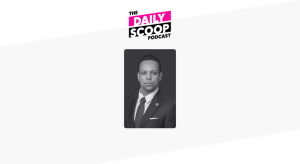
In a March research paper about the OneGov promotional prices, government procurement expert Jessica Tillipman said the promotional prices are “a nominal cost that makes the transaction sound exciting and low risk, while the true economics, such as lifecycle costs, operational dependency, and reduced negotiating leverage, arrive later.”
Instead, one of the real hidden costs behind the deals may be behavioral dependence in an increasingly AI-reliant world. Tillipman, George Washington University’s associate dean for government procurement law studies, said the deals may not generate traditional technical lock-in to a single product, but behavioral lock-in is already here.
“Most people just stay with whatever it is because it’s just such a pain to migrate,” she said during a George Mason University webinar last week. “Right now, if you told me I had to destroy my Claude account that has my projects in it, I would weep.”
Tillipman said in her article: “When the promotional period ends, the cost of switching isn’t limited to the price of licensing an alternative platform. It’s the disruption of unwinding months of institutional dependency.”
And taking it away may lead to the rise of shadow AI; a Thomson Reuters study last month found 27% of government professionals report using AI tools their organization had not sanctioned.
What will renewal look like?
When it comes to renewing the deals, there is a lot we still don’t know or isn’t public.
Google Gemini’s OneGov page on Carahsoft, a government IT distributor, says that “at the end of the promotional period, customers must renew at a per user price.” OpenAI’s says subscriptions will not automatically renew and pricing is based on the number of users in tiers. Anthropic’s offers no renewal sneak peeks, but notes the looming Sept. 30 deadline when access expires.
Anthropic did not respond to a request for comment about its OneGov usership nor its renewal plans, and Google only responded with links to Gemini for Government use cases.
An OpenAI spokesperson said: “The OneGov program has helped jump-start partnerships across dozens of federal organizations, enabling agencies to better understand how these tools can support their workforces and plan for continued use. It has laid a foundation for secure, responsible AI adoption in critical areas such as cybersecurity, and we continue to work with agencies to expand their use of our tools.”
Greg Barbaccia, the outgoing federal chief information officer, told FedScoop in December that upon renewal, he expects these vendors to align on pricing by analyzing the usage from the promotional period.
“I don’t think it’s going to be $1. I think it’ll be transparent at least, which is a step in a great direction where they could say, ‘this is your usage, this is a computed cost, this is the overhead it costs us to run, this is what we’re trying to get out of the deal,’” he said. “So, at least they’re coming to the table with fact-based pricing that’s transparent to us, which is something I think we’ve missed out on in a lot of things.”
OneGov is changing government procurement
The OneGov strategy has saved the government $1.6 billion so far, acting Federal Acquisition Service Commissioner Laura Stanton said last week at the George Mason webinar, by unifying purchase agreements and minimizing duplication.
“Fragmented purchasing really limits the government’s buying power, and that’s not just at the pricing level; that means that we can create unnecessary duplication, and we can end up with different terms and conditions,” she said. “We really don’t have the weight of the federal government coming to bear on these negotiations, and we ultimately end up losing leverage.”
However, Tillipman said the steep discounts have already cost the government its leverage. She pointed to the Federal Acquisition Regulation, which warns against below-cost entry pricing as “early discounts can limit leverage once lock-in and operational dependency set in,” she said.
“The leverage agencies have today will not survive renewal,” Tillipman said in the paper. “This window is the moment to secure terms and build the capacity to walk away.”
The bottom line is “technology procurement has become significantly more complex over the past decade,” and the acquisition model itself is “evolving,” Stanton said at the webinar.
“Our model for the federal government has been to purchase that commercial technology through an ecosystem of resellers, each negotiating independently with agencies, and that approach at the time served an important purpose,” she said. “But as technology has become more enterprise-based, and as the government increasingly purchases the same commercial tech platforms across dozens of agencies, we have started to see challenges emerging.”
One potential consequence of dealing directly with original equipment manufacturers might be bypassing value-added resellers, who purchase software from OEMs and enhance it with certain features or services before reselling it to the government.
After a January request for information asking VARs how they add value to government procurement, Stanton said VARs are still needed for implementation, integration, cybersecurity and mission delivery. She asked these resellers for the “willingness to challenge the long-held assumptions while preserving the strength that’s made this marketplace successful.”
“As the government continues to modernize its acquisition strategies, the contracting relationships may evolve, but the operational need for the types of services that I’ve itemized from knowledgeable implementation partners continues to be there,” she said. “We need to have your knowledge. We need to have these services.”
Regardless, it’s still pedal down on OneGov, with “more to come on AI,” Stanton said. For Tillipman, it’s wait and see.
“I do wonder what the landscape looks like four years from now, three years from now, when it comes to some of these things,” Tillipman said. “Because I jokingly call it, we’re about to enter our ‘this is why we can’t have nice things’ era.”