A look at the digital flight strip system used by the FAA
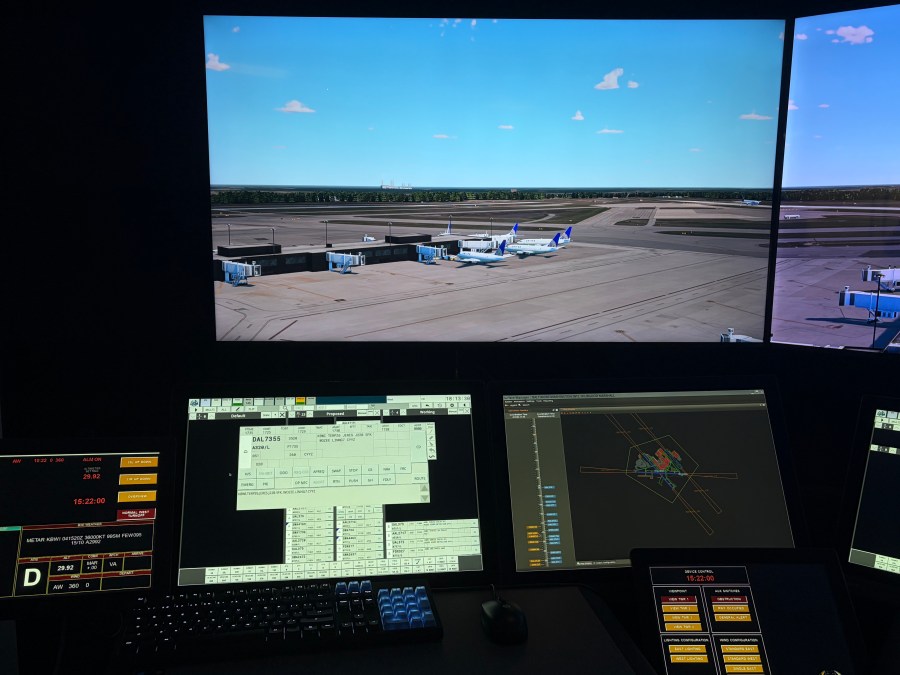
The Federal Aviation Administration is making progress on its goal to replace paper flight strips in the largest airports across the country with the help of longtime government contractor Leidos.
The vendor saw its digital flight strip system go live Tuesday in Austin, Texas, marking the 18th airport implementation since deployment began in November 2022. Leidos plans to onboard another dozen airports by the end of the year.
Each time the digital flight strip system becomes operational, it’s been months in the making.
“We got to train all the controllers so they’re certified on the system,” Doug Lieberman, VP and CTO of Leidos’ air traffic organization, told FedScoop. “We got to physically install the gear, we got to test the gear out, and we got to certify that it’s working.”
In coordination with the FAA, Leidos developed the digital flight strip system around a decade ago.
After a series of delays tied to COVID-19 and funding challenges, the rollout picked up pace last year as FAA Administrator Bryan Bedford began emphasizing the need for speedy modernization timelines in the wake of congressional pressure and watchdog audits.
By 2028, nearly 90 airports will have sunset paper flight strips in favor of the digitized version.
“We have a very specific schedule between now and 2028,” Lieberman said. “It’s collaborative between the FAA and the controllers and the union and the towers.”
The flight strip system is operational at airports in Cleveland, Indianapolis, Phoenix, Raleigh-Durham, Las Vegas, Los Angeles, Tampa, Seattle, Miami and Washington, D.C., among others.
Despite the modernization focus, the system lacks a flashy or uber-trendy interface — and that’s on purpose, according to Leidos.
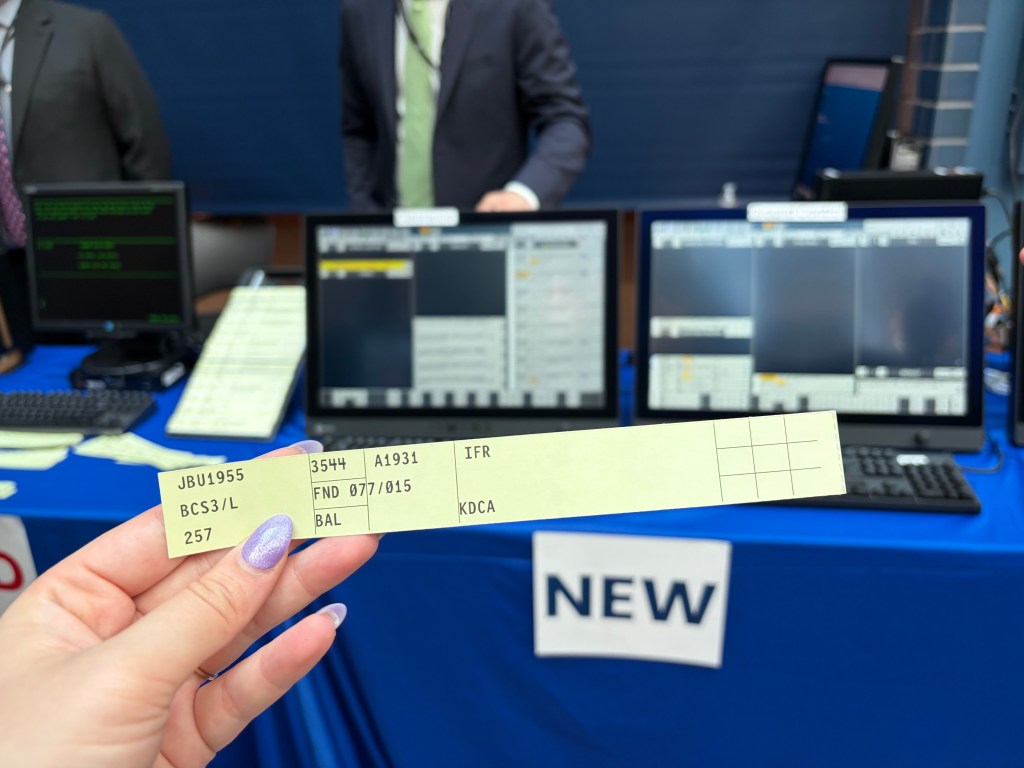
“You can only change so many things at a time,” said Mike Hawthorne, business development manager for Leidos’ FAA division. “They look an awful lot like those old paper ones because that’s what the controllers are used to seeing.”
With the goal to get the workforce quickly onboarded in mind, Leidos kept the system’s interface simple.
“Everything on this screen is really designed to be optimized to reduce strain on the controllers’ eyes and give them the data they need when they need it,” Lieberman said. “With this, everything is gray so when something goes red, your brain immediately says, ‘That’s a problem.’”
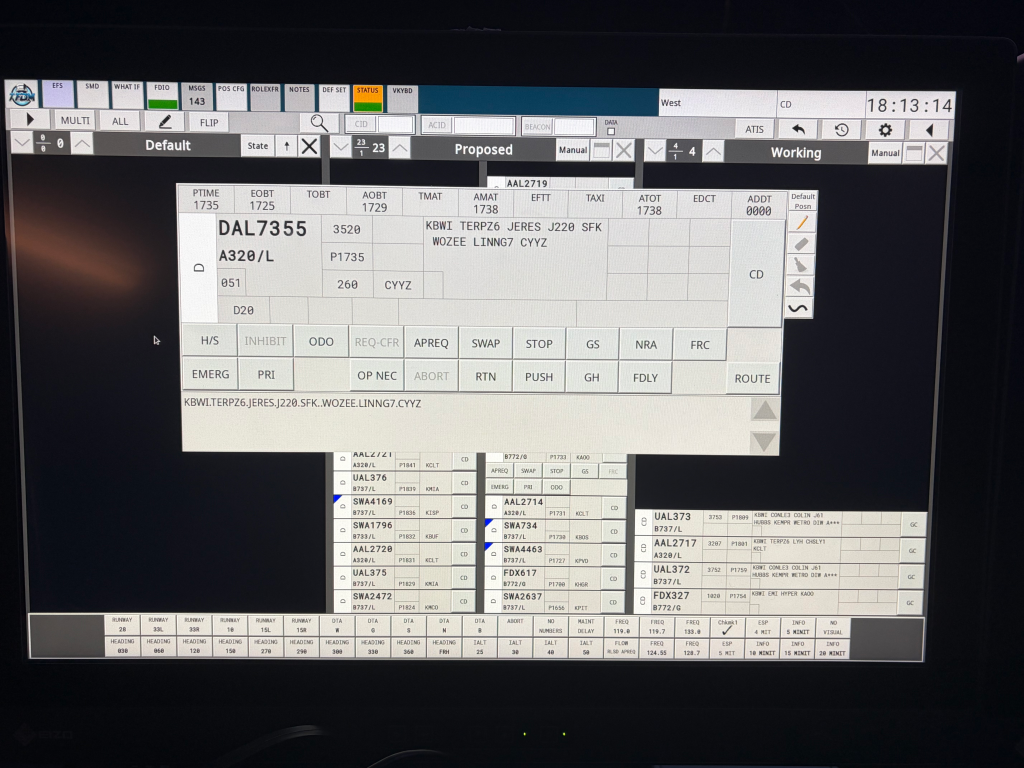
While there could be a snazzier design in the future, the need to be mindful of controllers’ cognitive load will not change.
“At the end of the day, the controllers actually like this because it gives them what they need, they can drag stuff where they want and they’re not distracted by stuff they don’t need to see,” Lieberman said. “We don’t want accidents to happen because we gave them information but they didn’t see it.”
The common automation platform
For the FAA, the digitization of flight strips is just one of the myriad projects making up the air traffic control modernization overhaul. The Department of Transportation unit is also pursuing a vendor to help develop a common automation platform, referred to as the CAP, that will consolidate several systems.
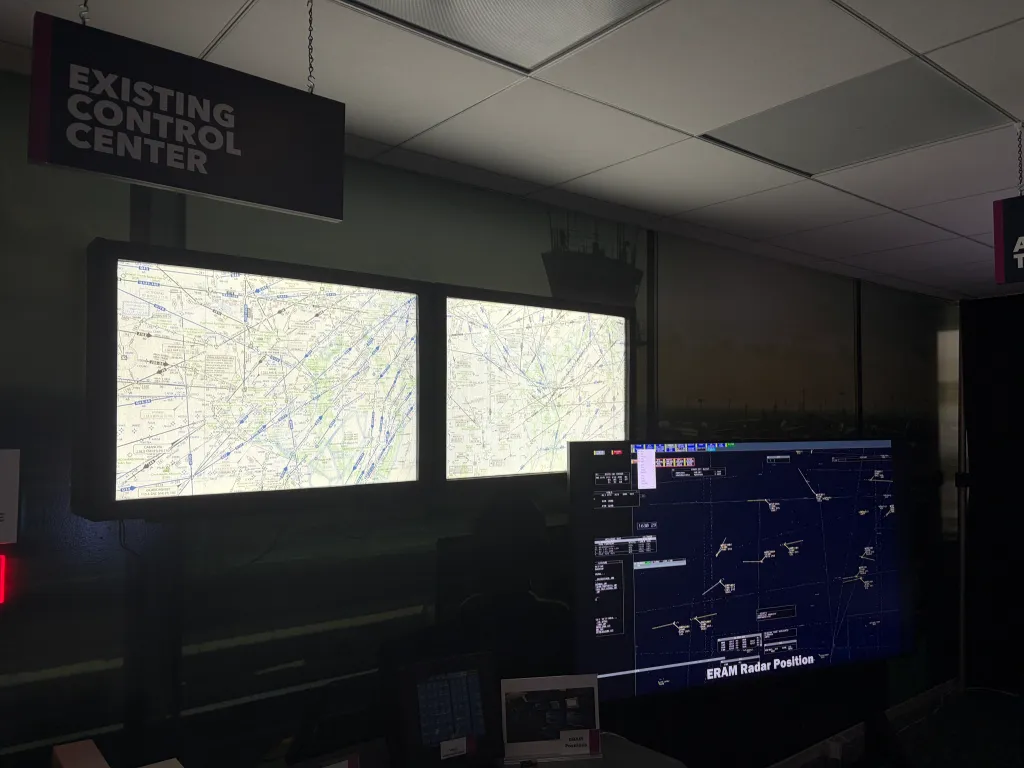
Leidos is vying for the opportunity and has been shortlisted for the contract, alongside four other companies.
The development process for Leidos started by taking a look at its Skyline-X platform, which is deployed by other aviation authorities, such as in Kazakhstan. Leidos is calling the prototype it built for the FAA the “LCAP Collaboration hub.”
The centralized ATC platform has been customized to meet the needs of the U.S., the contractor said.
“The U.S. airspace is by far the most complex airspace in the world by number of flights and number of flight operations,” Lieberman said. “What we’ve done is divided the whole country into about half-an-hour blocks … so if you’re flying from New York to Los Angeles, about every 30 minutes you will change controllers.”
The intricate dance of communication and coordination of controllers across the country is unique. The U.S. national airspace sees more than 45,000 flights a day across more than 29 million square miles, per the FAA.
“If you look at something like Europe, you’re not in en route space very long,” Lieberman said. “By the time you hit en route space, you’re probably leaving the country border and heading somewhere else.”
The prototype that Leidos developed provides controllers with timely information to help identify and resolve potential conflicts quickly — and support handoffs along the way. The system presents the data via color-coded visual cues using AI and other algorithms, enabling faster decision-making and reducing controller workload.

Pilots remain the decision-maker even with the influx of AI recommendations, per the two Leidos leaders.
“The idea is not to remove the human from the loop but to give the human in the loop help to make a decision faster,” Lieberman said. “The important part is a controller is dealing with 20 to 25 aircraft.”
If one of the aircraft in a controller’s purview has an issue, there are still more than a dozen others that need to be managed.
“The more information that we can give the controller that’s useful reduces the cognitive load and improves safety,” Lieberman added.
The vendor invested millions into the prototype as a strategy to win over the FAA by presenting a ready-to-go version of what officials want.
It’s unclear when the FAA will further cull the shortlisted five companies that have been identified, and the DOT unit has yet to finalize full program funding.