Energy Department demos Genesis Mission platform
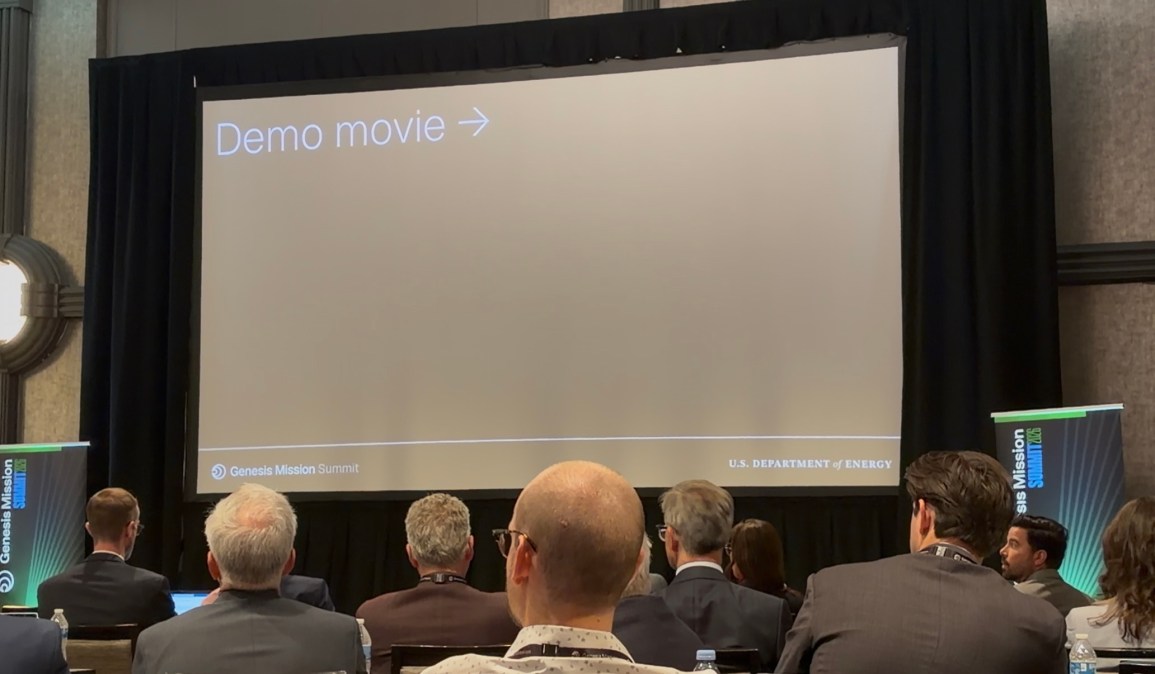
Applause filled the Capital Hilton main event room before and after the demo video for the Genesis Mission platform finally played Wednesday during the Department of Energy-run summit for its signature technology initiative.
The demo was the crown jewel of the agenda and anticipation had mounted after several delays and false starts. Occurring just before the event broke for lunch, the at-capacity audience was hungry for a tangible element of progress on the initiative.
“We talked a lot and heard about platforms,” said Brian Spears, technical director for DOE’s Genesis Mission. “We have a platform with a capital ‘P’ here today.”
Some attendees felt slightly let-down by the pre-recorded nature of the video, while others were appreciative for a peek into the in-progress project.
“Many people on my team from Jefferson have actually built components to that platform, so I’ve heard about it,” said Jens Dilling, director of the DOE’s Thomas Jefferson National Accelerator Facility. “But it was the first time I actually saw it. Very impressive, very exciting.”
The platform essentially “levels the playing field” for participating institutions, per Spears, providing access to frontier tokens and models via the Model Access Gateway.
“Pick your model, generate a key and you are working,” the video said. “No waiting on procurement.”
The platform will offer access to simulation agents, national lab datasets, and DOE-developed model context protocol tools, among others. Users can also build their own tools and connect them to the ecosystem using open protocols.
“The result is a complex, scientific workflow that’s greater than the sum of its parts,” the demo video said.
DOE’s national labs have played a variety of roles in developing the platform.
“We’ve been more focused on the challenges … but we do have some engagement on the platform side,” said Johney Green, director of the Savannah River National Lab. A few team members worked on the data side of the platform.
“We’re really excited about having the opportunity to use the platform as it emerges,” Green added.
The labs that had a larger role in the development of the platform expressed pride in the work.
“The demo is something that we have worked very closely on,” said Gina Tourassi, associate laboratory director for computing and computational sciences at Oak Ridge National Laboratory. Spears, the Genesis Mission’s technical lead, “emphasized very much the entry point [or] single sign-on — that was the problem we wanted to tackle,” she added.
The single sign-on capability is the starting point for any partner trying to use Genesis Mission resources. It will allow any partner institution, from labs to private-sector businesses, to access the platform via a federated identity.
Tourassi said single sign-on was a technical hurdle as well as an administrative challenge.
“We were tackling both sides of the problem in the past several months,” Tourassi said. “So I’m very excited.”
RFA awardees
DOE announced 278 team-based awards coming from the funding opportunity that launched in March. The agency received thousands of applications.
The awardees, which represent 342 institutions, will gain access to the Genesis Mission Platform, including AI agent frameworks, advanced AI models and high-performance computing among other resources.
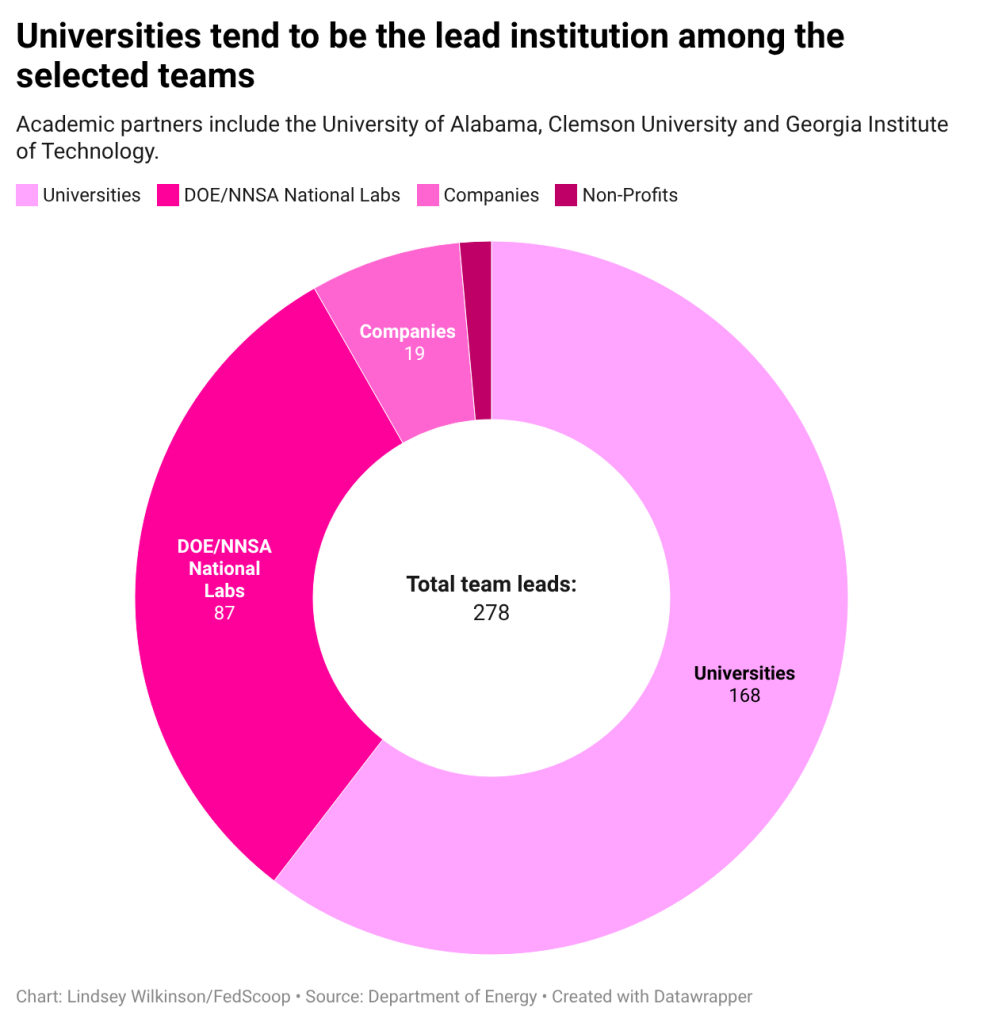
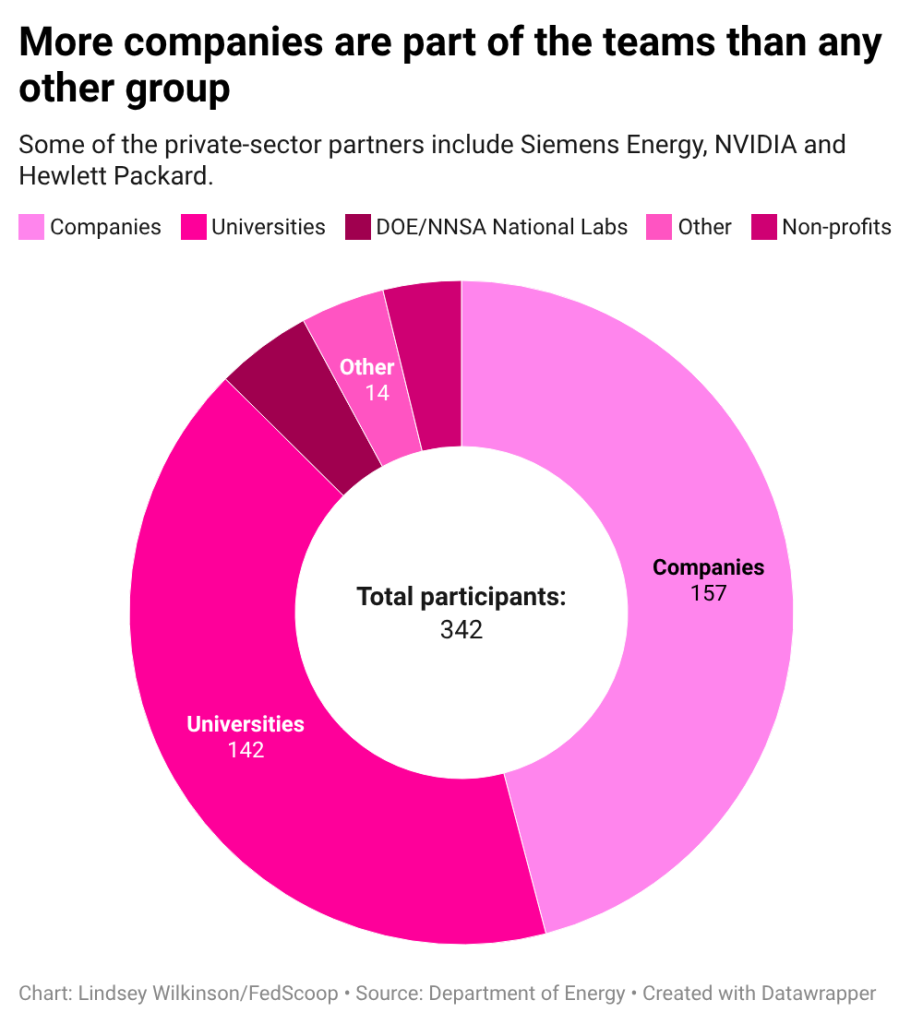
The teams will be tackling a range of challenges, including ones focused on intelligent chip design, critical mineral extraction and commercial fusion energy. DOE said the largest project is a three-year, $60 million investment in nuclear energy “that will deliver nuclear facilities faster, safer, and cheaper to provide more affordable, reliable energy.”
With a total of $250 million already allocated, the awards make up the majority of the $293 million tabbed for the teams. The awardees are mostly in phase one, which are small teams.
The agency expects to announce the rest of the phase-two awards this fall, from early- to mid-September. Phase-two awardees are larger teams that run longer projects.