FAA blames telecommunications issue for nationwide ground stop
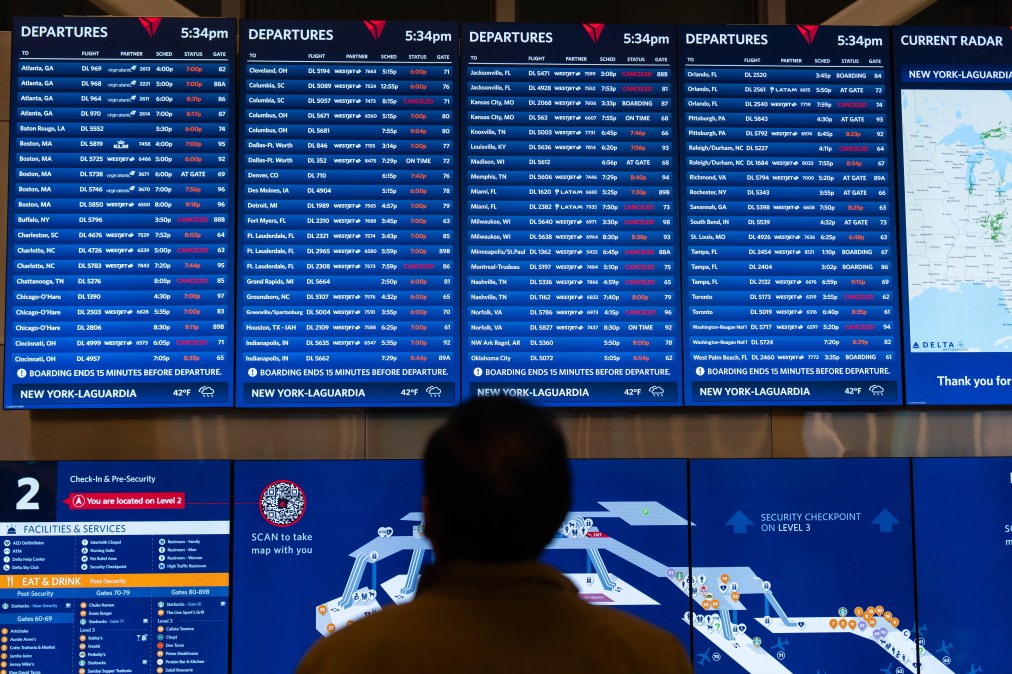
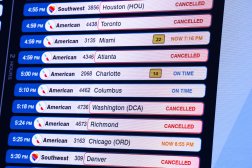
The Federal Aviation Administration issued a nationwide ground stop for all U.S. airports Friday, the second time the agency has taken such a step since Sept. 11, 2001.
“There has been a temporary telecommunications outage — out of an abundance of caution all flights have been halted,” the FAA said in a social media post. “Every flight has been accounted for and international flights will be handled on a case by case basis.”
In a statement provided to FedScoop, an FAA spokesperson said the communication issues were impacting multiple Air Route Traffic Control Centers. FAA technicians are investigating the issue, per the spokesperson.
Department of Homeland Security Secretary Markwayne Mullin told reporters that planes were grounded “out of an abundance of caution” and there is “no indication of a nefarious attack.”
In a press conference Saturday, Transportation Secretary Sean Duffy and FAA Administrator Bryan Bedford reiterated that the nationwide ground stop was instituted as a safety precaution and that the issue was not a result of a cyberattack.
The Transportation officials did, however, point a finger at telecommunications vendor L3Harris, which owns the FAA’s copper network and has been transitioning it to fiber cables.
“What we’re working to determine was whether we had incompetence — meaning, was it user error or installation error from L3Harris — or did they install a faulty router,” Duffy said to reporters. “Either through the contractor error or a faulty piece of equipment, that router that was being replaced as we switched from copper to fiber started flooding other routers in our air traffic control system.”
Duffy said the router made over 1,000 connection attempts every four to five seconds, causing disruption in communications with airplanes and radar feeds.
Bedford said that the FAA spent about 45 minutes trying to determine the cause of the system’s instability Friday afternoon but was unsuccessful. One hiccup complicating the process was that this maintenance is logged manually, meaning they had to pour through sheets of paper to figure out who was working on what, Bedford said. Without a clear answer, the nationwide ground stop was implemented for nearly four hours and 40 minutes. Around 12,000 flights did not happen, per Bedford.
The cancellations and delays extended into the next day, with the FAA estimating that between 4,000 to 5,000 flights would likely be cancelled Saturday.
“Based on everything that we’re hearing from our airline partners, they believe that they’ll be able to have full schedule integrity by the close of business on Sunday,” Bedford said. “I do think the worst is behind us, but we still have a significant amount of recovery work to do.”
The DOT officials said the maintenance occurred in a “remote location,” but no other details on the whereabouts were provided. The officials said there was no expectation that the maintenance could have had outsized impacts, but Duffy said, “there’ll be a reevaluation of when we do this work.”
Bedford said the FAA will share the root cause analysis report once it’s complete.
A backdrop of modernization
The telecommunications issue comes amid massive changes to the FAA’s tech stack.
Earlier this week, the FAA announced it would be expanding its SMART system — which stands for Strategic Management of Airspace, Routes and Trajectories — across the country after “a successful initial rollout” in the National Capital Region. Since Sept. 21, the FAA said the system had helped reroute 180 flights, saving an average of 10 minutes per flight and an average of nearly 80 gallons of fuel per flight.
The system hasn’t been welcomed by all. House Democrats pushed the FAA to pause the rollout in October, requesting information about pre-deployment testing, stakeholder consultation and oversight. The members of Congress characterized the tool’s rollout as “rush[ed]” and said it was launched “surprisingly” and “recklessly.” In letters to Department of Transportation leaders, they also highlighted reported concerns about the tool from aviation workers and the airline industry.
The AI tool is just one part of the FAA’s tech overhaul. The DOT unit has also begun digitizing flight strips, upgrading analog communications, phasing out floppy disks and overhauling other legacy workflows. The efforts are part of a $12.5 billion plan to address a laundry list of technology woes that have plagued the agency for years.
DOT officials have advocated for more funding, especially as incidents that have underlined the need for redundancy and modernization have occurred.
In September, for example, a construction crew accidentally cut into a fiber line in New Jersey, causing a telecommunications outage. As a result, the FAA suspended flights across the Northeast.
DOT officials used the latest telecommunications issue to push Congress, once again, for more money. Transportation officials bumped the ask from $30 billion to $50 billion during a press conference Friday.
“I want $50 billion,” Duffy told reporters at the White House on Friday. “This is an emergency.”
Duffy doubled down on the request Saturday.
“I’m going to put in that full request,” Duffy said. “I’ll detail it and send it over to the Hill in conjunction with the president. We’ll do that on Monday.”