FAA asks Congress for $30B to finish air traffic control modernization
The Federal Aviation Administration is asking Congress for an additional $30 billion to reach its modernization goals tied to the overhaul of air traffic control systems and aviation infrastructure.
Sen. Eric Schmitt, R-Mo., introduced the Modern Skies Act on Monday, which lays out the plan including efforts to implement a common automation platform and cloud computing infrastructure. The bill is backed by nearly 60 organizations, including Airlines for America, the Association of Value Airlines, the National Air Traffic Controllers Association and the General Aviation Manufacturers Association.
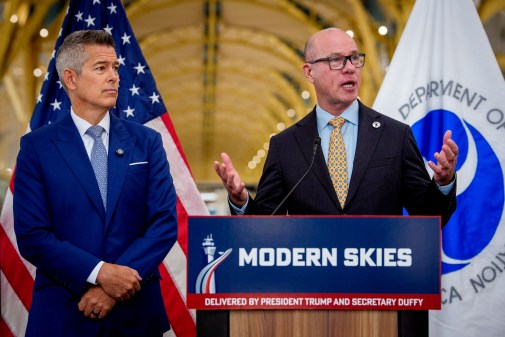
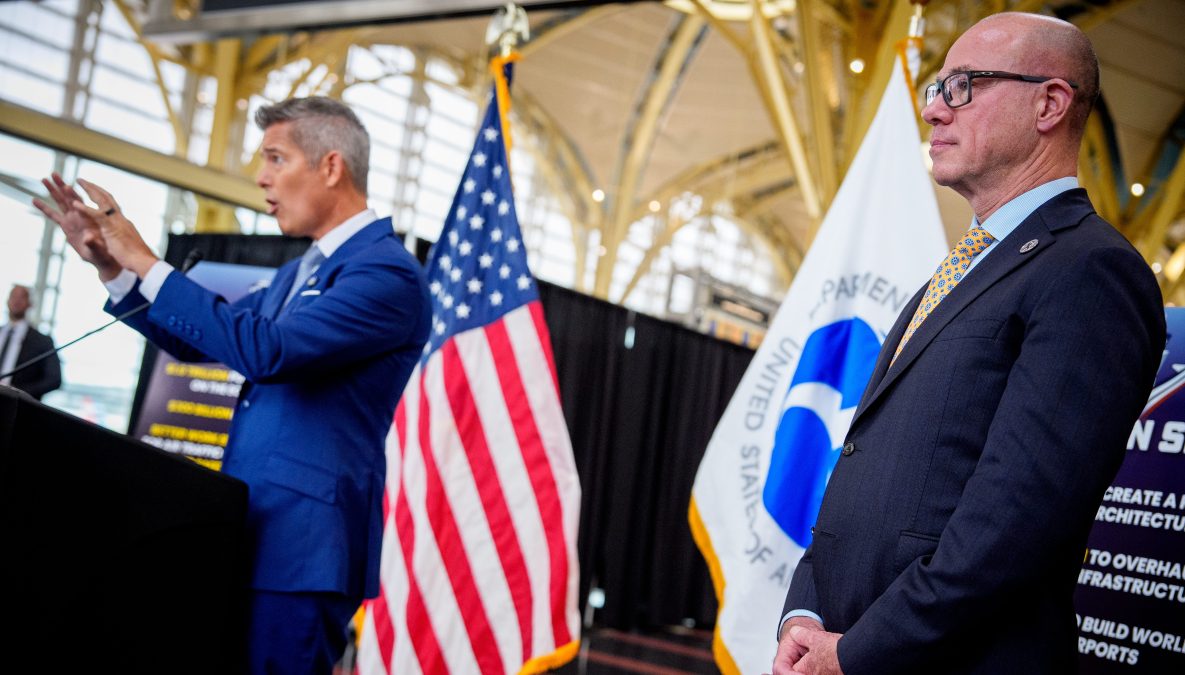
Schmitt appeared Monday alongside representatives from the trade groups, FAA Administrator Bryan Bedford and Transportation Secretary Sean Duffy at a news conference announcing the plan at Ronald Reagan Washington National Airport.
A third of the potential funds will go toward upgrading air traffic controller safety separation tools and building more resilient telecommunications systems. Another portion is tabbed for replacing air traffic control towers, airport facilities and runways. The rest of the investment will help improve “transitional hub airports,” which is defined as a mid-sized airport often connecting smaller regional stops with major international facilities.
“All of this could be completed by the end of 2028,” Duffy said during the event. “Now I can’t build every new tower, I can’t build every new airport for everybody by the end of 2028 — that build takes time, but the core infrastructure that we use, the software that we use could all be done in two-and-a-half years.”
“It’s just going to take resources from the Congress to make it happen,” he added.
Congress already gave the FAA around $12.5 billion, which Duffy and other officials described as a down payment. The Department of Transportation has used that capital to begin implementing digital flight strips, upgrading communications systems and deploying enhanced surveillance systems.
“Not only are we on time for that first $12.5 billion, we’re actually under budget,” Duffy said. Details to back up the claim, however, were not provided.
Last week, the FAA also launched an AI-powered aviation data tool in airspace around Washington D.C. An FAA spokesperson told FedScoop that it was funded by “existing facilities and equipment money,” but additional capital is needed for nationwide deployment.
DOT officials have been rallying support among lawmakers for more funds since last year. The latest desired figure, however, is quite the jump from the $4 billion that White House’s fiscal 2027 proposal allocated or the $20 billion that the FAA had previously identified.
Duffy said President Donald Trump is on-board with the FAA’s newest ask, as well as members of Congress across the aisle.
“When everyone agrees to something but they can’t find the money to give it to you, that gets frustrating,” Duffy said. “So I’m asking the Congress to lean in.”
This story was updated Sept. 29, 2026, with comment from an FAA spokesperson.