Midterm results won’t impact counter-drone efforts, DHS secretary predicts
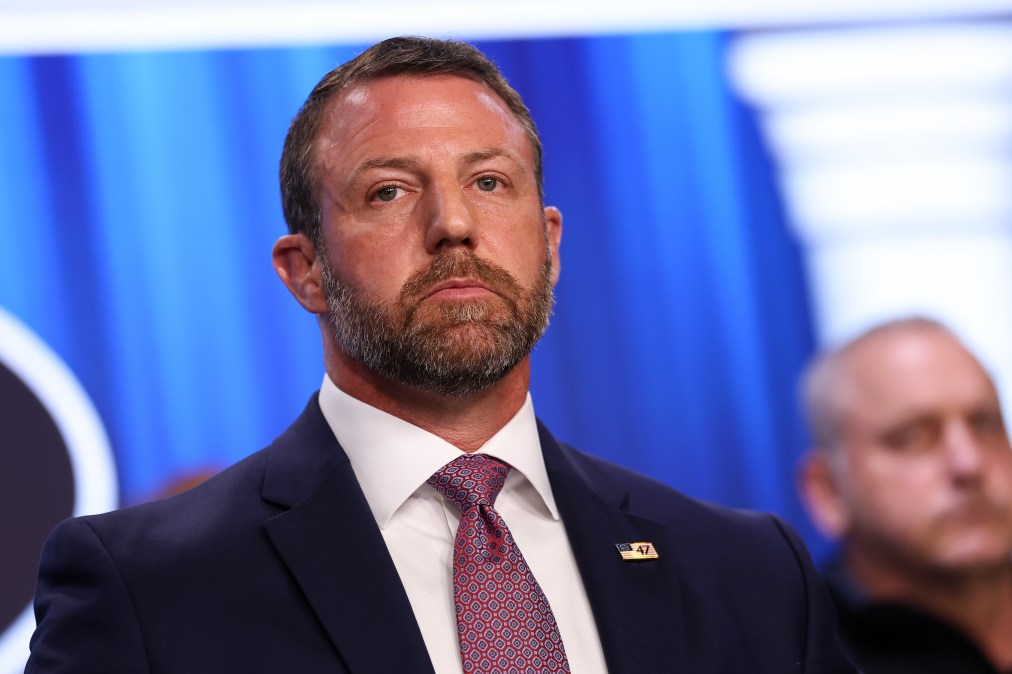
The top official at the Department of Homeland Security expects changes in Congress will not deter ongoing counter-drone initiatives.
Democrats gained control of the House and Senate, flipping multiple seats across the country. At the Commercial Drone Alliance’s Drone Security Industry and SLTT Grant Forum on Monday, DHS Secretary Markwayne Mullin said he isn’t planning to change his approach to engaging with the Hill on drone security.
“For the most part, I think the people that sit on the committees that are relevant, they see the vulnerabilities,” Mullin said on stage. “Sometimes these elected officials, they have a base that they’ve got to pander to, but privately they’ll act different.”
Drone security has been a point of bipartisan consensus. Members of Congress across the aisle have worked together on legislation that aims to improve drone safety, create partnerships with innovators and expand drone defense authorities to state and local law enforcement.
But building up drone defense hasn’t been easy, even with bipartisan support. DHS struggled with counter-drone measures leading up — and prior — to the FIFA World Cup this summer, and the FBI can’t keep pace with demand for its counter-drone training center.
Technology gaps haven’t helped matters, nor has the cost of counter-UAS capabilities. During the CDA event, Mullin called for industry to focus on emerging capabilities and affordability.
“You’re not going to make the system you have right now work,” Mullin said. “You need to stop and rethink what you have completely [and] that needs to be economically feasible, too.”
One of the attack drones DHS is currently using carries a production price tag of $40,000, per Mullin. It is a one-way attack drone, meaning it’s designed to crash directly into a target. These kinds of drones are not reusable.
“If you think a $40,000 one-way attack drone that only has one use is going to be economically feasible … we’re kidding ourselves to think it is going to work,” Mullin said.
A growing concern for the federal government is drone swarms. Mullin said swarms, in particular, pose a challenge with existing one-way attack drone options. While the Department of Defense and technology companies have been working toward a possible solution, unease remains.
“The FBI has absolutely thought about a swarm attack,” Devin Kowalski, assistant director of the FBI’s Critical Incident Response Group, said on the sidelines of the event at a media roundtable. “We’re constantly working with our partners to determine the best practices, the lessons learned, the technologies that are out there,” he said.
“We put that within the confines of the authorities that law enforcement has, which are different from [DOD], to produce solutions to defend against the myriad types of attack mechanisms that a drone operator or several drone operators can use to harm people,” the FBI official added.
There have also been hiccups regarding drones and counter measures due to a lack of interagency coordination and communication. Federal agencies have worked to mitigate the problem with data-sharing agreements and clearer paths for coordination.
On Monday, the departments of Defense, Transportation, Homeland Security, Energy and Justice signed a memorandum of understanding that outlines a unified federal process to test and deploy counter-drone technologies in the U.S.
“Through this whole-of-government approach, the agencies are strengthening collaboration to adapt to the latest drone threats while ensuring these technologies do not adversely affect aircraft operations or navigation equipment,” officials said in the joint statement.