A ‘signal’ to government contractors: House panel grills Oracle execs on VA EHRM, AI, data
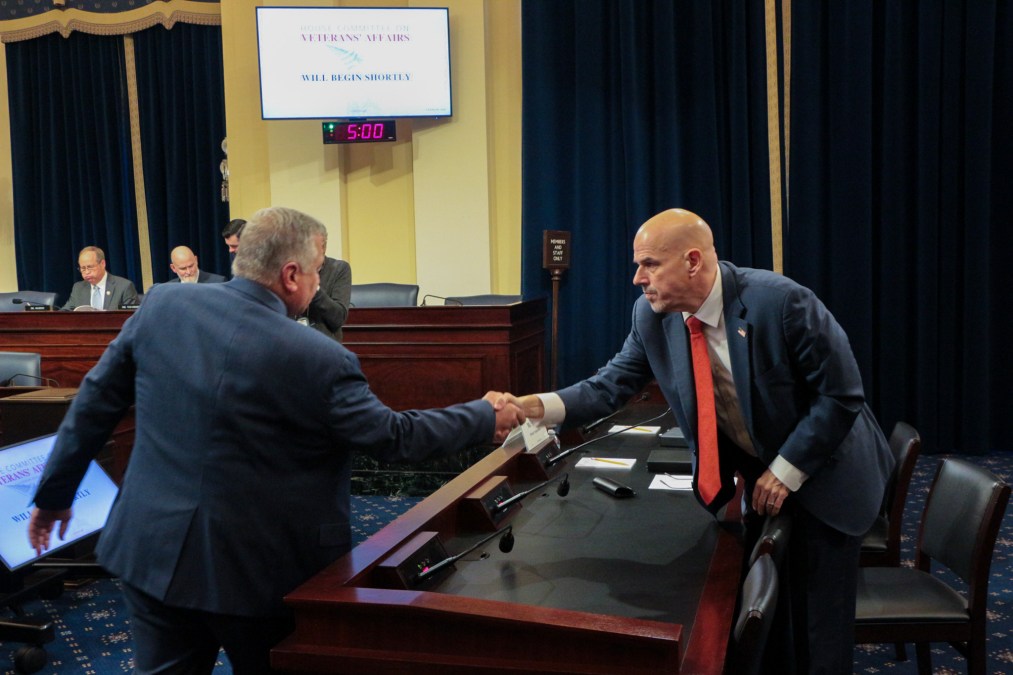
While Oracle executives repeated their reasons for the $17 billion increase to a $10 billion Department of Veterans Affairs electronic health record modernization contract, the House Veterans’ Affairs Committee grilled them Thursday about health data and artificial intelligence use.
Assumed incoming House Veterans’ Affairs Committee Chair Mark Takano, D-Calif., told FedScoop that the two-hour hearing featuring bipartisan scrutiny of Oracle co-CEO Mike Sicilia and Executive Vice President Seema Verma was “refreshing” and a “really good signal” to other government contractors.
“There’s a new ethos in Washington, and it’s potentially bipartisan,” he said. “It’s not just Democrats getting even, it’s not us seeking vengeance against Donald Trump, it’s about all the contractors. Everyone who does business with this government has got to do it on the straight and narrow.”
A volley of accusations was thrown from both sides of the dais at Sicilia and Verma, with the former appearing at Thursday’s meeting as a result of a unanimous September subpoena.
“Any other contract with this size would have came through Congress, but now through both Republicans and Democrats, it has been expanded,” Chair Mike Bost, R-Ill., said. “You do understand it’s over $2,000 per veteran. That’s a lot of money.”
The pair also testified Wednesday before the Senate Veterans’ Affairs Committee, saying the contract ceiling increase was due to an expansion of scope and scale, COVID-19 delays, early customization and inadequate infrastructure. Verma also said 40% of the original contract’s ceiling was spent by the time Oracle acquired Cerner in 2022.
“I’m not here to milk the taxpayers or the veterans,” Sicilia told the representatives. “If there are other ways to reduce cost here, my main mission is to deliver the solution for veterans. I believe it has value for veterans, but if the government doesn’t feel that way, then they should by no means continue to fund the program. But if we all feel that way, I’m willing to sit with any member of any committee. I’m willing to sit with the VA. I’m willing to sharpen every single pencil we can.”
But Thursday, while the executives reiterated their earlier reasoning to the House panel, they also faced accusations that Oracle wants veteran health data to train its AI systems.
“We have zero access to the data of the veterans,” Verma said. “We have testified multiple times. We have no access. We do not use that data for any purpose. It is only used by the VA to deliver care for veterans.”
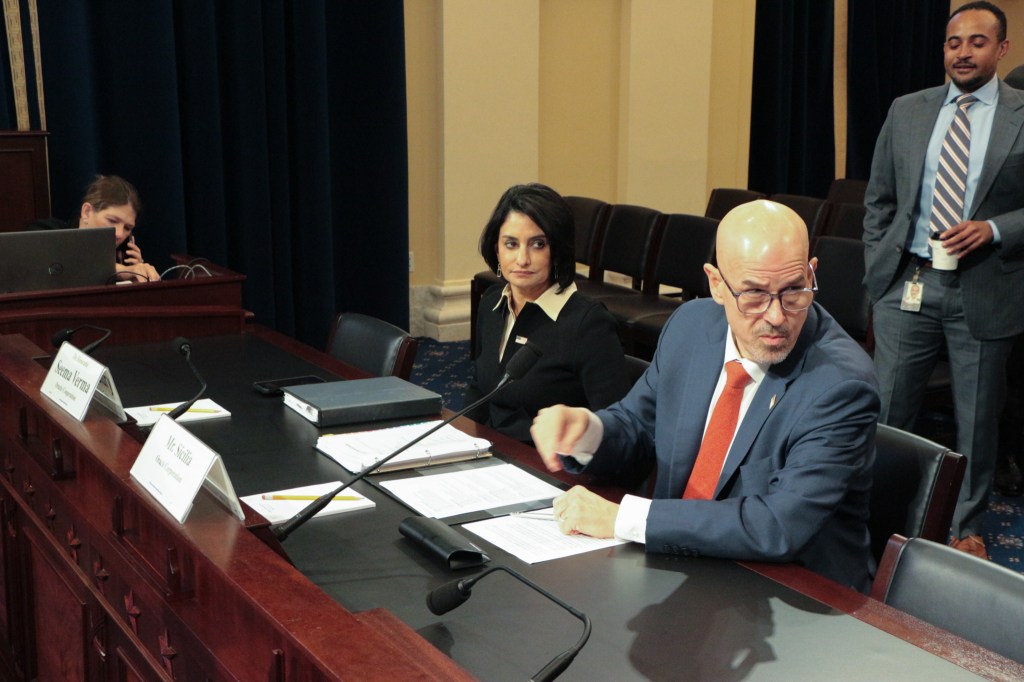
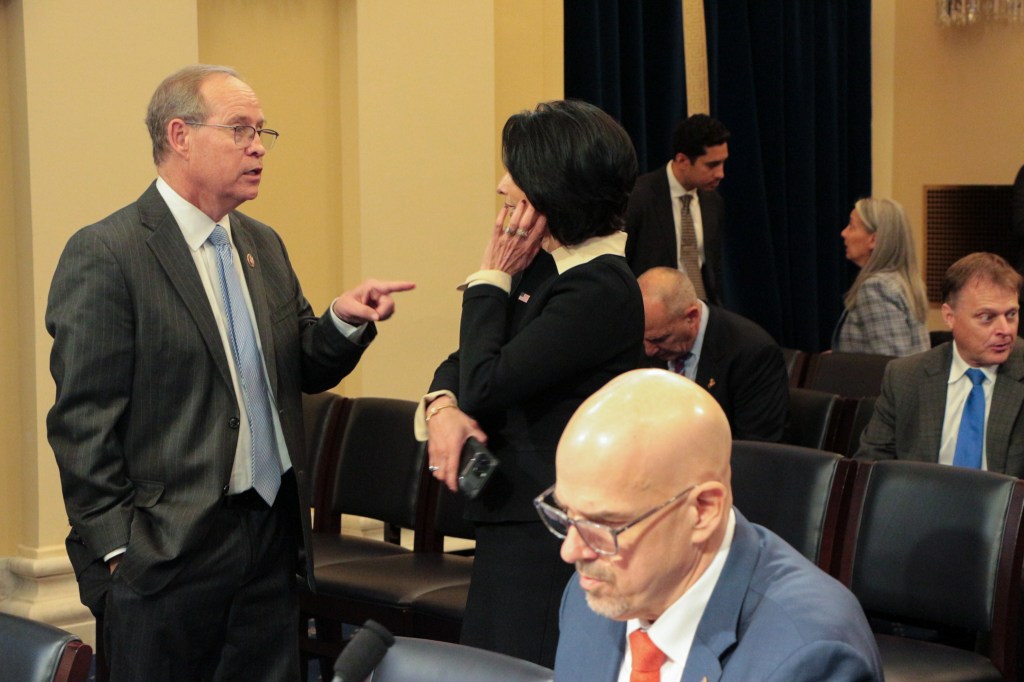
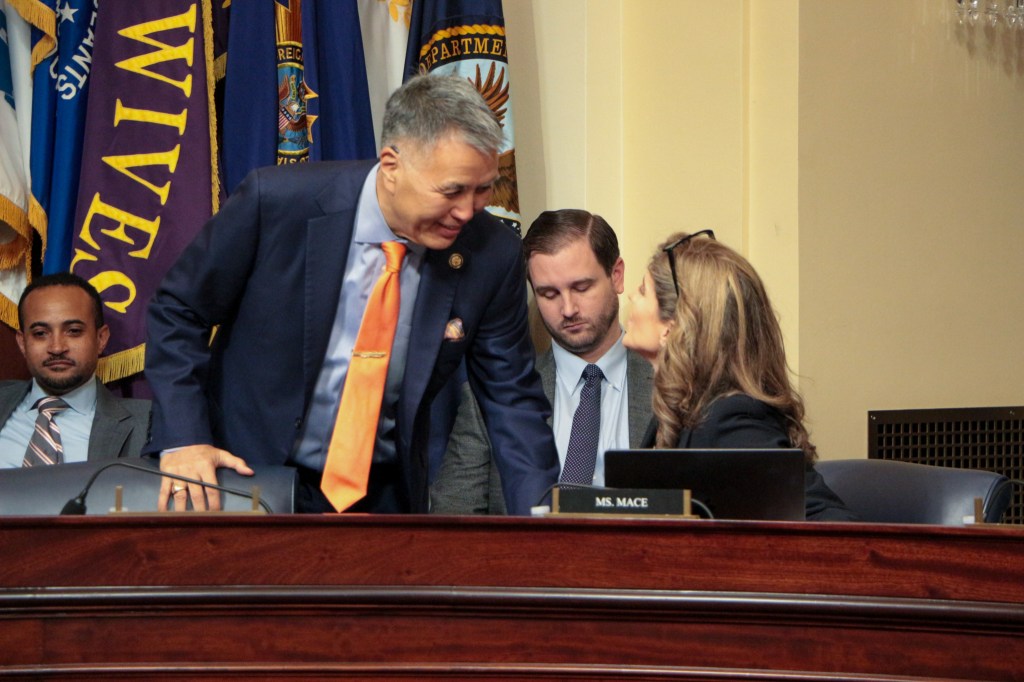
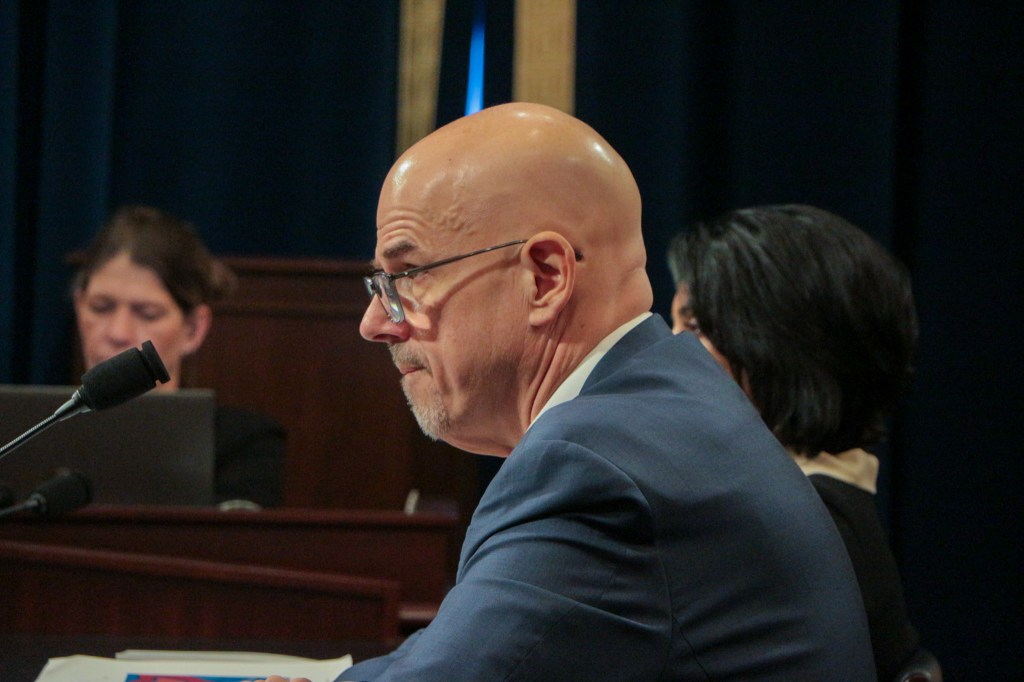
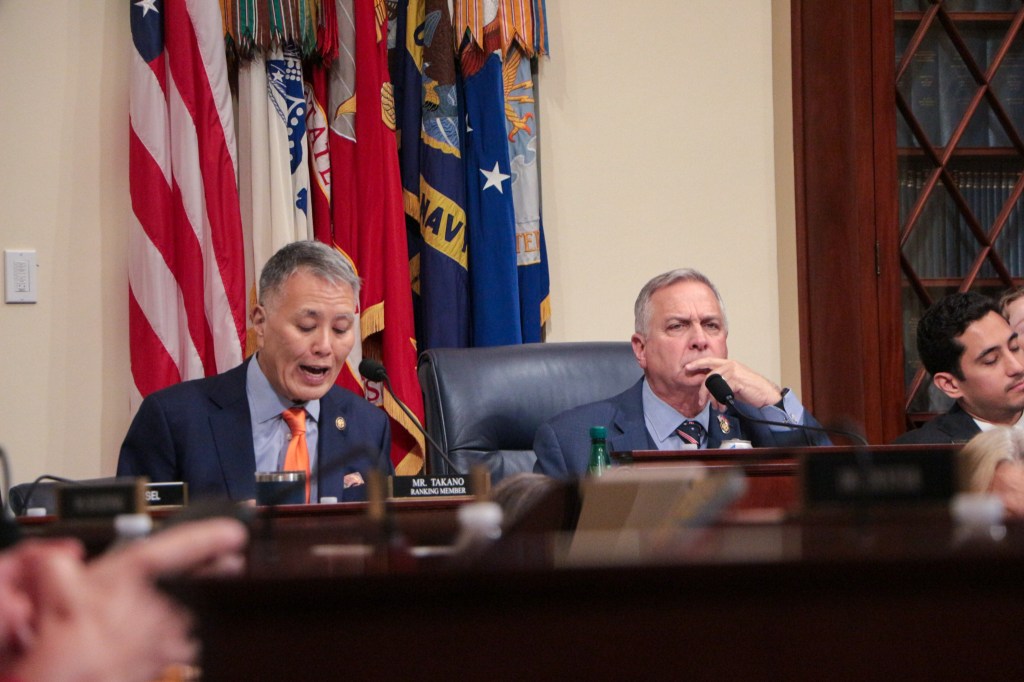
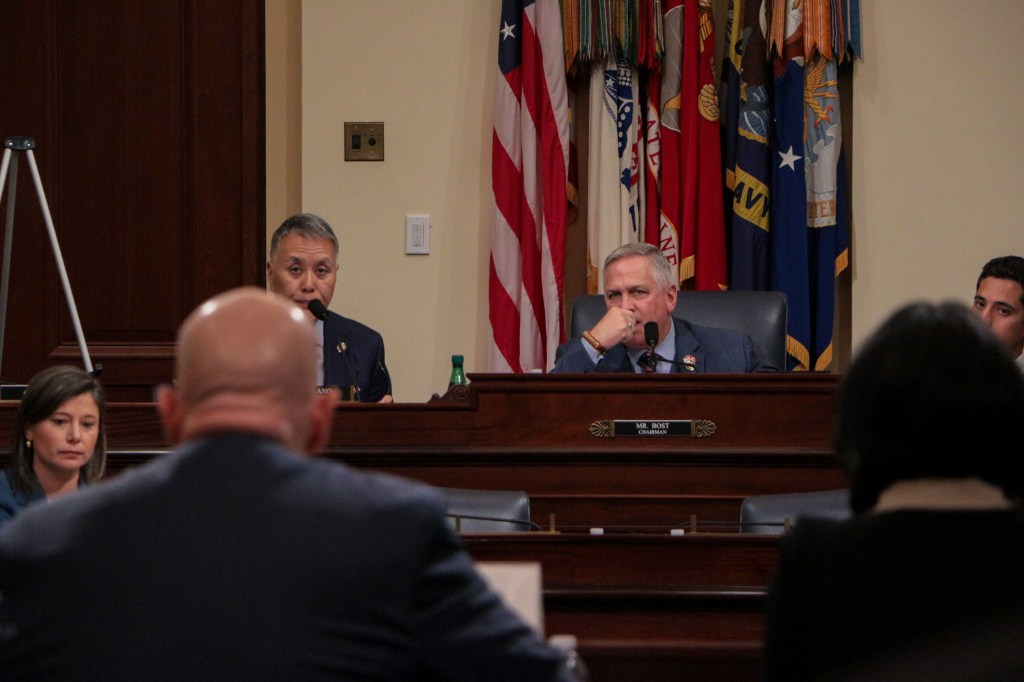
Oracle co-CEO Mike Sicilia and Executive Vice President Seema Verma testify before the House Veterans’ Affairs Committee on the Department of Veterans Affairs electronic health record modernization effort on Nov. 19, 2026. (K. Sophie Will/Scoop News Group)
Rep. Nikki Budzinski, D-Ill., said Oracle’s sales team “has been pursuing the inclusion of your commercial terms and conditions as it relates to data privacy, which would virtually allow you to own this data.” Takano said the VA told Congress that it had a “long and feisty” discussion with Oracle about the use of veteran data, which the executives said they were not aware of.
“It’s clear that Trump’s allies were well aware of the value of this data 10 years ago, which has only become more valuable with the growth of large language models and generative AI,” Takano said. “This deal set up what could become the most significant commercial exploitation of veterans’ data ever seen.”
The hearing also had some heated discussions led by Rep. Nancy Mace, R-S.C., who questioned why Verma could not provide the exact number of patient safety tickets that were older than 90 days. The Oracle EVP estimated it is between 1,000 and 1,800 and said they are resolved in weeks if not days.
Mace wasn’t buying that response, telling FedScoop after the hearing that Verma should have shown up with answers.
“And it’s kind of f—– up,” she said. “Yeah, as a software company, you should be able to talk about software numbers. Give me a f—— break.”
Sicilia said the next version of the software is included at no additional cost, and “in fact, we would love the VA to roll out the most modern technology in the world,” including the company’s clinical AI agent.
Verma said while rollout progress is not perfect, it is still significant. Sicilia said that while the contract went from eight service level agreements to 22, “We have largely met those service level agreements. There is one exception in May of 2025 where we did not meet the system uptime agreement, and we paid the penalty.”
Regardless, some lawmakers want the rollout, if only the money, to stop completely. Rep. Abe Hamadeh, R-Ariz., said the speed of the rollout is “embarrassing” and he is “appalled.”
“No further money should move until Oracle and the VA produce a [Government Accountability Office]-accepted cost estimate, a fixed deployment schedule, and a clear accounting of what has already been wasted,” he said.